Why the Method You Choose Matters
Tracking your spending is one of the most foundational personal finance habits you can build. But the debate isn't just about preference - the method you choose shapes how engaged you are with your money. As part of a broader household budgeting strategy, spending tracking is where awareness begins.
The core question isn't which tool is objectively better. It's which approach produces enough clarity and consistency for you to adjust your behavior. Both manual and app-based methods have real advantages and genuine limitations.
| Manual Tracking | Budgeting App | |
|---|---|---|
| Setup effort | Low to moderate - pen, paper, or spreadsheet | Moderate - account linking, initial configuration |
| Ongoing time commitment | High - requires active daily logging | Low - automation handles most data entry |
| Spending awareness | High - deliberate entry builds mindfulness | Varies - depends on how often you review |
| Customization | Full control over categories and format | Limited to app's structure and settings |
| Privacy considerations | No third-party account access required | Bank data shared with app provider |
| Cost | Minimal or free | Free tiers exist; advanced features often paid |
| Accuracy risk | Human error and missed entries | Miscategorized transactions from automation |
The Case for Tracking Spending by Hand
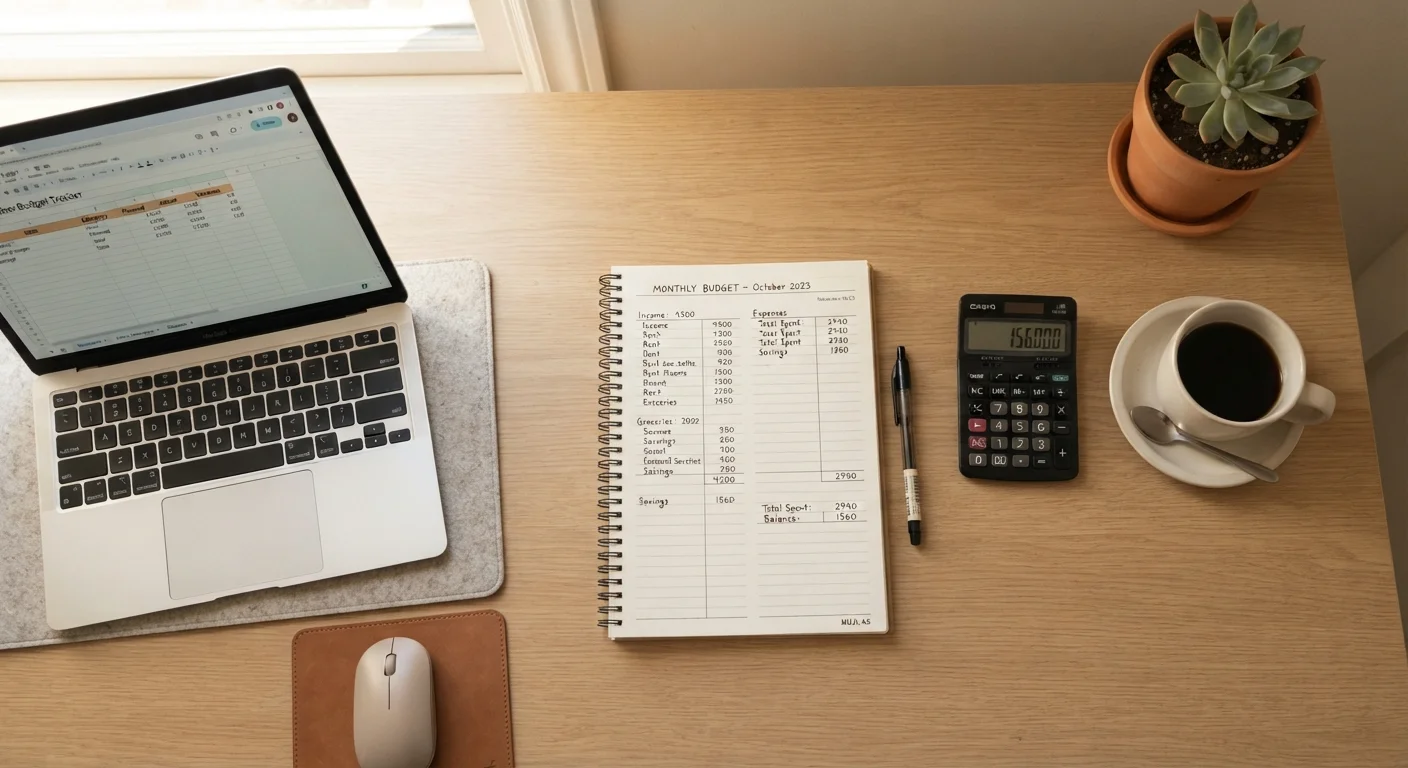
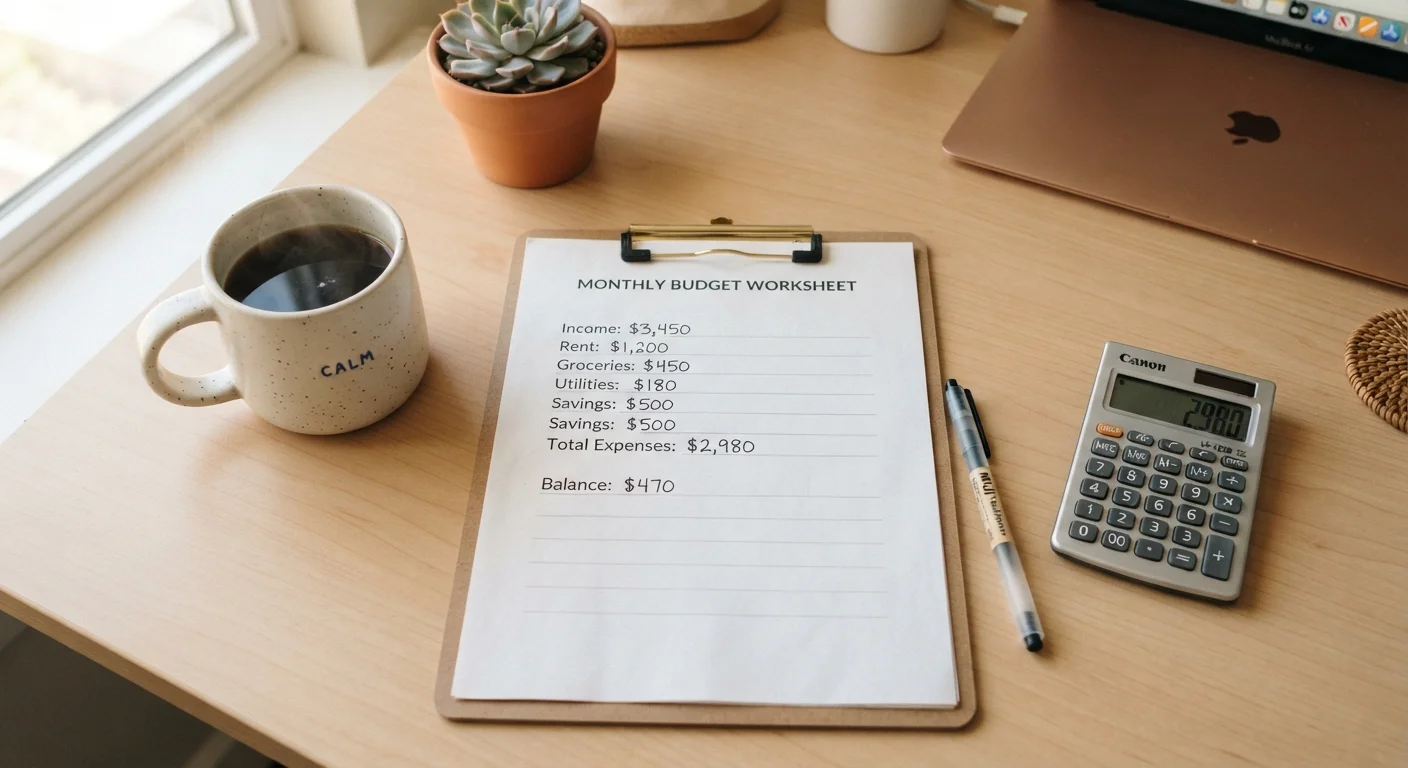
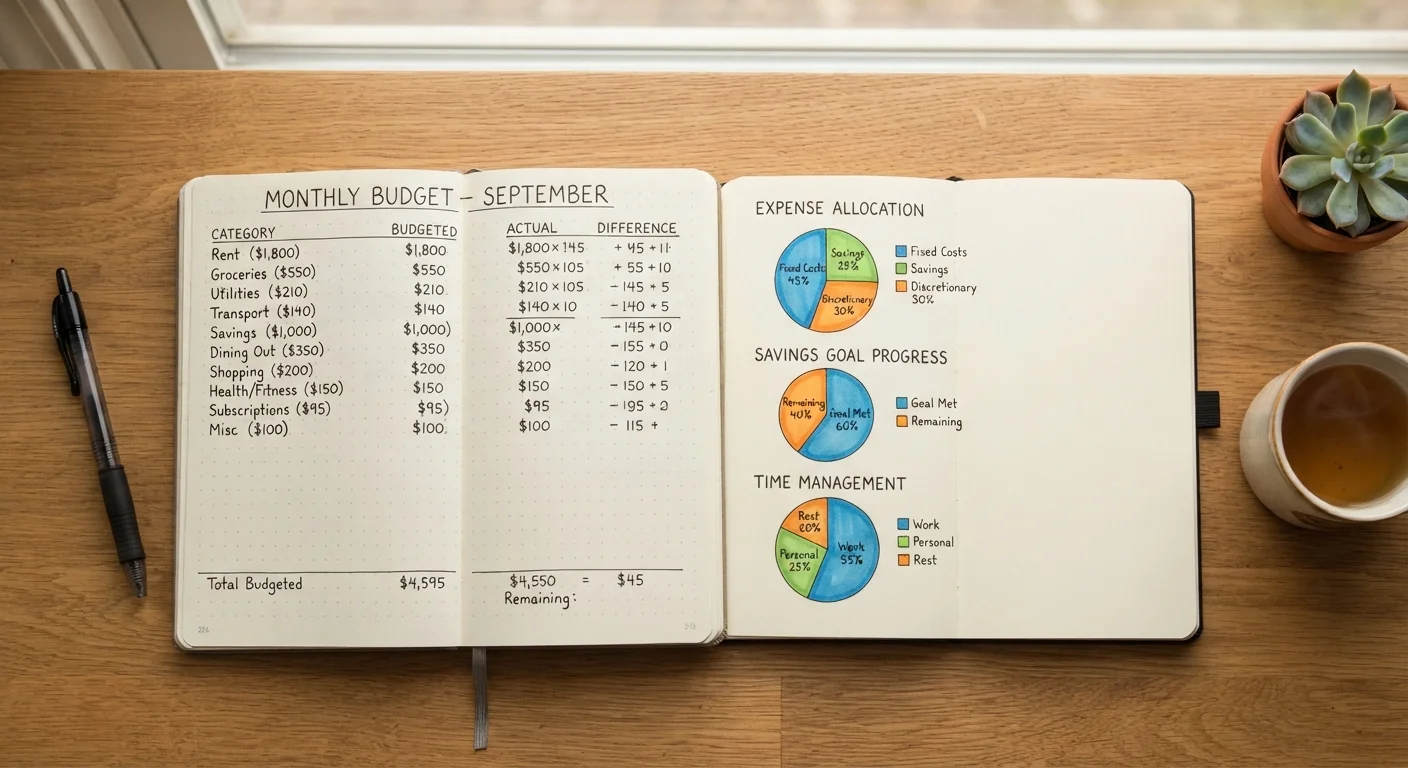
Manual tracking - whether in a notebook, a printed worksheet, or a spreadsheet you build yourself - requires you to actively record every transaction. That friction is often cited as a drawback, but behavioral research suggests it may actually be a feature.
The act of writing an expense down forces a moment of conscious acknowledgment. Studies in behavioral economics indicate that deliberate recording strengthens the mental link between spending and consequences, which can support better self-regulation over time. If you've ever noticed you spend less during weeks when you're actively logging, this is likely why.
~65%
Americans without a formal budget
A Gallup survey found that roughly two-thirds of U.S. households do not maintain a detailed household budget, highlighting how common it is to track spending informally or not at all.
3x
Greater recall with written records
Cognitive research consistently finds that writing information by hand improves encoding and recall compared to passive observation, a principle that applies to financial record-keeping.
Manual methods also offer complete customization. You decide which categories matter, how granular to go, and what the layout looks like. There are no subscription fees and no privacy concerns about linking bank accounts to third-party platforms.
The tradeoff: manual tracking is time-intensive. It depends on discipline and consistency. Miss a few days and the record becomes unreliable. For those just starting out, a structured first-month guide can help establish the habit before it becomes automatic.
The Case for Using a Budgeting App
Budgeting apps address the biggest weakness of manual tracking: they reduce the effort required to capture data. Most apps can connect securely to bank and credit card accounts, automatically pulling in transactions and categorizing them without any manual entry.
This automation is especially valuable for people with high transaction volume - multiple accounts, frequent small purchases, or irregular income streams. Real-time dashboards can surface spending patterns that would take hours to calculate by hand.
Get the Most From Any App
Set aside 10 to 15 minutes each week - not just month-end - to review your app's transaction list and correct any miscategorized entries. Automation captures the data, but regular human review is what turns it into genuine financial insight. Treat the dashboard as a starting point for reflection, not a final answer.
Apps also tend to send alerts when you approach a category limit, which provides a nudge that manual methods can't replicate passively. For households managing shared finances, some apps allow collaborative access across multiple users.
The limitations are real, though. Automatic categorization is imperfect - merchants often code transactions in unexpected ways, requiring periodic manual corrections. App interfaces can also create a layer of distance from your money; it's easy to glance at a dashboard and feel informed without truly engaging with the numbers. And linking financial accounts to any third-party service carries privacy and security considerations worth understanding before you sign up.
If you're exploring structured approaches that complement app use, comparing zero-based budgeting against the 50/30/20 rule can clarify which framework your chosen tool should support.
How to Choose - and What Actually Drives Results
Tracking method adherence is the single biggest predictor of whether any approach delivers value. A highly automated app you check once a month will do less for your financial health than a simple notebook reviewed weekly.
Consider your honest habits: Do you find writing things down grounding, or does it feel like a chore you'll abandon? Are you comfortable linking bank accounts to apps, or does that feel like a privacy risk you'd rather avoid? Is your spending concentrated in a few categories, or spread across dozens of merchants?
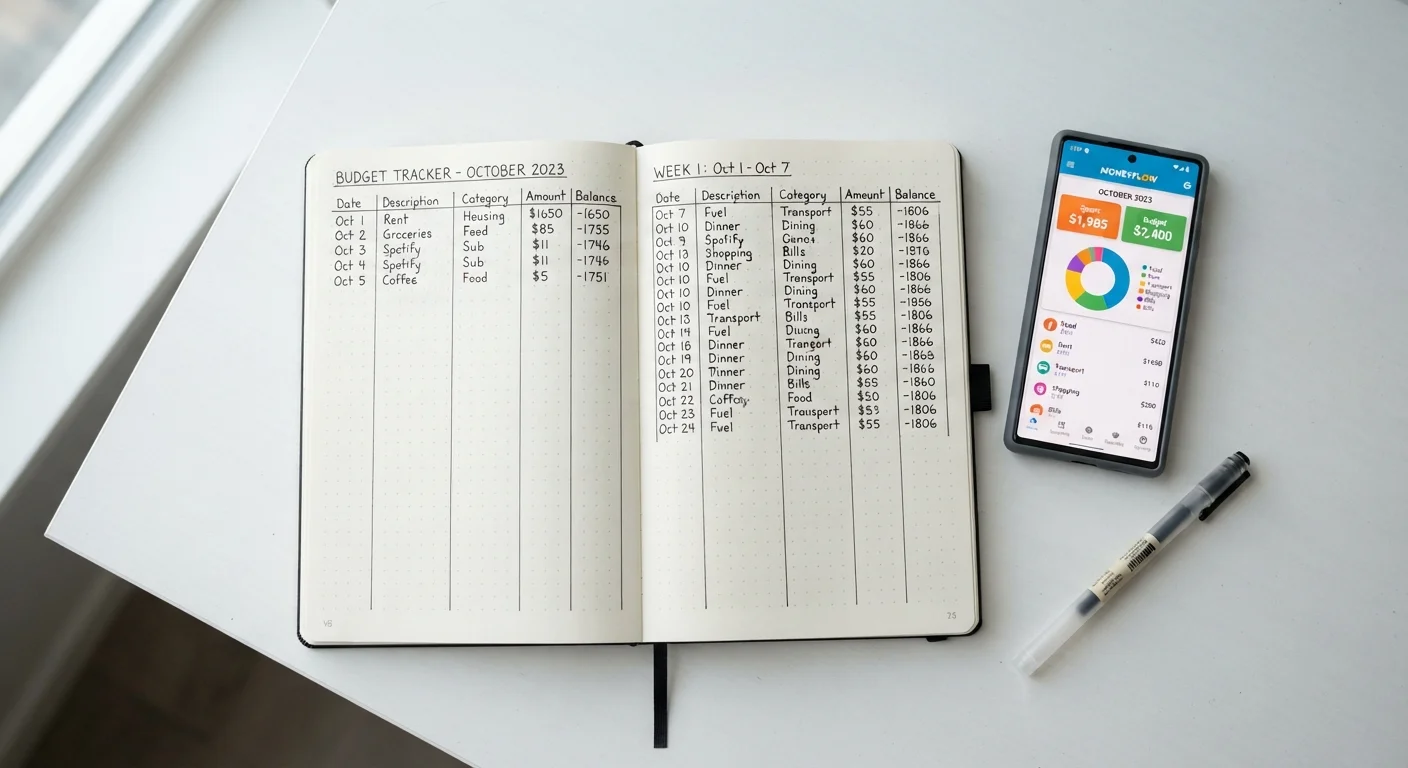
Some people use a hybrid approach - logging major purchases by hand to stay engaged, then reconciling with an app at month-end for a complete picture. This can combine the mindfulness of manual methods with the completeness of automated tracking. The envelope method's digital adaptations offer another example of how analog principles can be layered onto modern tools.
Whichever method you choose, a regular monthly review is what converts raw data into better decisions. Use a monthly budget audit checklist to turn your tracking records into actionable adjustments each cycle.
This article is for general informational and educational purposes only and does not constitute personalized financial advice. Consult a qualified financial professional for guidance specific to your circumstances.