The Five Factors Behind Your Score
Credit scores don't emerge from a black box - they're calculated from five distinct categories of information drawn from your credit report. Understanding each category helps you know where to focus your energy.
- Payment history (35%): Whether you pay on time is the single biggest factor. Even one missed payment can meaningfully lower a score, especially if you have a short history.
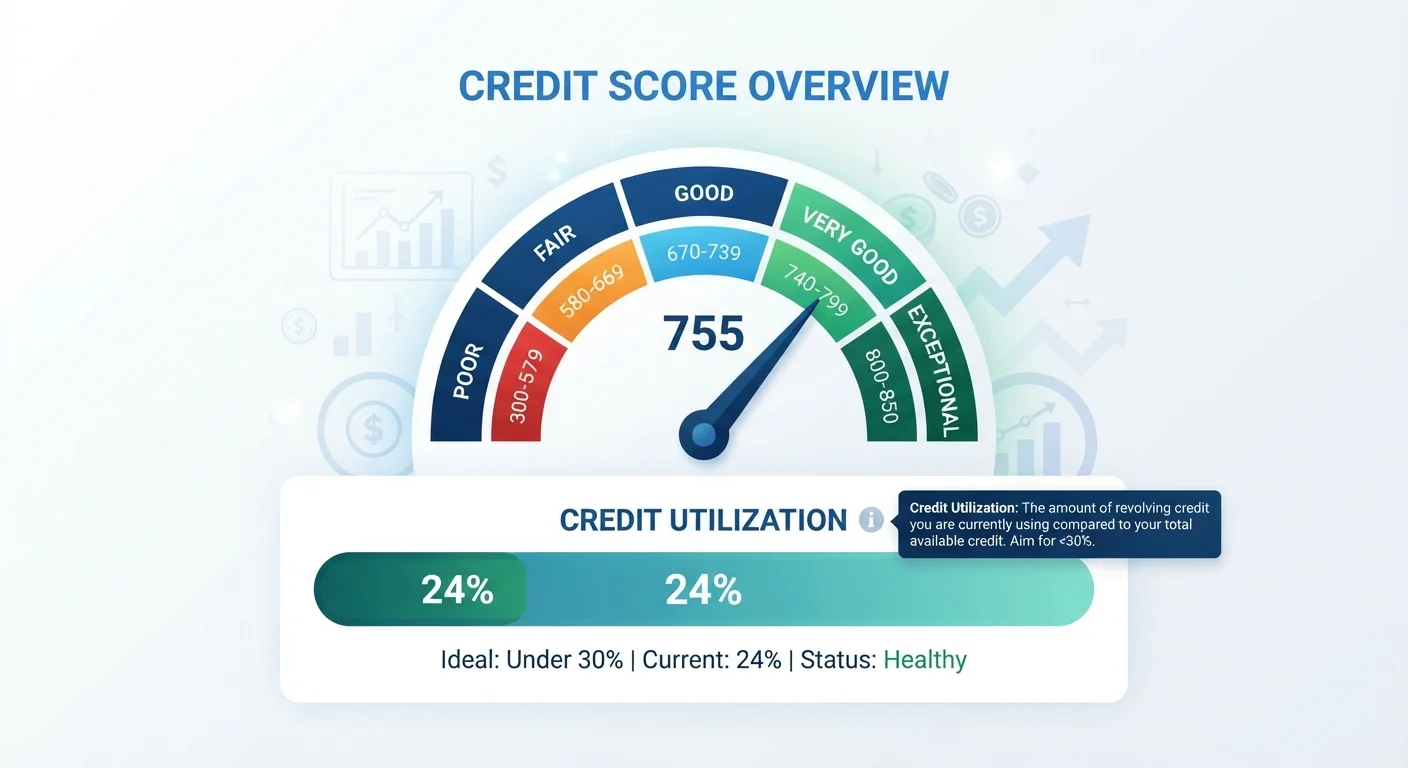
- Amounts owed / credit utilization (30%): This measures how much of your available revolving credit you're using. Lower utilization - generally below 30% - signals responsible borrowing. See how utilization is calculated and why it responds quickly for a deeper look.
- Length of credit history (15%): Longer histories give scoring models more data to assess. The age of your oldest account, newest account, and average account age all factor in.
- Credit mix (10%): Holding a variety of credit types - installment loans, revolving credit cards - can modestly benefit a score, though this should never be a reason to take on unnecessary debt.
- New credit inquiries (10%): Applying for several new accounts in a short period can signal financial stress to lenders. Hard inquiries each cause a small, temporary dip.
Focus on what you can control
Payment history and credit utilization together account for roughly 65% of a standard FICO Score. Consistently paying on time and keeping revolving balances low will have a greater positive impact than any other single action. Small, consistent habits outperform one-time fixes.
These weights apply to FICO Score calculations. VantageScore uses slightly different terminology and weighting, though the underlying inputs are broadly similar.
Why You Have Multiple Credit Scores
Many consumers are surprised to discover they don't have a single credit score - they have dozens. Two variables explain this.
First, the scoring model matters. FICO alone has over 40 score versions tailored to specific lending decisions, such as auto lending or mortgage underwriting. VantageScore releases its own periodic updates. Each version may prioritize factors differently.
Second, the underlying data varies by bureau. Not all lenders report to all three major credit bureaus - Equifax, Experian, and TransUnion. If a missed payment appears in one bureau's file but not another's, the resulting scores will differ. Your full credit report from each bureau shows exactly what data each is working from.
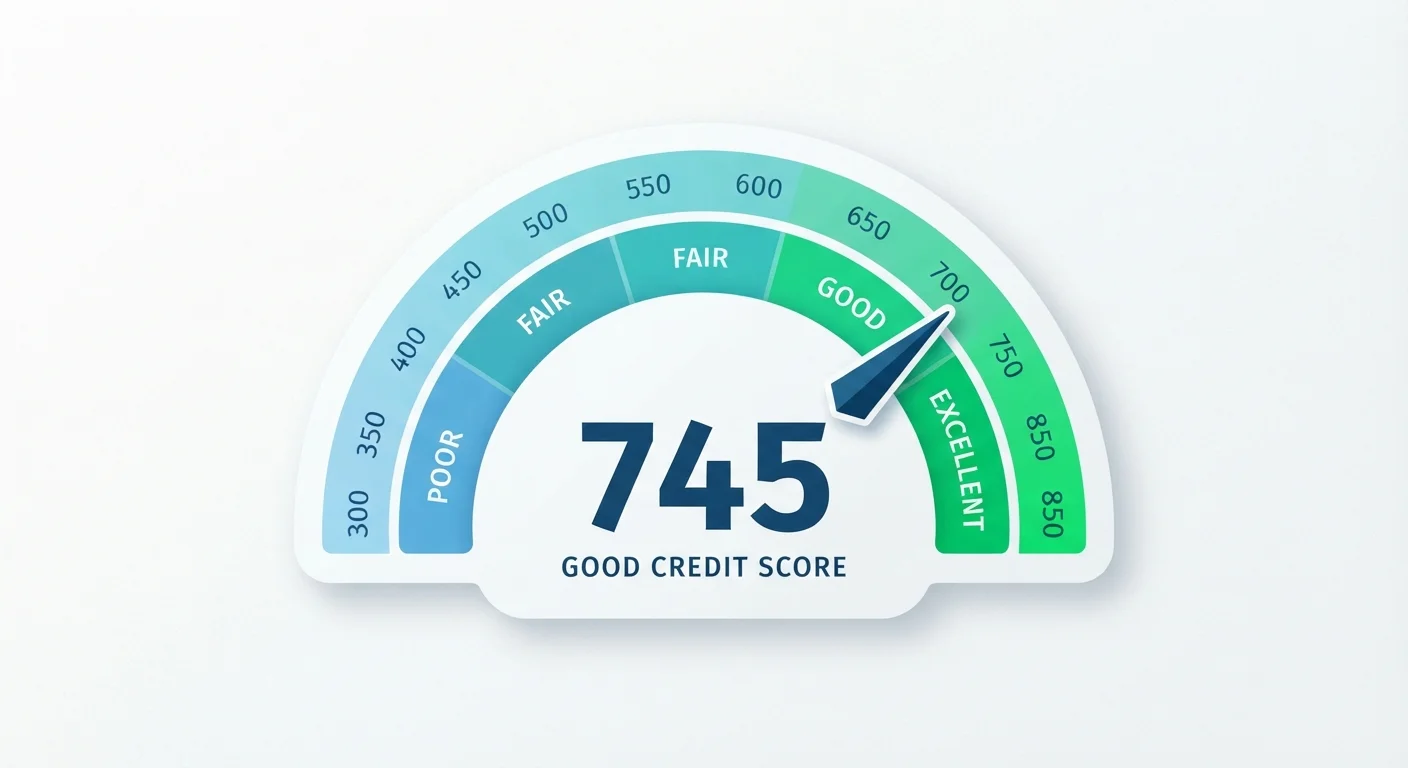
300-850
Standard FICO and VantageScore range
Both major scoring models use this range; lender-specific cutoffs vary by product and institution.
35%
Weight of payment history in FICO scoring
Payment history is the single largest factor in the standard FICO Score calculation, according to Fair Isaac Corporation.
40+
FICO score versions in active use
Fair Isaac Corporation has developed more than 40 score versions tailored to different lending categories, including auto, mortgage, and credit card.
This is why the score you see through a free consumer app may differ from what a mortgage lender pulls - neither is wrong, they're just different models applied to potentially different data sets.
Common Misconceptions That Cost Consumers
Several persistent myths lead people to make financial decisions that harm rather than help their scores.
Carrying a balance doesn't build credit. A widespread belief holds that leaving a small balance on a credit card each month signals active use and improves scores. In reality, it does neither - it only generates interest charges. Carrying a balance does not help your credit score; paying in full every month is the better approach.
Closing old accounts can backfire. Shutting down an old card reduces your total available credit (raising utilization) and can shorten your average credit age - two factors that could lower your score.
Income is not a scoring factor. Your salary, employment status, and net worth play no role in credit score calculations. Scores are strictly a function of how you've managed credit obligations, not how much money you earn.
This is general financial information
Credit scoring models and lender requirements vary widely. The information in this article reflects general principles based on publicly available data from Fair Isaac Corporation, the Consumer Financial Protection Bureau, and the major credit bureaus. For advice tailored to your specific financial situation, consult a licensed financial professional.
This article is for informational purposes only and does not constitute financial or legal advice. Consult a qualified financial professional for guidance specific to your situation.