
Why Credit Rebuilding Takes a Structured Approach
A major financial setback - bankruptcy, foreclosure, or a prolonged period of missed payments - doesn't just lower a credit score. It reshapes how lenders perceive you as a borrower, often for years. The good news is that credit reports are not permanent records: most negative items are legally required to age off within seven years, and their impact on your score diminishes well before that deadline as positive history accumulates alongside them.
The challenge is that rebuilding isn't passive. Left alone, a damaged credit file doesn't improve on its own - it simply becomes less negative. Active rebuilding means layering new, positive information on top of the old, creating a more complete picture of current financial behavior.
What you will need
Before starting the steps below, gather the tools that will support your plan:
AnnualCreditReport.com
Access your free official credit reports from Equifax, Experian, and TransUnion to identify errors and track progress.
Secured credit card
A card backed by a cash deposit that lets you build a positive payment history with minimal approval barriers.
Credit-builder loan
A small installment loan offered by many credit unions and community banks specifically to help consumers establish credit history.
Nonprofit credit counseling agency
Provides free or low-cost guidance on budgeting, debt management, and credit recovery strategies from certified counselors.
This Is General Information, Not Personal Advice
The steps below are educational and apply broadly to many situations - but your circumstances may differ significantly depending on the type of setback, your current income, and applicable state laws. Consider consulting a nonprofit credit counselor or a licensed financial adviser before making major decisions about your credit strategy.
Step-by-Step: Rebuilding Your Credit History
Follow these steps in order. The early steps are foundational - skipping them may mean building on inaccurate information, which wastes time and effort.
Pull and review all three credit reports
Start by obtaining your credit reports from Equifax, Experian, and TransUnion at AnnualCreditReport.com - the only federally authorized source for free reports. Review each one carefully for:
- Accounts that were included in a bankruptcy but still show as active
- Incorrect balances or late payment dates
- Accounts that don't belong to you
- Negative items approaching their removal date (generally seven years; ten years for Chapter 7 bankruptcy)
Dispute any inaccuracies directly with the reporting bureau in writing. Under the Fair Credit Reporting Act (FCRA), bureaus are required to investigate disputes within 30 days.
Understand what dragged your score down
Before rebuilding, it helps to understand the exact mechanics of what happened. Credit scores are driven primarily by five factors: payment history (~35%), amounts owed (~30%), length of credit history (~15%), credit mix (~10%), and new inquiries (~10%).
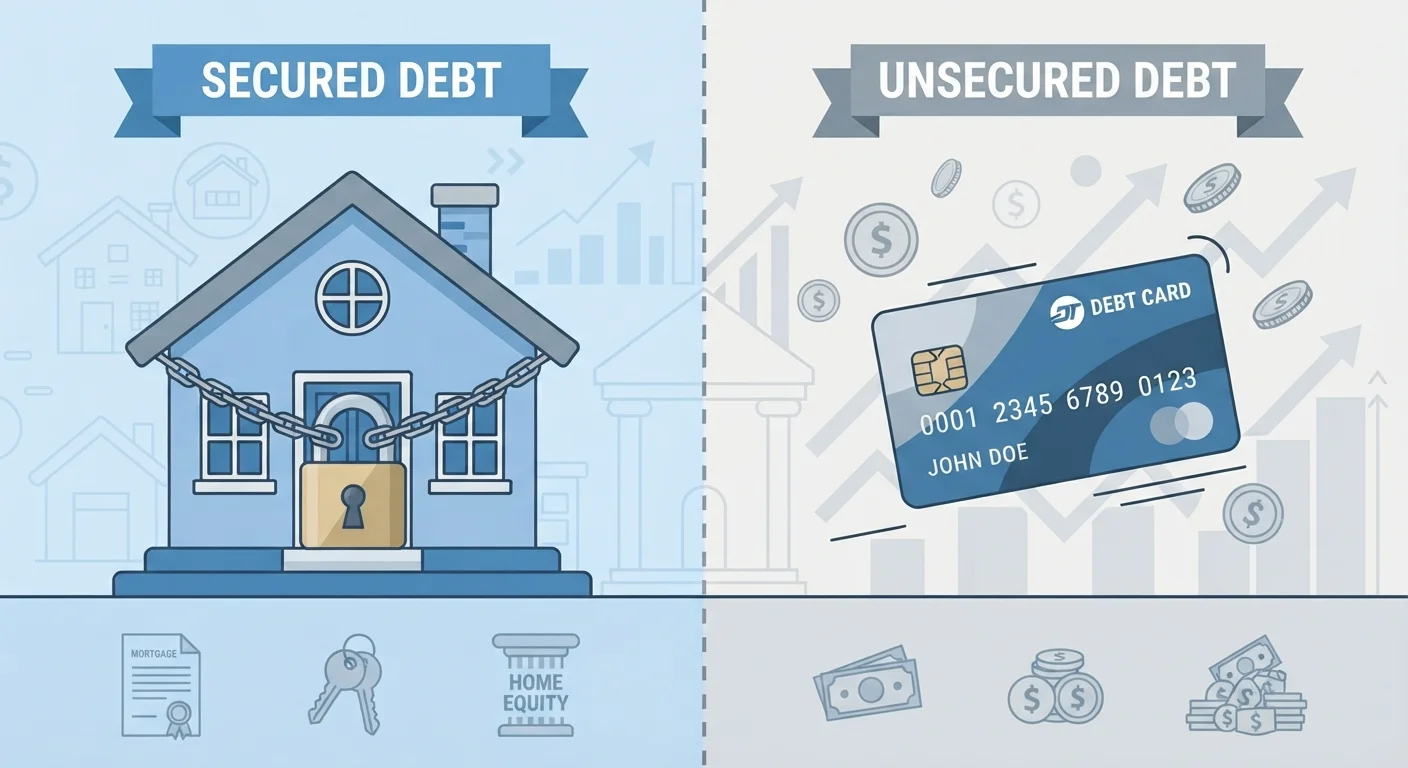
A bankruptcy or foreclosure damages multiple factors simultaneously - which is why recovery takes time rather than a single fix. For a deeper foundation on how debt and credit interact, see our introduction to debt and credit. Understanding whether your remaining debts are secured or unsecured also shapes your options - the distinction is explained in this overview of secured vs. unsecured debt.
Open a secured credit card or credit-builder loan
These two products are specifically designed for people rebuilding credit:
- Secured credit card: You deposit a sum (often $200-$500) that becomes your credit limit. Use it for small, recurring purchases and pay the full balance each month.
- Credit-builder loan: The lender holds the loan amount in a locked account while you make monthly payments. Once paid off, you receive the funds. Both payment history and mix of credit benefit.
Apply for only one or two new accounts at a time - each application generates a hard inquiry, and multiple inquiries in a short period signal risk to lenders.
Pay every bill on time, every month
Payment history carries more weight in your credit score than any other single factor. During rebuilding, even one 30-day late payment can cause a noticeable score drop and signal to lenders that the pattern continues.
This applies beyond credit cards and loans - some utilities, rent, and phone bills can also be reported to the bureaus, either automatically or through opt-in services. Confirm which of your obligations are being reported and treat each one as a priority.
Keep credit utilization low
Credit utilization - the ratio of your current balances to your total credit limits - is the second-largest scoring factor. Most credit professionals suggest keeping utilization below 30% on each card and in total; lower is generally better during active rebuilding.
If your only card has a $500 limit, carrying even a $200 balance represents 40% utilization. Paying balances down before the statement closing date (not just before the due date) reduces the balance that gets reported to bureaus.
Monitor your progress and stay patient
Credit recovery after a major setback is measured in years, not weeks. Many lenders look for at least 12-24 months of clean post-event payment history before extending meaningful credit. Track your scores monthly using free tools offered by many financial institutions - but don't obsess over small fluctuations, which are normal.
As your score improves, be intentional about the habits you maintain. Some behaviors appear harmless but gradually erode scores - common score-damaging patterns are outlined here. If you are juggling multiple balances, review whether consolidation makes sense - understand the real trade-offs of debt consolidation before acting.
Watch Out for Credit Repair Scams
Companies that promise to erase accurate negative information from your credit report - for an upfront fee - are nearly always fraudulent. No service can legally remove accurate, timely information before its natural expiration. The Federal Trade Commission (FTC) warns that these schemes often make things worse. Legitimate credit repair starts with steps you can take yourself, for free.
Use Autopay to Protect Your Progress
Even a single missed payment during rebuilding can set back your score significantly. Setting up automatic minimum payments on every account ensures you never accidentally damage the positive history you're working to create. Pay more than the minimum whenever possible to reduce interest costs.
This article provides general financial education and is not personalized financial, legal, or credit advice. Results vary based on individual circumstances. Consult a licensed financial professional or nonprofit credit counselor for guidance tailored to your situation.