How Each Method Actually Works
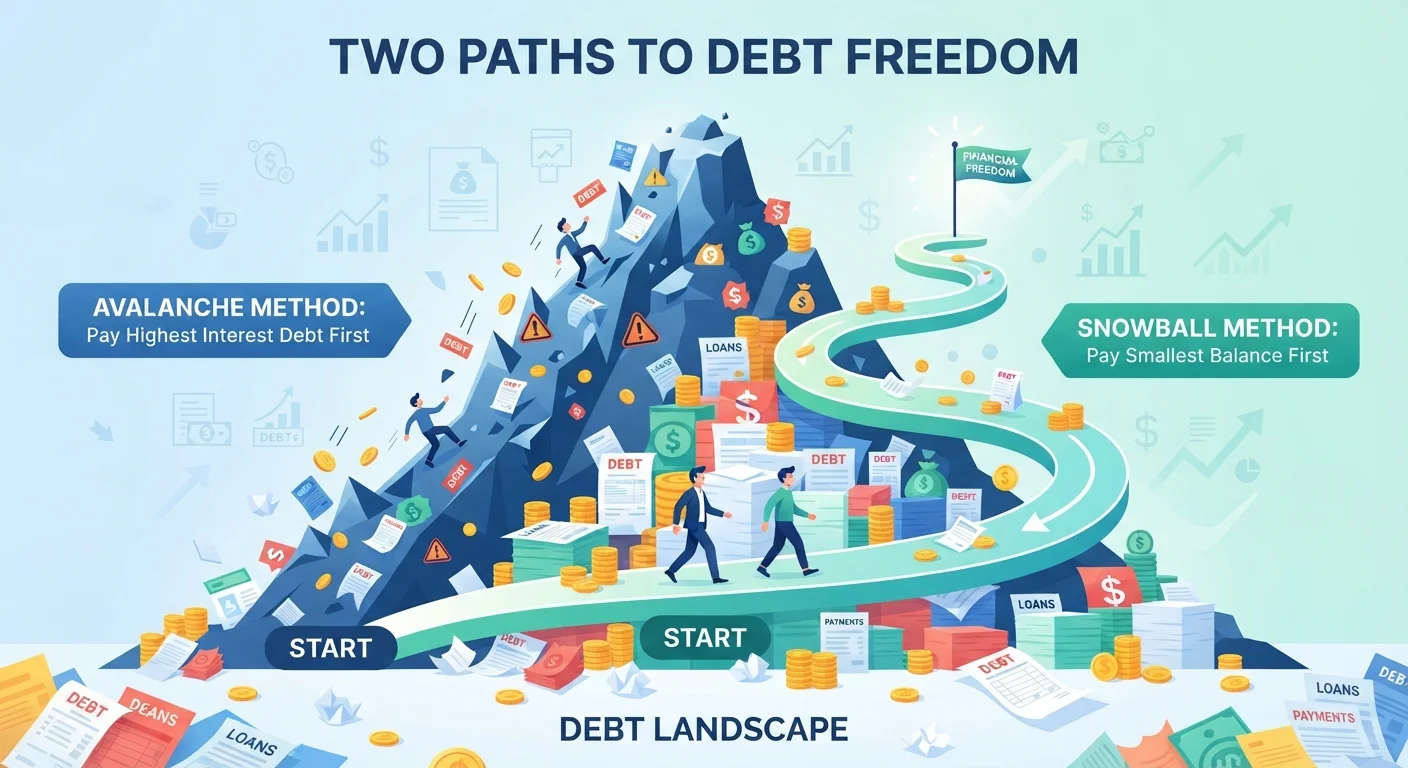
Both strategies share the same foundation: you make minimum payments on all debts, then direct any extra money toward one target debt each month. Where they diverge is in how that target is chosen.
The Debt Avalanche ranks your debts by interest rate, from highest to lowest. You attack the highest-rate balance first. Once it's eliminated, you redirect its payment to the next-highest-rate debt - creating an accelerating payoff cycle. Because high-rate debt compounds fastest, neutralizing it early limits how much interest accumulates across your entire debt portfolio.
The Debt Snowball ranks debts by balance size, from smallest to largest, regardless of rate. You eliminate the smallest balance first. Once it's gone, you roll that freed-up payment into the next smallest. Each payoff is faster than the last, building what proponents describe as a motivational feedback loop.
To see how interest compounds against you in the first place, our article on the real cost of minimum payments walks through the math in plain terms.
| Criterion | Debt Avalanche | Debt Snowball |
|---|---|---|
| Payoff order | Highest interest rate first | Smallest balance first |
| Total interest paid | Lower (mathematically optimal) | Slightly higher in most cases |
| Time to first payoff | Longer if high-rate debt is large | Faster - smallest balance cleared first |
| Motivational structure | Delayed gratification | Early and frequent wins |
| Best for | Disciplined, numbers-focused planners | Motivation-driven, habit-building planners |
| Complexity | Low - rank by rate, then execute | Low - rank by balance, then execute |
| Completion rate research | Lower in some behavioral studies | Higher in some behavioral studies |
The Cost Difference: What the Numbers Show
In most scenarios, the avalanche method results in paying less total interest and becoming debt-free faster. The gap depends on your specific balance mix and rates, but it can be meaningful - sometimes hundreds or even thousands of dollars over a multi-year payoff period.
However, research from behavioral economists - including work published in the Journal of Marketing Research - has found that many consumers who attempt the avalanche abandon the plan before capturing those savings. The snowball, by delivering faster early victories, tends to improve completion rates. A strategy abandoned halfway costs more than either method followed to completion.
~$1,000+
Potential interest savings with avalanche vs. snowball
Illustrative estimates based on typical multi-debt scenarios with varied interest rates; actual savings depend on individual balances and rates.
3 in 10
Americans carrying credit card debt month to month
Federal Reserve data consistently shows a significant share of U.S. cardholders carry revolving balances, making payoff strategy selection consequential.
20%+
Average credit card APR in recent years
According to Federal Reserve consumer credit data, average credit card rates have risen substantially, amplifying the cost of carrying balances long-term.
Neither method involves taking on new debt or renegotiating terms. If you're dealing with overwhelming balances and need a structured third-party program, our overview of debt management plans explains how those differ from self-directed payoff strategies.
Choosing the Right Fit for Your Situation
There's no universal answer. Personal finance is personal, and the right method depends on your debt profile, temperament, and financial habits.
Start by listing all your debts with their balances, minimum payments, and interest rates. If one debt carries a rate significantly above the others - say, a store credit card at 28% APR while your other debts hover near 12% - the avalanche case becomes compelling. If your balances are scattered and your rates are clustered within a few percentage points of each other, the motivational lift of the snowball may outweigh the marginal cost difference.
You can also consider a hybrid: start with the snowball to clear one or two small balances quickly, then switch to avalanche ordering once you've built confidence. The mechanics still work - you're always making minimums plus one focused extra payment.
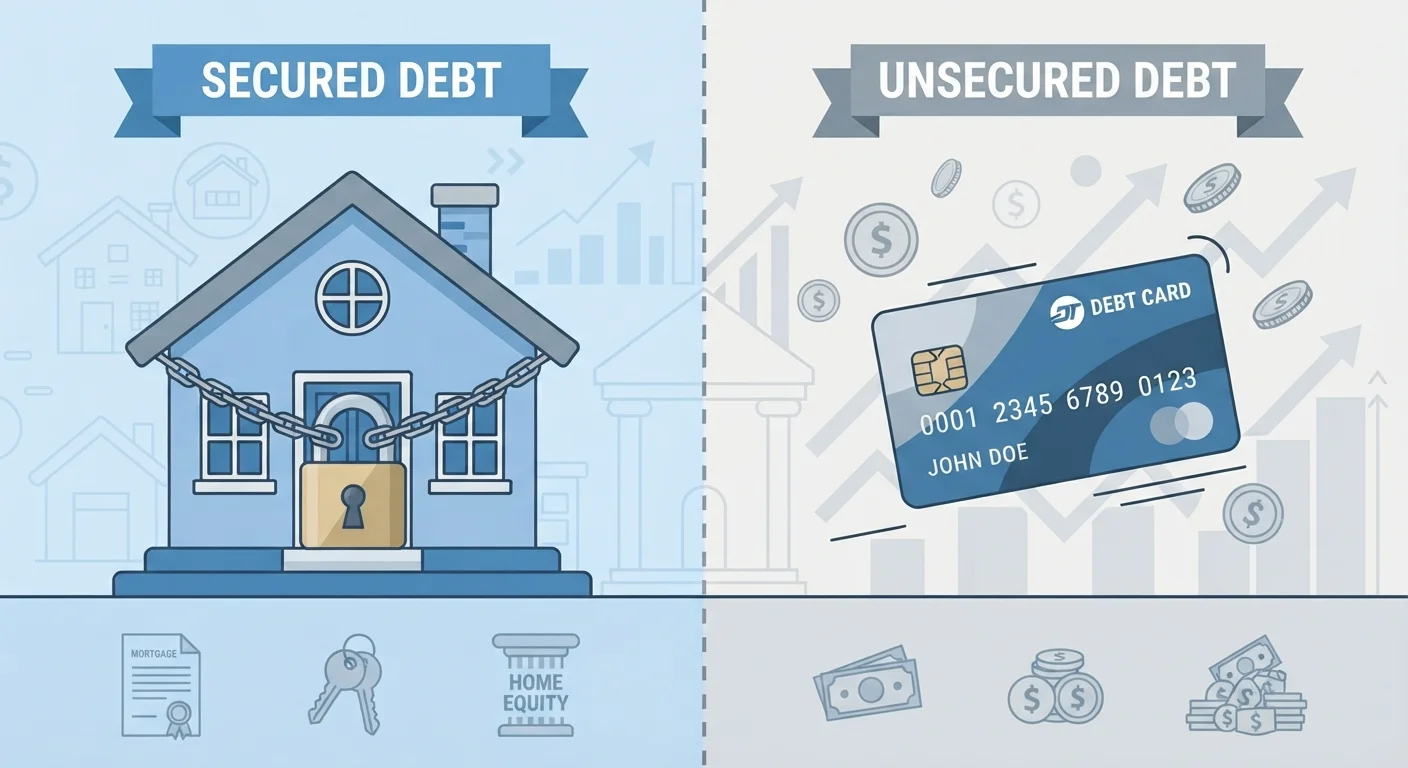
Whatever method you choose, it works best alongside a clear monthly budget. See our budgeting basics hub for practical frameworks to free up the extra payment that makes either strategy viable. And if you're unsure whether your debts are secured or unsecured - a distinction that affects your risk and options - our guide on secured vs. unsecured debt provides useful grounding.
This article is for general informational and educational purposes only. It does not constitute personalized financial, investment, or legal advice. For guidance tailored to your situation, consult a qualified financial professional.