
How High-Yield Savings Accounts Work
A high-yield savings account operates much like a standard savings account - you deposit money, the institution holds it securely, and you earn interest on your balance. The key difference is the rate. While the national average APY on traditional savings accounts has historically hovered near 0.5% or below, HYSAs - particularly those offered by online banks - have frequently paid multiples of that figure, especially during periods of higher interest rates.
Interest in a HYSA typically compounds daily or monthly and is credited to your account monthly. This compounding effect means you earn interest on previously earned interest, accelerating growth over time. To understand how compounding amplifies returns, see our article on compound interest and long-term wealth growth.
Online banks can offer higher yields because they carry lower overhead than branch-based institutions. Without physical locations to maintain, they pass savings to depositors in the form of better rates. As long as the account is insured by the FDIC or the NCUA, the structural difference between online and traditional banks has no bearing on the safety of your deposits.
~0.45%
National average APY on traditional savings accounts
According to FDIC data, the national average savings account rate has historically remained well below 1% outside of rate-cycle peaks.
$250,000
FDIC insurance coverage per depositor, per institution
The FDIC guarantees deposits up to this limit at each insured bank, protecting your principal in the event of institutional failure.
Daily
Most common compounding frequency for HYSAs
Many high-yield savings accounts compound interest daily, which maximizes the benefit of the annual percentage yield over time.
What to Look for When Evaluating a HYSA
Not all high-yield savings accounts are identical. Beyond the headline APY, several factors affect how useful an account will be in practice.
- APY vs. interest rate: Always compare accounts using APY, which accounts for compounding frequency. A slightly lower nominal rate that compounds daily can outperform a higher rate that compounds monthly.
- Variable rate risk: HYSA rates fluctuate. An attractive rate today may fall if the Federal Reserve lowers the federal funds rate. This is not a reason to avoid HYSAs, but it's worth understanding that the advertised rate is not guaranteed indefinitely.
- Fees and minimums: Monthly maintenance fees can erode earnings. Look for accounts with no monthly fee and no minimum balance requirement, or confirm you can consistently meet any required threshold.
- Withdrawal access: Confirm how and how quickly you can transfer funds. Some institutions impose limits on outbound transfers per statement cycle.
- Federal insurance: Verify FDIC or NCUA insurance before opening any account. This is non-negotiable for any money you cannot afford to lose.
Compare APY, Not Just the Advertised Rate
When evaluating accounts, focus on the Annual Percentage Yield rather than the nominal interest rate. APY incorporates compounding frequency, giving you an accurate, apples-to-apples comparison across institutions. Even small APY differences compound meaningfully over time on larger balances.
Where HYSAs Fit in a Broader Savings Strategy
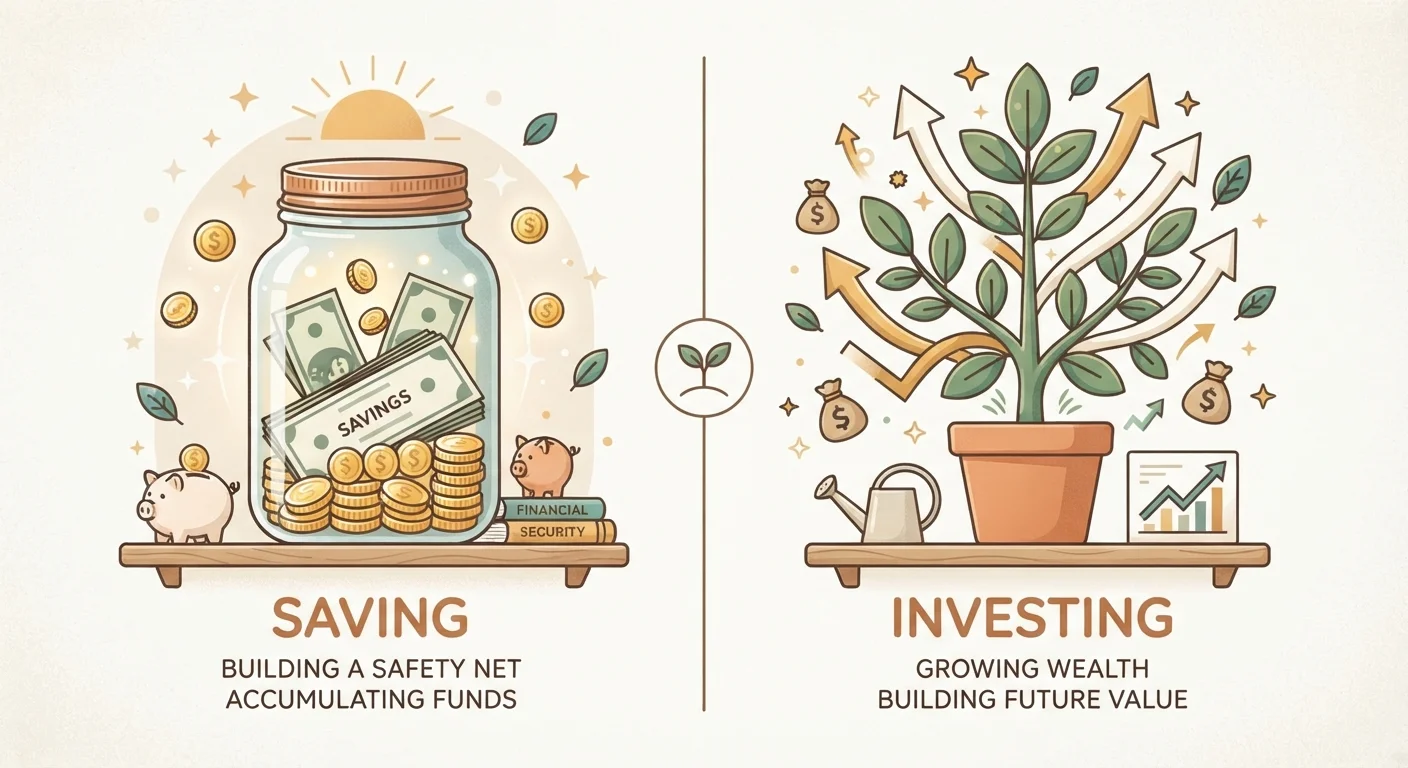
A high-yield savings account is not an investment vehicle - it carries no market risk, but it also won't generate the long-term growth associated with equities or other assets. That distinction matters for how you use it. To understand when saving is the right move versus investing, see our guide on the difference between saving and investing.
HYSAs are most effective for:
- Emergency funds: Liquid, insured, and earning more than a checking account - a HYSA is widely considered an appropriate home for three to six months of living expenses. For guidance on prioritizing your emergency fund relative to other financial goals, see emergency fund vs. investment account.
- Short-term savings goals: Money earmarked for a planned purchase within one to three years - such as a down payment, vacation, or home repair - benefits from HYSA returns without exposure to market volatility.
- Cash buffer beyond checking: Keeping excess cash in a HYSA rather than a low-yield checking account ensures your money works harder while remaining accessible.
For a structured approach to allocating funds across goals and account types, consider building a personal savings plan that accounts for both short- and long-term priorities.
This article is for informational purposes only and does not constitute personalized financial advice. Consult a qualified financial professional for guidance specific to your situation.