The Bean Is Only the Starting Point
When restaurant guests complain about bad coffee, the bean itself is rarely the primary culprit. Commodity-grade coffee used in diners and specialty single-origin coffee served at upscale restaurants both start as raw ingredients - what happens between the roastery and your cup determines almost everything about the flavor you experience.
Coffee's taste is shaped by a chain of decisions: how freshly the beans were roasted, how coarsely or finely they were ground, what temperature the water reached, how long the water was in contact with the grounds, and how clean the equipment was at the time of brewing. Change any one of those variables and you change the drink.
This is why two restaurants buying coffee from the same regional roaster can produce cups that taste nothing alike. One might brew at the correct temperature with freshly ground beans; the other might rely on pre-ground coffee that has been sitting in a canister for two weeks, brewed in a machine that hasn't been descaled in months.
98%
Water content in a brewed cup of coffee
This widely cited figure in coffee science underscores why water quality is as important as bean selection in determining final flavor.
195-205°F
Optimal water temperature for coffee brewing
The Specialty Coffee Association identifies this temperature range as the standard for balanced extraction in professional brewing environments.
2-4 weeks
Typical window for peak bean freshness post-roast
Coffee industry professionals generally agree that whole beans are at peak flavor within the first two to four weeks after roasting.
Why Most Restaurants Struggle With Coffee
Coffee service is genuinely difficult to execute well in a full-service restaurant context. Unlike a dedicated café where every staff member is trained on brewing and every piece of equipment is calibrated for coffee, restaurants divide attention across dozens of tasks simultaneously.
Staff turnover is one factor. A well-trained server who understands proper espresso extraction cycles out, and their replacement may never receive the same instruction. Equipment calibration - adjusting grind size as humidity changes, dialing in espresso dose - is a daily discipline that gets skipped when the lunch rush hits.
Bean freshness is another persistent issue. Restaurants typically order coffee in bulk to minimize costs and deliveries. Beans that are two to four weeks past their roast date lose aromatic complexity rapidly, producing a flat, dull cup even when brewed correctly. Specialty coffee shops often receive beans weekly; many restaurants stretch supplies over a month or more.
Ask When the Beans Were Roasted
If coffee quality matters to you when dining out, it's completely reasonable to ask your server when the restaurant last received a coffee delivery or who supplies their beans. Restaurants that take coffee seriously will have an answer. Those that don't may reveal the gap between their coffee program and the rest of their menu. This small question can save you from a disappointing end to an otherwise excellent meal.
The Role of Water and Equipment
Water makes up roughly 98 percent of a brewed cup of coffee, yet it's the variable most often overlooked when diagnosing quality problems. Hard water - high in calcium and magnesium - can interfere with extraction and leave mineral buildup inside equipment. Overly soft or filtered water strips minerals needed to carry flavor compounds properly. The Specialty Coffee Association notes that ideal brewing water falls in a specific hardness and alkalinity range to produce balanced extraction.
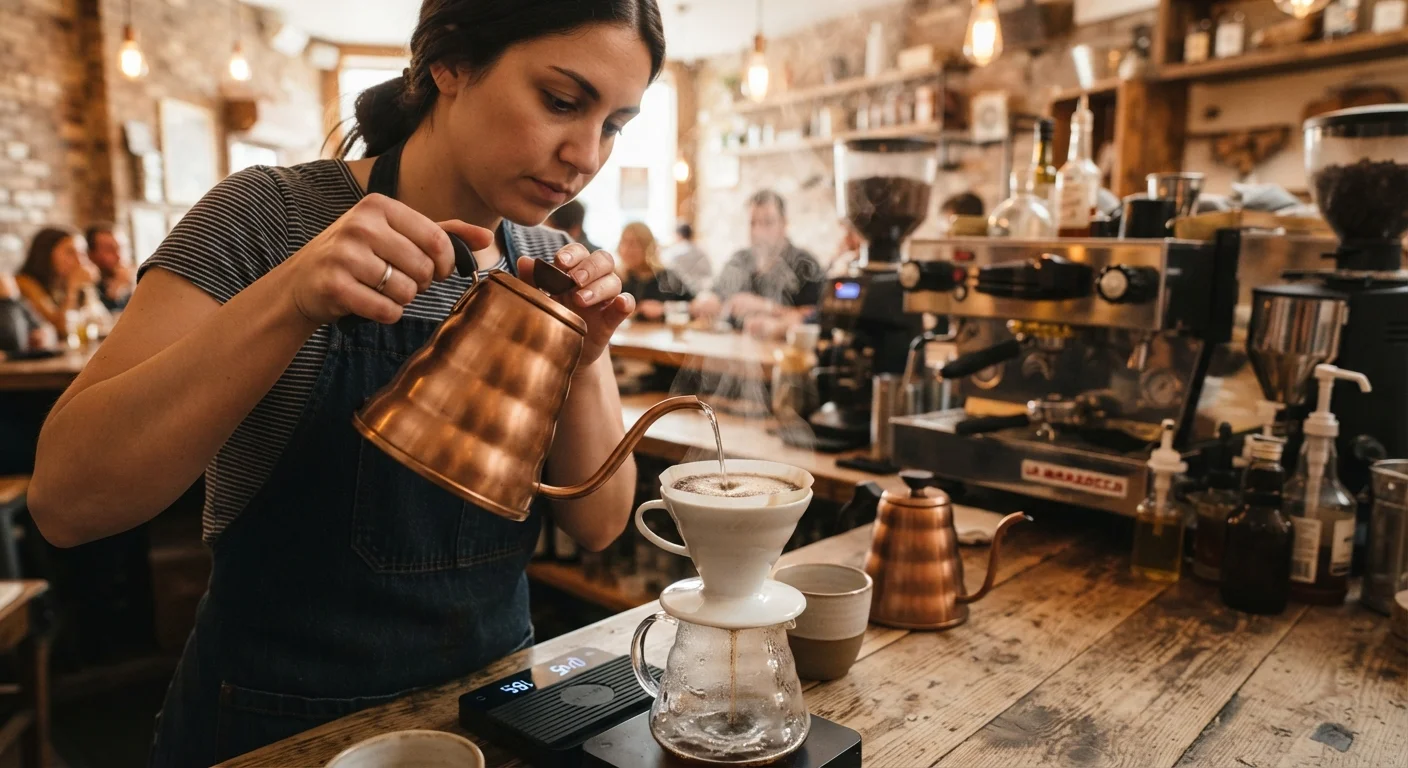
Commercial drip brewers used in many restaurants are designed for volume, not precision. They may not maintain the 195-205°F water temperature range considered optimal, particularly during high-volume periods when hot water is continuously drawn down. Espresso machines require even more care - group heads must be clean, pressure must be calibrated, and portafilters must be dried and dosed correctly every single pull.
A machine that hasn't been backflushed and descaled regularly imparts old coffee oils and mineral deposits into every subsequent shot - a reliable path to bitter, off-tasting espresso regardless of bean quality.
“Water is the most overlooked ingredient in coffee. You can source exceptional beans and calibrate your grinder perfectly, but if your water is wrong, your coffee will be wrong.”
— Scott Rao, Coffee researcher and author of several widely referenced professional barista training manuals
What the Best Restaurant Coffee Programs Do Differently
A growing number of restaurants - particularly those in urban markets or with a strong hospitality ethos - now treat coffee as a meaningful part of the dining experience, not a footnote. These establishments share a few common practices worth understanding as a curious diner.
They source intentionally, partnering with local or regional roasters and rotating offerings seasonally. They receive beans frequently in smaller quantities to ensure freshness. Staff receive dedicated coffee training - not just a five-minute walk-through - and someone on the team is responsible for daily equipment checks and calibration.
Water filtration is installed and serviced regularly. And critically, coffee is priced to reflect its actual cost of quality: a restaurant serving a genuinely excellent espresso program will typically charge accordingly, because the inputs - fresh beans, maintained equipment, trained labor - cost more.
As a diner, you can read these signals. A restaurant that names its coffee supplier on the menu, keeps its espresso machine visibly clean, and has staff who can describe the roast is making a statement about priorities. That context matters when you're deciding whether to order dessert coffee or skip it.