Why Aromatics Are the Foundation of Flavor
Open almost any savory recipe - pasta sauce, chili, curry, soup, stir-fry - and the first instruction is nearly always the same: cook onions and garlic in oil. This isn't habit or tradition for its own sake. It's chemistry with a practical payoff.
Aromatics are ingredients that, when heated in fat, release volatile compounds responsible for complex, savory flavor and aroma. Onions contain sulfur-based molecules that transform under heat into hundreds of distinct flavor compounds, shifting from sharp and pungent when raw to mellow and slightly sweet when cooked. Garlic undergoes a similar transformation. Allicin - the compound responsible for raw garlic's bite - breaks down with heat into a range of mellower, savory molecules that form the backbone of flavor in everything from pasta to braised meats.
Beyond onions and garlic, the aromatic family includes celery, carrots, leeks, scallions, shallots, fresh ginger, lemongrass, and fresh herbs. In French cooking, the combination of onion, celery, and carrot is called a mirepoix. In Cajun and Creole traditions, the same trio - minus carrots and plus bell pepper - is called the Holy Trinity. In Spanish cooking, it's a sofrito. Every culinary tradition has its own aromatic base because every culinary tradition has figured out the same fundamental truth: flavor must be built from the bottom up.
Heavy-bottomed skillet or saucepan
Distributes heat evenly so aromatics cook without hotspots that cause burning.
Chef's knife
For dicing onions and mincing garlic to consistent sizes that cook at the same rate.
Wooden spoon or silicone spatula
For stirring aromatics frequently without scratching your pan's surface.
Microplane or garlic press
Creates ultra-fine garlic that melts into dishes without detectable chunks.
What makes this process different from simply adding raw onion and garlic to a dish? Fat acts as a flavor carrier. Many aromatic compounds are fat-soluble, meaning they bind to oil or butter and disperse through the entire dish in a way that water cannot achieve. Skipping the sauté step - or rushing it - leaves a flat, sometimes harsh flavor that no amount of seasoning added later can fully correct. If you're building a kitchen pantry and skill set from scratch, setting up a home kitchen from scratch covers the staples and tools that support techniques like this one.
How to Build an Aromatic Base: Step by Step
The process is straightforward once you understand the logic behind each stage. The key variables are heat level, timing, and the order in which ingredients enter the pan. Rushing any step - especially with garlic - is the most common reason a dish tastes flat or bitter before it even gets started.
What you will need
Prep your aromatics before the pan heats up
Dice your onion into roughly uniform pieces - aim for about ¼-inch cubes. Mince your garlic finely; uneven pieces cook at different rates and you risk burning some while others remain raw. If your recipe includes additional aromatics like celery, carrots, leeks, or fresh ginger, cut those now too. Having everything ready before heat is applied is a foundational habit. See reading a recipe before you start for a fuller explanation of why mise en place - having everything prepped and in place - matters so much.
Heat your pan and fat properly
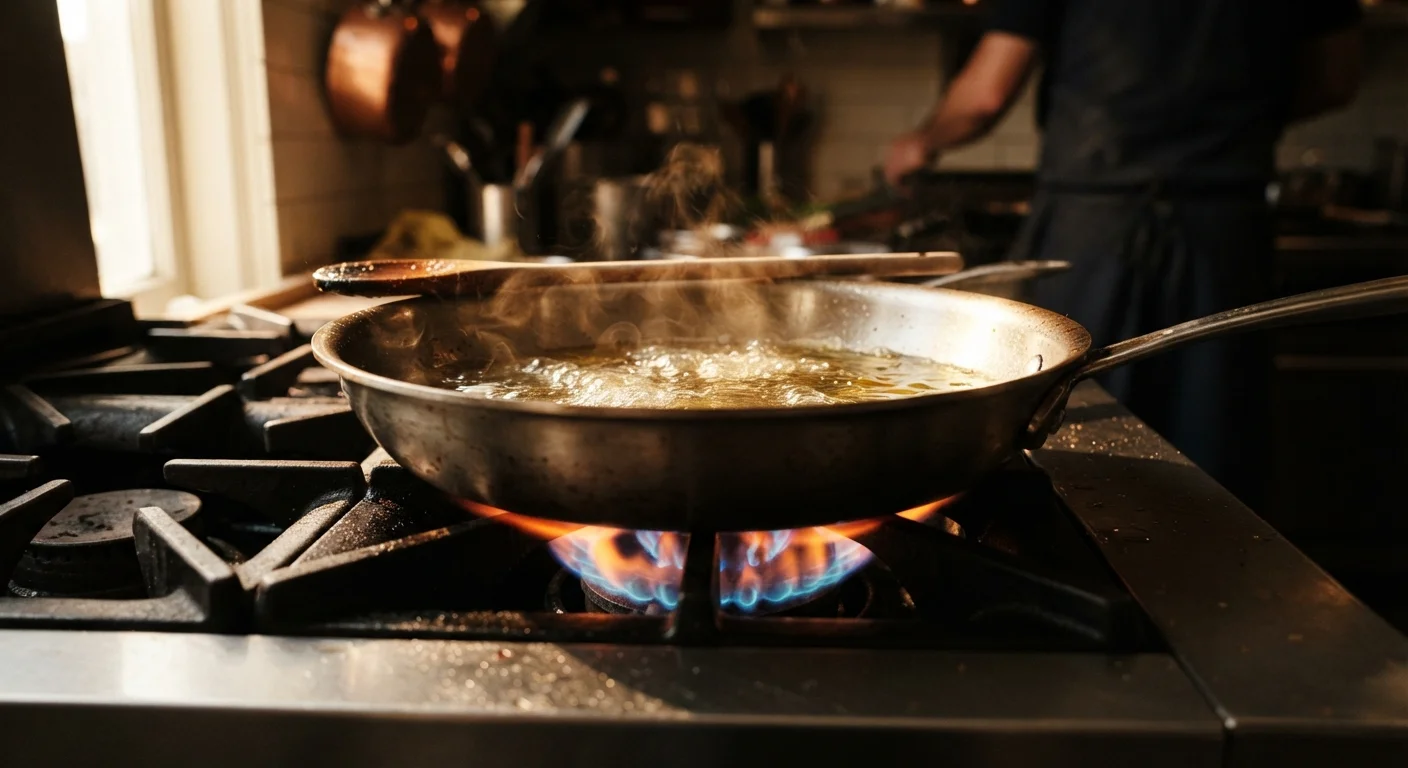
Place your pan over medium to medium-low heat and allow it to warm for about 60 seconds before adding fat. Add enough oil or butter to coat the bottom - typically 1 to 2 tablespoons for a standard skillet. Fat is not optional here: it is the medium through which aromatic flavor compounds dissolve and spread throughout the dish. When the fat shimmers (for oil) or melts and begins to foam (for butter), you're ready to add aromatics. For a deeper understanding of what different heat levels actually do to food, see why pan temperature matters more than the recipe admits.
Add onions first and cook until softened
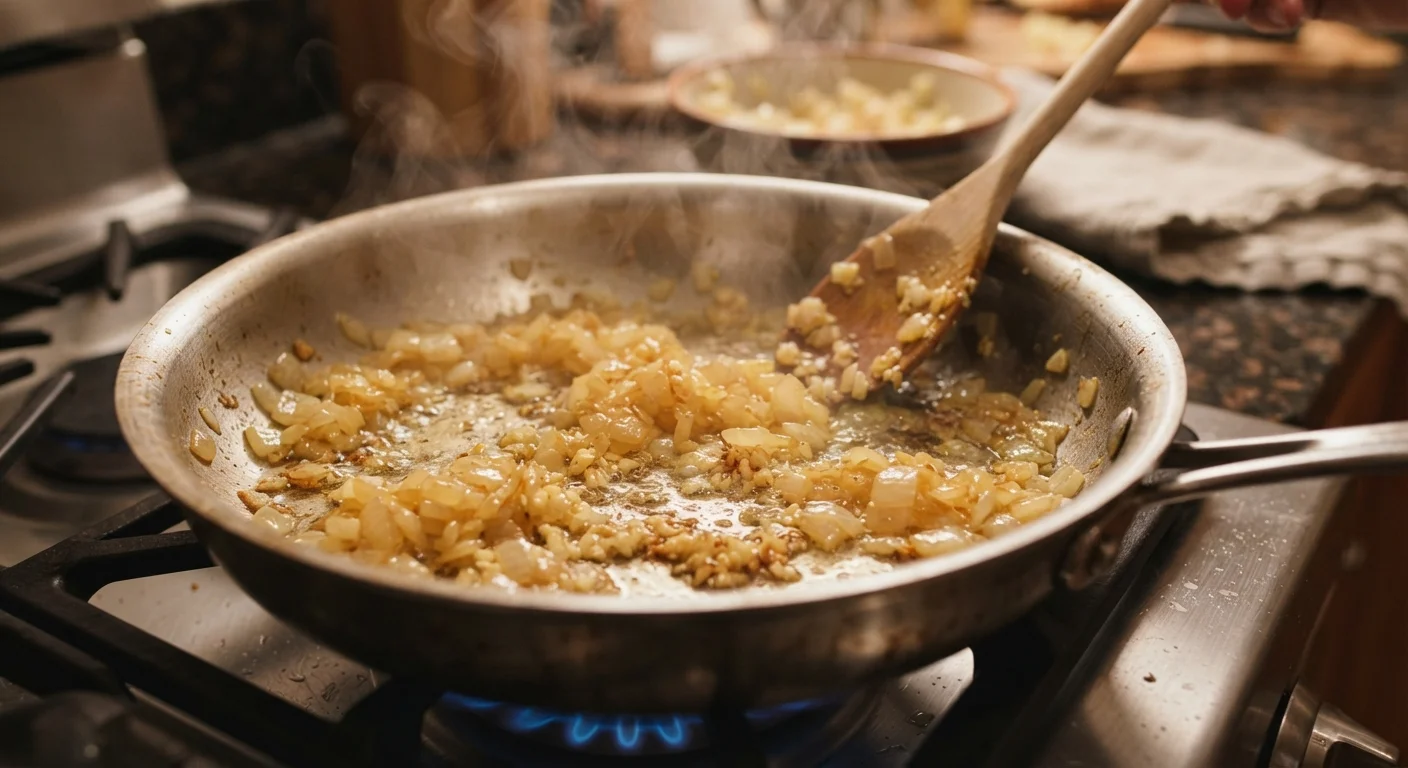
Add your diced onion to the pan and stir immediately to coat each piece with fat. Cook over medium-low heat, stirring every minute or two. After 5-8 minutes, the onion should turn translucent - that milky, slightly glassy appearance signals that the sharp, pungent sulfur compounds have cooked off and natural sugars are beginning to emerge. The onion will also shrink significantly in volume. This soft, sweet onion base is what most soups, stews, sauces, and braises are built on.
Add garlic and other fast-cooking aromatics
Once your onions are softened and translucent, push them to the edges of the pan and add your minced garlic to the center. Garlic contains more concentrated sugars and burns much faster than onion - this is why it goes in second. Stir constantly for 30-60 seconds. When you can smell a rich, nutty aroma and the garlic has turned just barely golden at the edges, it's done. At this point, add any other fast-cooking aromatics: fresh herbs with delicate stems like thyme, red pepper flakes, or ground spices. Toasting spices briefly in fat blooms their essential oils and dramatically deepens flavor.
Deglaze or build on the base immediately
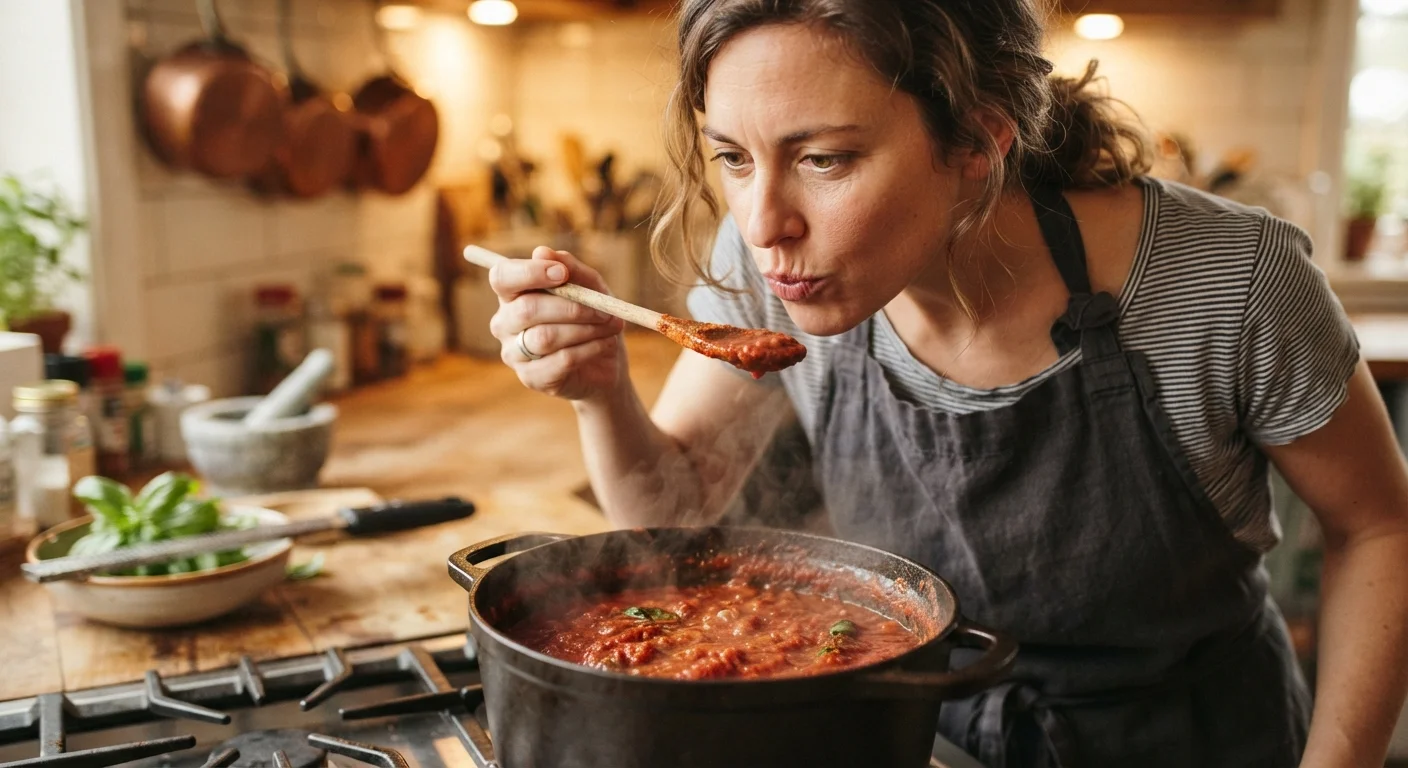
Your aromatic base is ready the moment garlic is golden and fragrant. This is the precise window to add your next ingredient - whether that's a splash of wine, stock, crushed tomatoes, coconut milk, or whatever your recipe calls for. Adding liquid now halts the cooking, lifts any flavorful browned bits from the pan bottom (called fond), and integrates the aromatic layer into the larger dish. Waiting too long after the garlic turns golden risks a burnt base that can make the entire dish taste bitter and acrid. Tasting as you cook from this point forward will help you track how the flavors develop.
Caramelized Onions: A Different Goal
If a recipe calls for caramelized onions, that's a longer process - 30 to 45 minutes over low heat - that produces a deep amber color and intensely sweet, jammy result. This is distinct from simply softening onions for a flavor base. Don't confuse the two: recipes that say 'cook until soft' mean translucent, not caramelized.
Burnt Garlic Cannot Be Fixed
Garlic goes from golden to burnt in under 30 seconds on a hot pan. Burnt garlic turns harsh and bitter, and that flavor will carry through the entire dish. If you burn it, the safest move is to wipe the pan clean and start the garlic step over rather than continue cooking on top of a bitter base.
Once the aromatic base is complete and you've built your dish, understanding how different salts behave will help you season confidently at each subsequent stage without overshooting.