
Why Kitchen Myths Stick Around
Cooking lore travels fast - from grandmothers to cooking shows to food blogs - and once a technique sounds logical, it becomes gospel. The problem is that many widely repeated kitchen rules were never tested against evidence. They just feel right. For a beginner cook, that creates a particular kind of doubt: you follow the rule, the dish doesn't turn out perfectly, and you assume you did something wrong.
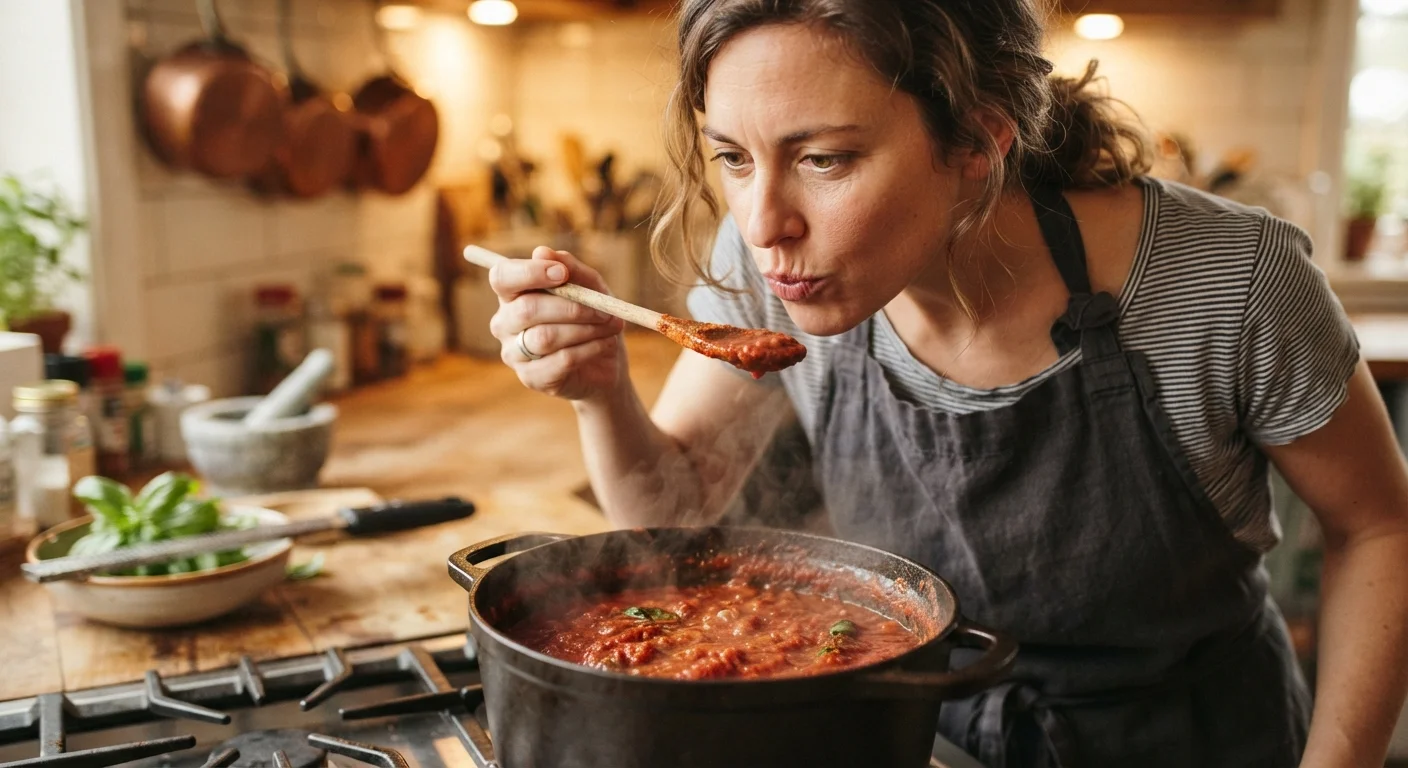
Most of the time, the rule was wrong to begin with. Understanding what's actually happening in the pan helps you cook more confidently and fix problems instead of repeating them. For more on building that foundational instinct, see tasting as you cook - one of the most underrated habits in a home kitchen.
Myth
Searing meat seals in the juices, keeping it moist.
Fact
Searing does not create a moisture barrier. Meat continues to lose liquid after searing just as it would otherwise.
The "sealing" idea has been around for over a century, but food scientists have consistently shown it doesn't hold up. What searing actually does is trigger the Maillard reaction - a chemical process between amino acids and sugars that creates hundreds of new flavor compounds and a deeply browned crust. That's worth doing, but for flavor reasons, not moisture retention. A poorly cooked steak can still come out dry regardless of whether it was seared. For more on what actually causes dry meat, see why home-cooked chicken turns out dry.
Myth
You should never wash mushrooms - they'll soak up water like a sponge.
Fact
Mushrooms absorb only a tiny amount of water during a quick rinse, and it evaporates rapidly during cooking.
Food writers have tested this directly: mushrooms rinsed briefly and patted dry absorb only a few percentage points more moisture than dry-wiped ones. That trace water disappears within seconds in a hot pan. The real enemy of a good sauté is overcrowding the pan, which traps steam and causes mushrooms to stew rather than brown. A quick rinse is perfectly fine - just dry them well and give them space in the pan.
Myth
Adding oil to pasta water prevents the noodles from sticking together.
Fact
Oil floats on water and coats cooked pasta, which actually prevents sauce from adhering properly.
Oil and water don't mix. Any oil you add sits on the surface of the boiling water and, once you drain your pasta, coats the noodles in a thin slick. That slick repels the sauce you're trying to get to stick. The correct approach: use plenty of water, stir the pasta during the first couple of minutes of cooking (when starch is releasing and noodles are most likely to clump), and toss the drained pasta with your sauce immediately.
Myth
Alcohol always fully cooks off when you add wine or spirits to a dish.
Fact
Significant amounts of alcohol can remain in a dish even after extended cooking, depending on method and time.
Research by the U.S. Department of Agriculture found that a dish flambéed and immediately served retains roughly 75% of its original alcohol. Even after 15 minutes of simmering, around 40% may remain. Full evaporation requires prolonged cooking - typically over two hours of uncovered simmering. For most weeknight recipes that call for a splash of wine or beer, a meaningful amount of alcohol stays in the dish. This matters most when cooking for children, pregnant individuals, or people who avoid alcohol for health or religious reasons. When in doubt, consider an alcohol-free substitute.
Myth
You should rinse cooked pasta under cold water to stop the cooking.
Fact
Rinsing strips the starch coating that helps sauce cling to pasta, resulting in a slippery, poorly sauced dish.
The starchy surface of freshly drained pasta is a feature, not a flaw. That starchy film is what allows sauce to grip and coat the noodles evenly. Rinsing with cold water removes it, leaving you with clean but sauce-resistant pasta. The correct way to stop cooking is simply to drain the pasta when it's al dente (with a slight bite) and immediately toss it with your sauce. The residual heat will finish it gently, and the starch helps everything come together.
Myth
Letting meat rest after cooking is optional - it's just about temperature.
Fact
Resting allows muscle fibers to relax and reabsorb juices that migrated to the center during cooking, genuinely improving moisture.
During cooking, heat causes muscle proteins to contract and push moisture toward the cooler center of the meat. If you cut it immediately, that pooled liquid runs out onto the cutting board. Resting for a few minutes - roughly five minutes for a chicken breast, up to fifteen for a large roast - gives the fibers time to relax and redistribute that moisture throughout the cut. The result is a noticeably juicier slice. This is one kitchen rule that actually earns its reputation.
What These Corrections Mean in Practice
Debunking a myth is only useful if it changes how you cook. The core insight connecting all of these corrections is the same: trust process over folklore. Searing builds flavor, not a moisture barrier - so sear because it tastes better, not because you're "locking in" anything. Rest your meat not out of superstition, but because the temperature redistribution is real and measurable.
~75%
Alcohol retained after flambéing
According to USDA research, a dish flambéed and served immediately retains approximately 75% of its original alcohol content.
2+ hours
Time needed to fully cook off alcohol
USDA data suggests uncovered simmering for more than two hours is required to reduce alcohol content to negligible levels.
Understanding doneness is another area where myth and reality diverge sharply. Color and timing alone are unreliable - a chicken breast can look done and still be underdone at the center. For a practical guide to reading doneness across different proteins and vegetables, see how to tell when food is actually cooked through.
Heat management sits underneath almost all of these myths too. Many cooks compensate for a pan that's too cool or too hot by applying a rule that doesn't actually address the problem. Pan temperature matters more than most recipes admit, and once you understand it, a lot of the guesswork disappears. If you want to keep building from the ground up, reading a recipe before you start is a great companion habit to develop alongside these corrections.
Don't Rely on Color Alone for Food Safety
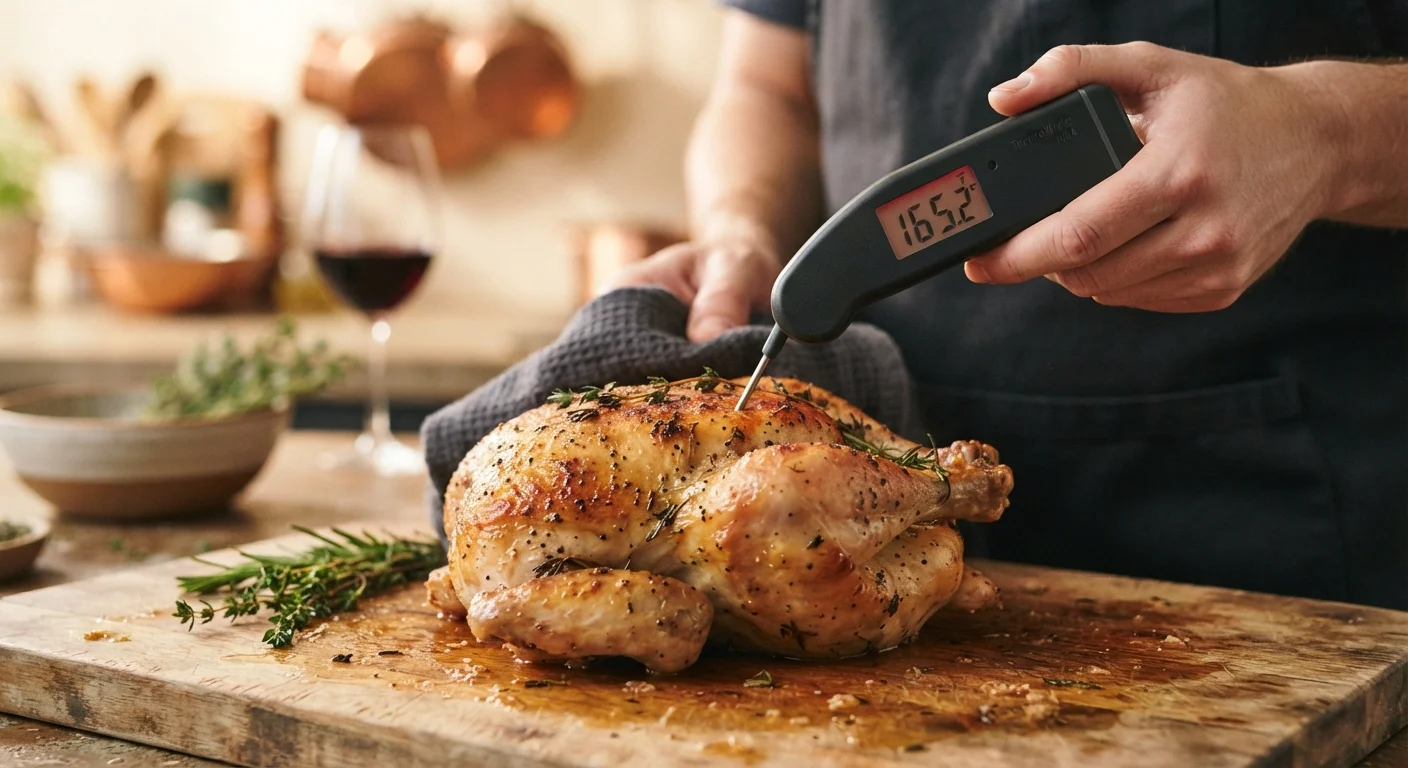
Several cooking myths lead beginners to judge doneness by appearance - golden-brown crust, clear juices, or a certain color of meat. None of these are reliable indicators of safe internal temperature. A meat thermometer is the only dependable tool for confirming that poultry, pork, and ground meats have reached food-safe temperatures. The USDA recommends 165°F for poultry and 160°F for ground beef.