Why Companion Planting Gets Complicated
Companion planting - the practice of growing different plants in close proximity for mutual benefit - has been a part of agriculture for centuries. The appeal is obvious: if the right plant neighbors can suppress pests, fix nitrogen, or improve flavor, why wouldn't every gardener do it?
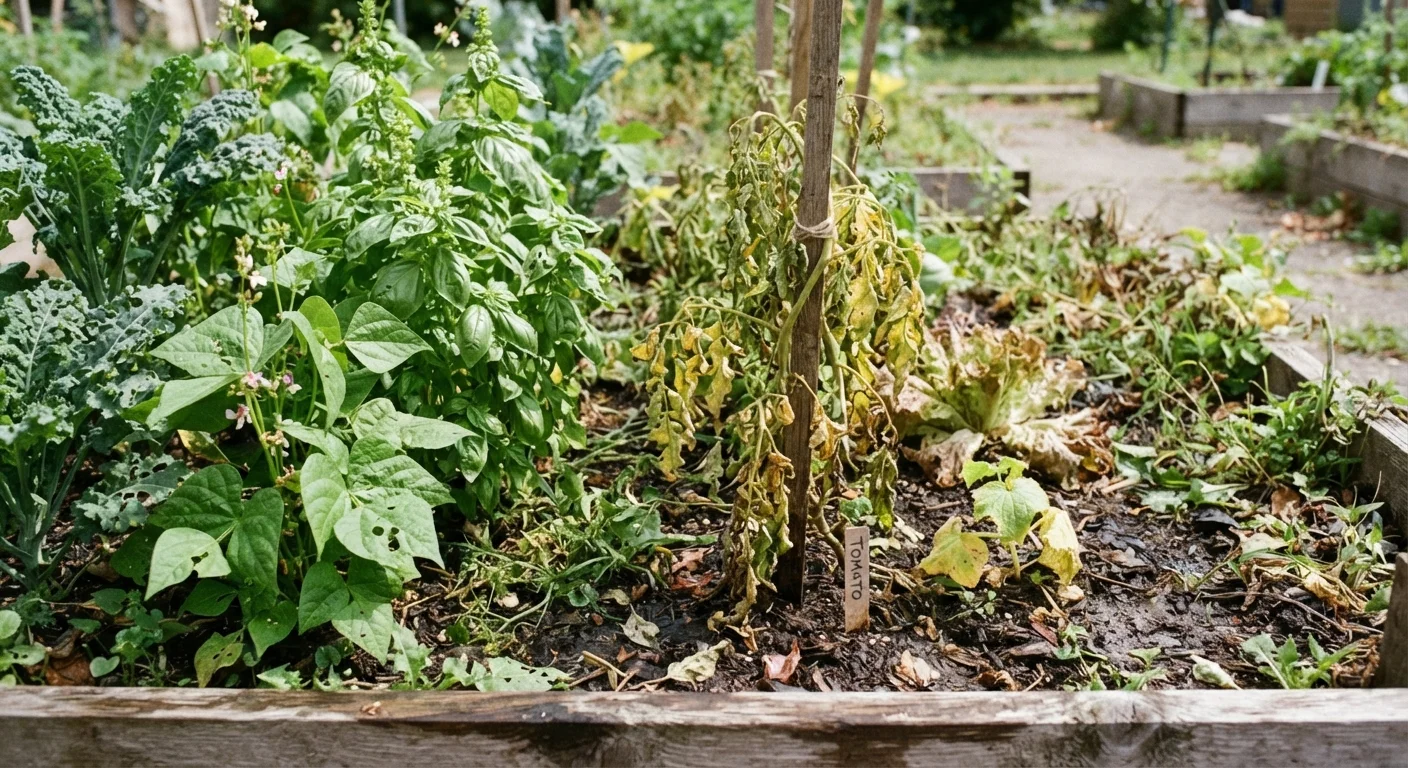
The problem is that garden lore moves faster than controlled research. Many widely repeated pairings have thin or no scientific backing, while a handful of combinations have been studied closely enough to be genuinely useful. Knowing the difference helps you make planting decisions based on evidence rather than tradition.
If you're building your garden from the ground up, our beginner's growing guide covers the foundational steps before you start thinking about what grows next to what.
Myth
Planting basil next to tomatoes improves the tomatoes' flavor.
Fact
There is no reliable scientific evidence that basil alters the flavor of neighboring tomatoes.
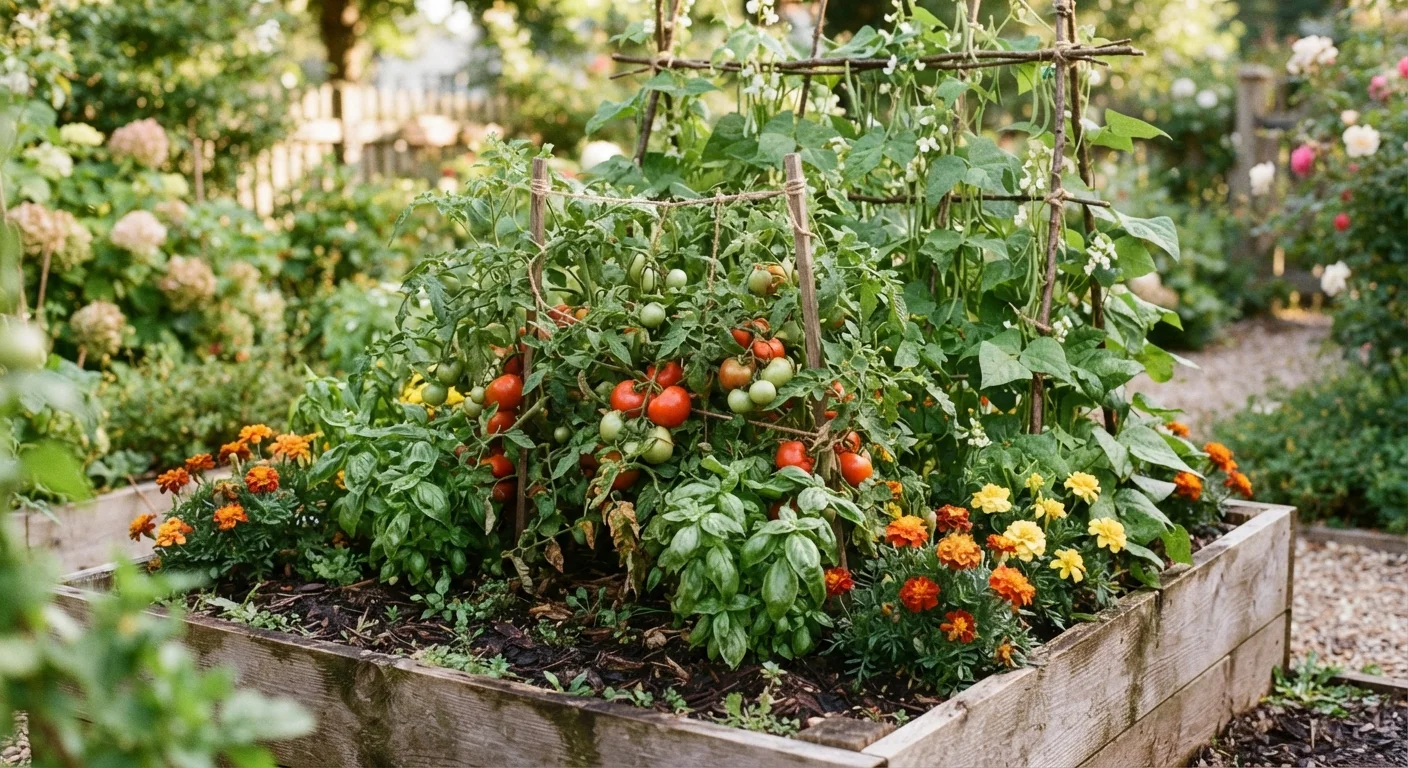
This is one of the most repeated claims in companion planting, but controlled studies have not demonstrated a flavor-transfer mechanism between the two plants. Basil does not release volatile compounds through roots or foliage at levels shown to affect tomato chemistry. The two plants do share similar growing conditions - warm temperatures, full sun, consistent moisture - so they're practical neighbors, but the flavor benefit is not supported by evidence. Grow them together for convenience, not chemistry.
Myth
Marigolds planted anywhere in the garden will repel most pests.
Fact
Marigolds can deter specific soil-dwelling nematodes when densely planted, but their general pest-repelling reputation is largely overstated.
The nematode-suppressing effect of French marigolds (Tagetes patula) is the one area with genuine research backing - but it requires dense planting across a large area and takes time to build up, typically across a full growing season. The idea that a border of marigolds creates a pest-repelling force field around a vegetable bed is not supported. Marigolds do attract pollinators and some beneficial insects, which is a real and worthwhile reason to include them. But if pest pressure is your main concern, row covers and physical barriers offer more consistent results.
Myth
Herbs like rosemary and mint confuse pests and protect nearby vegetables.
Fact
Strong-scented herbs may have some masking effect in very close proximity, but the evidence is inconsistent and effect sizes are typically small.
The theory that aromatic herbs mask host-plant scents from pests is plausible in principle - some studies have found modest effects in controlled settings - but replication across different gardens, climates, and pest species has been unreliable. Mint in particular spreads aggressively and can itself become a weed problem if planted directly in a bed. If you're growing herbs for culinary use, there's no harm in placing them near vegetables, but counting on them as a pest-management strategy is likely to disappoint. Note that mint is best grown in containers to contain its spread.
Myth
Companion planting can replace the need for crop rotation.
Fact
Companion planting and crop rotation address different problems and should be used together, not as substitutes for each other.
Crop rotation breaks pest and disease cycles that build up in soil over successive seasons - a benefit that companion planting cannot replicate. A companion plant cannot prevent the fungal diseases or soil-borne pathogens that accumulate when the same plant family is grown in the same spot year after year. Companion planting can complement a rotation plan by supporting soil health or attracting beneficial insects, but it does not replace the need to move plant families around the garden each season. If you're planning a new garden, build rotation into your layout from the start.
Myth
All plants benefit from having companions - the more diverse the bed, the better.
Fact
Some plants are genuinely allelopathic - they release compounds that suppress the growth of neighboring plants.
Allelopathy, the chemical suppression of one plant by another, is a documented phenomenon. Black walnut trees produce juglone, a compound toxic to many plants including tomatoes and peppers. Fennel is another commonly cited example - it tends to inhibit the germination or growth of several vegetables and herbs when planted in close proximity. More diversity in a planting bed can support pollinators and soil biology, but plant selection still matters. Research which plants are known to be allelopathic before assuming all combinations are neutral or beneficial.
What the Evidence Actually Supports
The most credible companion planting effects fall into a few clear categories: nitrogen fixation, physical structure, and habitat for beneficial insects.
Nitrogen fixation is the most well-established benefit. Legumes - beans, peas, clover - host bacteria in their root nodules that convert atmospheric nitrogen into a form plants can use. Intercropping legumes with heavy-feeding vegetables is a legitimate, research-supported practice that can reduce synthetic fertilizer needs over time.
Physical structure is equally real. In the Three Sisters system, corn provides a vertical pole for beans, squash leaves shade the soil to reduce moisture loss, and beans fix nitrogen. This is a functional system backed by both agricultural research and centuries of Indigenous practice in North America.
Habitat for beneficial insects is another documented benefit. Planting nectar-rich flowers like borage, phacelia, or alyssum near vegetables attracts predatory and parasitic insects that prey on common garden pests. This works through habitat provision, not chemical deterrence. For gardens where biodiversity matters, pairing flowering plants alongside edibles is a sound strategy - and it connects naturally to the case for native plants that support local insect populations.
25-50%
Yield increase from Three Sisters intercropping
Agricultural research on traditional Three Sisters polyculture has found land equivalent ratio advantages of 25-50% compared to monoculture plots in some studies.
1 full season
Time needed for marigold nematode suppression
Research on French marigolds as a nematode-suppressing cover crop typically requires dense planting maintained for an entire growing season to reduce nematode populations meaningfully.
Struggling yields often trace back to basics rather than planting combinations. Before relying on companion effects, it's worth reviewing our guide on why vegetable gardens underperform to rule out the most common fixable problems.
Mint Will Take Over Your Garden Bed
Mint is often recommended as a companion plant for its scent, but it spreads via underground runners and can quickly crowd out neighboring plants if planted directly in the ground. Always grow mint in a buried container or pot to limit its spread. This applies in raised beds too - an uncontained mint plant can dominate an entire bed within a single season.