Why Organization Jargon Can Get in the Way
Home organization advice is everywhere - but it often assumes you already know what terms like decanting, negative space, or zones actually mean. When the vocabulary is unclear, even practical guidance can feel inaccessible. This reference breaks down the most commonly used organization terms in plain language, so you can apply the ideas rather than puzzle over the words.
Whether you're starting fresh or refining an existing system, understanding these concepts gives you a shared vocabulary with guides, organizers, and how-to resources. For a deeper look at how some of these ideas work in practice, see our Zone Method guide.
Decanting
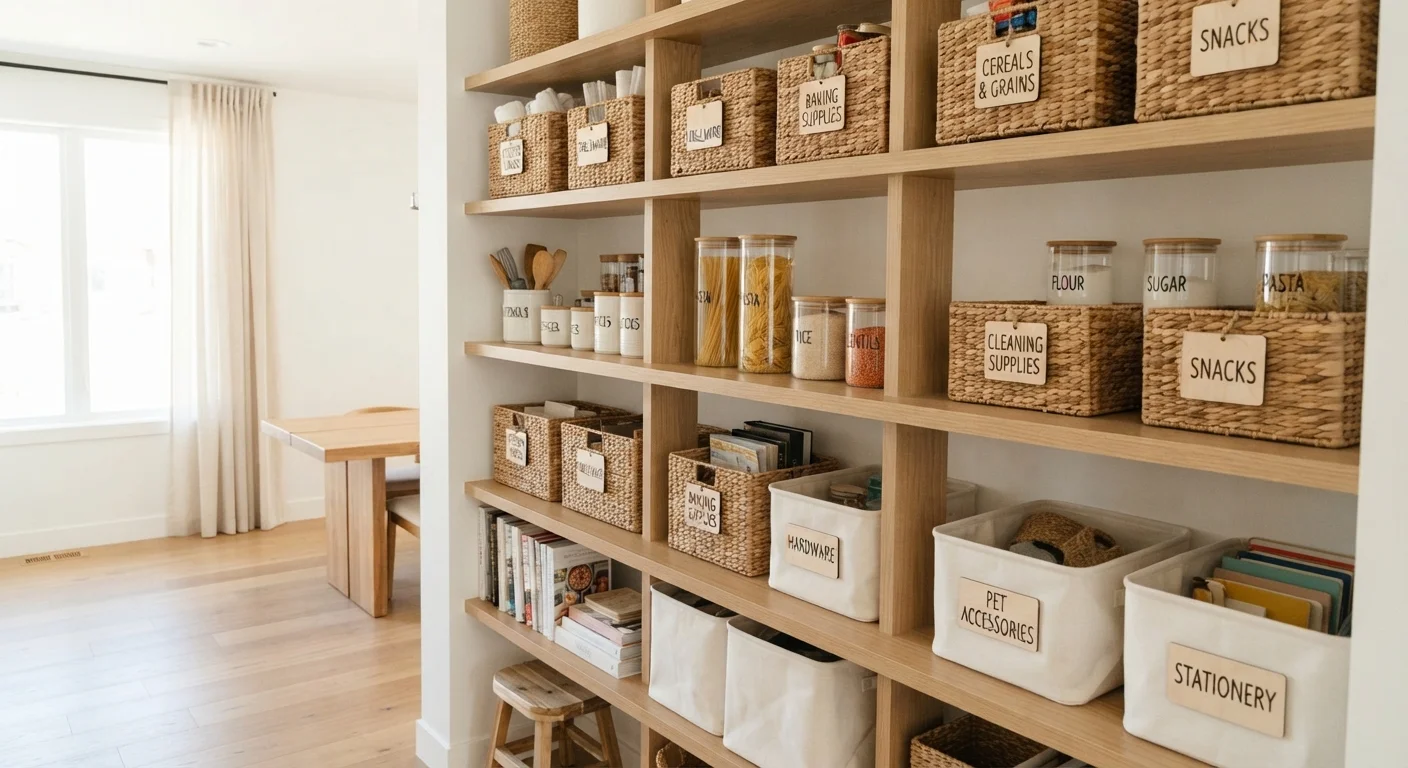
Transferring products from their original packaging into uniform, often transparent containers. Common with pantry staples like grains, pasta, or snacks. The goal is visual consistency and easier inventory tracking, though it requires time to maintain.
Negative space
Intentional empty area left in a drawer, shelf, or cabinet. Far from wasted room, negative space makes it easier to see and access what's there, and prevents clutter from creeping back in.
Zone
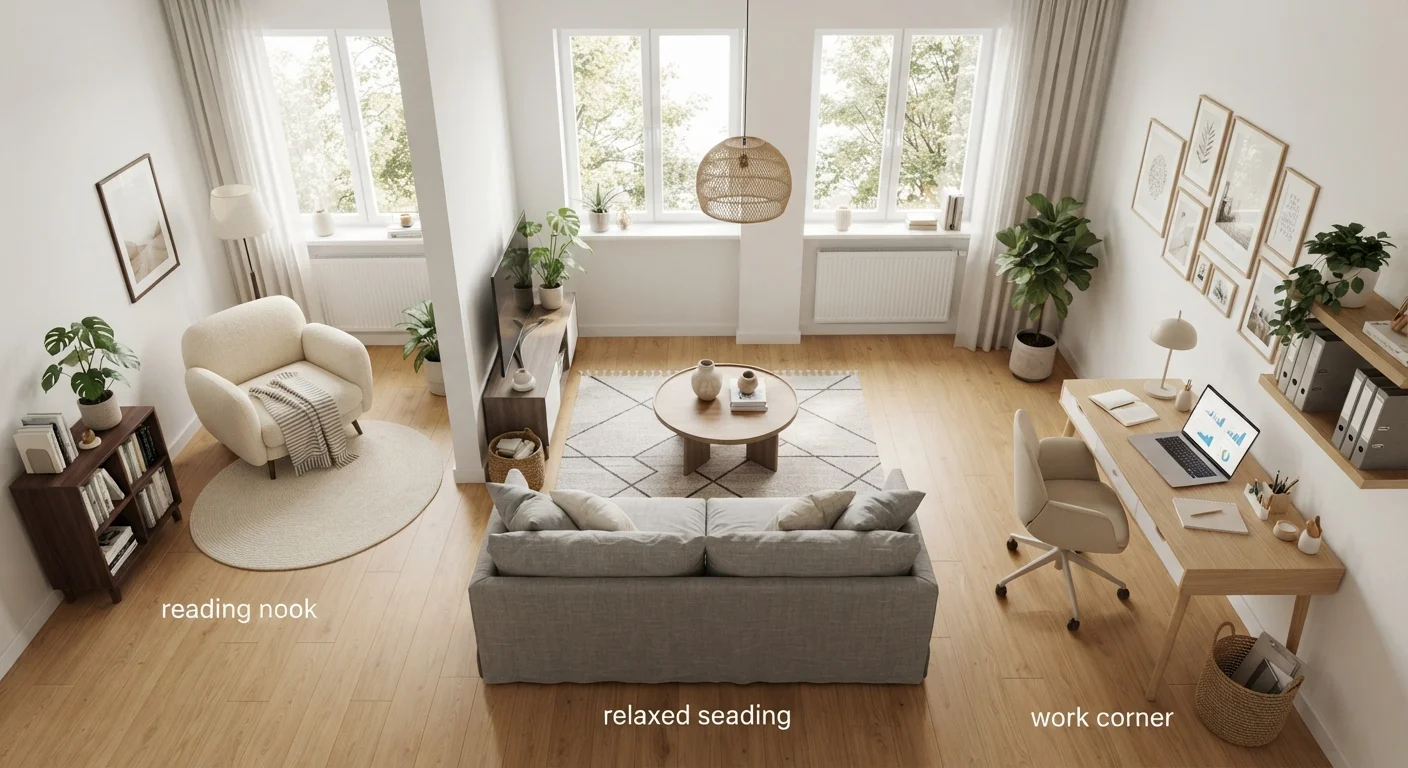
A designated area of the home - or a section within a room - dedicated to a specific activity or category of items. Zones reduce friction by keeping everything needed for a task in one place.
One-in, one-out rule
A maintenance habit where any new item brought into the home is matched by removing one existing item. It's a simple guardrail against gradual accumulation.
Containerizing
Assigning physical boundaries to categories of items using bins, baskets, boxes, or drawer dividers. The container itself defines the limit - when it's full, it signals time to edit rather than expand storage.
Prime real estate
Storage locations that are easiest to reach - eye-level shelves, front-of-drawer positions, and frequently opened cabinets. Items used most often should occupy prime real estate; rarely used things belong in harder-to-access spots.
Like with like
The principle of grouping similar items together regardless of where they're stored. All batteries go together, all tape in one spot, all first-aid supplies in one container - reducing the time spent searching.
Touch it once
A habit-based rule suggesting that when you pick something up, you put it directly in its correct place rather than setting it down temporarily. Reduces the pile-up that happens when items get 'parked' in transit.
Editing
The process of reviewing a category of belongings and removing items that are unused, duplicated, broken, or no longer relevant to your life. Often used in place of 'decluttering' to convey a more deliberate, ongoing practice.
Catch-all zone
A single, designated spot - often near an entryway - where miscellaneous items can land temporarily. A functional catch-all has a regular clear-out schedule so it doesn't become permanent storage.
Visual noise
The mental clutter created by too many items, colors, or labels competing for attention in one space. Reducing visual noise - through consistent container colors or closed storage - can make a space feel calmer and easier to navigate.
Dead space
Storage areas that exist in the home but are rarely used or difficult to access - high shelves, under-bed areas, or deep cabinet corners. Good organization systems find ways to make dead space functional.
Key Concepts at a Glance
The terms below appear across nearly every style of home organization - from minimalist approaches to family-friendly systems. Knowing what each one means helps you evaluate which methods suit your actual space and lifestyle.
| Most misunderstood term | Decanting - often confused with a purely aesthetic choice, it also aids inventory management |
| Organizing principle that costs nothing | Like with like - pure habit change, no products needed |
| Most impactful small shift | Assigning prime real estate to daily-use items reduces time spent searching |
| Common maintenance rule | One-in, one-out - prevents accumulation from undoing organized systems |
| Term that reframes clutter | Visual noise - helps people recognize the mental impact of overcrowded spaces |
| Often overlooked storage | Dead space - high shelves, under-bed areas, deep cabinet corners |
If your challenge is knowing where to begin rather than what terms mean, our decluttering from scratch guide walks through building momentum step by step. And if multiple people share your space, organizing a shared household addresses how to create systems everyone can maintain.
These Terms Describe Principles, Not Products
Many organization terms originated in professional organizing or interior design, but the underlying ideas apply to any budget and any home size. You don't need matching containers or specific systems to use concepts like negative space or like with like - a repurposed shoebox and a clear habit work just as well. Focus on the principle, not the packaging.