
Why Starting Feels So Hard
For many people, the hardest part of decluttering is not the work itself - it is knowing where to begin. When a home has accumulated years of possessions, every room can feel equally overwhelming, and the sheer scale of the task creates a kind of paralysis.
Two things make this harder: decision fatigue and emotional attachment. Every item requires a choice, and some items carry memories, guilt, or sentimental weight that makes those choices genuinely difficult. Recognizing this upfront - rather than treating it as a personal failure - helps you approach decluttering with realistic expectations.
Decision fatigue
The mental exhaustion that results from making too many choices in a row, which can cause you to delay or avoid decisions about what to keep or discard.
Sorting
The process of categorizing every item in a space - typically into keep, donate, and discard - before doing anything else with it.
Negative space
Empty or clear areas in a room that are intentionally left open, making a space feel less crowded and easier to maintain.
Decanting
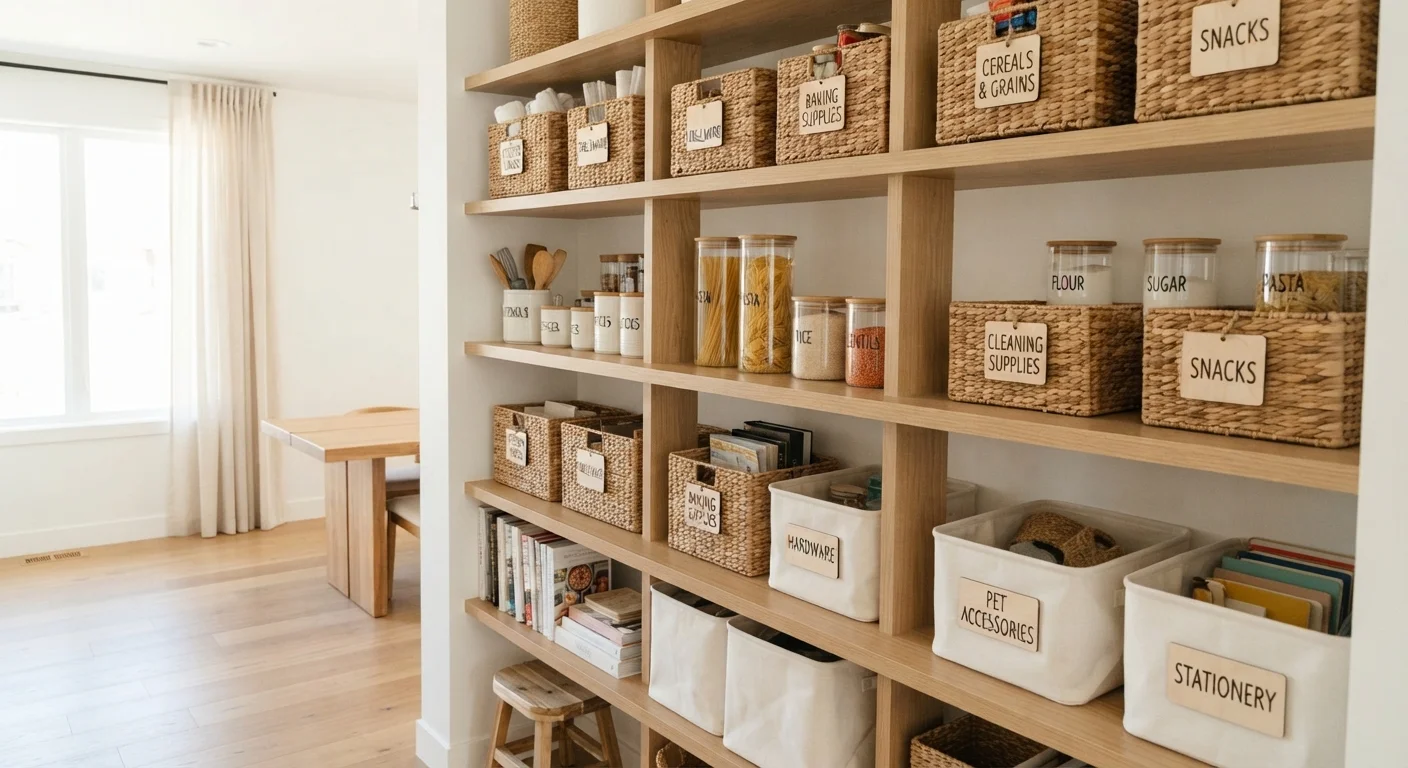
Transferring items out of their original packaging into uniform containers, often used in kitchens or pantries to make storage look consistent and be easier to access.
One-in, one-out rule
A simple household habit where every new item brought into the home is matched by removing one similar item, preventing gradual accumulation.
The good news is that the feeling of being overwhelmed is almost always worse than the reality of doing the work. A single focused 20-minute session in one corner of a room can shift your entire sense of possibility.
The Core Method: Sort Before You Store
The single most important principle for first-time declutterers: sort before you store. Many people skip straight to buying baskets and bins, only to find they have neatly organized clutter rather than reduced it.
Use a simple three-category system for every item you handle:
- Keep - items you use regularly, love, or genuinely need
- Donate/Rehome - items in good condition that someone else could use
- Discard - broken, expired, or unsalvageable items
A fourth temporary category - Maybe - is useful for items you cannot decide about immediately. Place them in a labeled box with a date. If you have not missed or needed them in 30 to 60 days, they are ready to leave.
Don't Shop for Storage First
Resist the urge to buy bins, baskets, or shelving units before you have finished sorting. It is nearly impossible to know what you need until you know exactly what you are keeping. Shopping after sorting saves money and prevents storage solutions that do not fit your actual belongings.
Once sorting is complete, you will have a much clearer sense of what storage solutions you actually need - and how much space you are working with. For a plain-language breakdown of terms like decanting, negative space, and other organization vocabulary, see the home organization terminology reference.
Where to Begin in Your Home
Do not start in your most cluttered room. Start somewhere small and low-stakes to build confidence. Good entry points include:
- A bathroom cabinet or drawer - easy to sort, quick to finish, and results are immediately visible
- The entryway or mudroom - high-impact because it sets the tone for the whole home
- One kitchen drawer or countertop zone - avoid tackling the whole kitchen at once
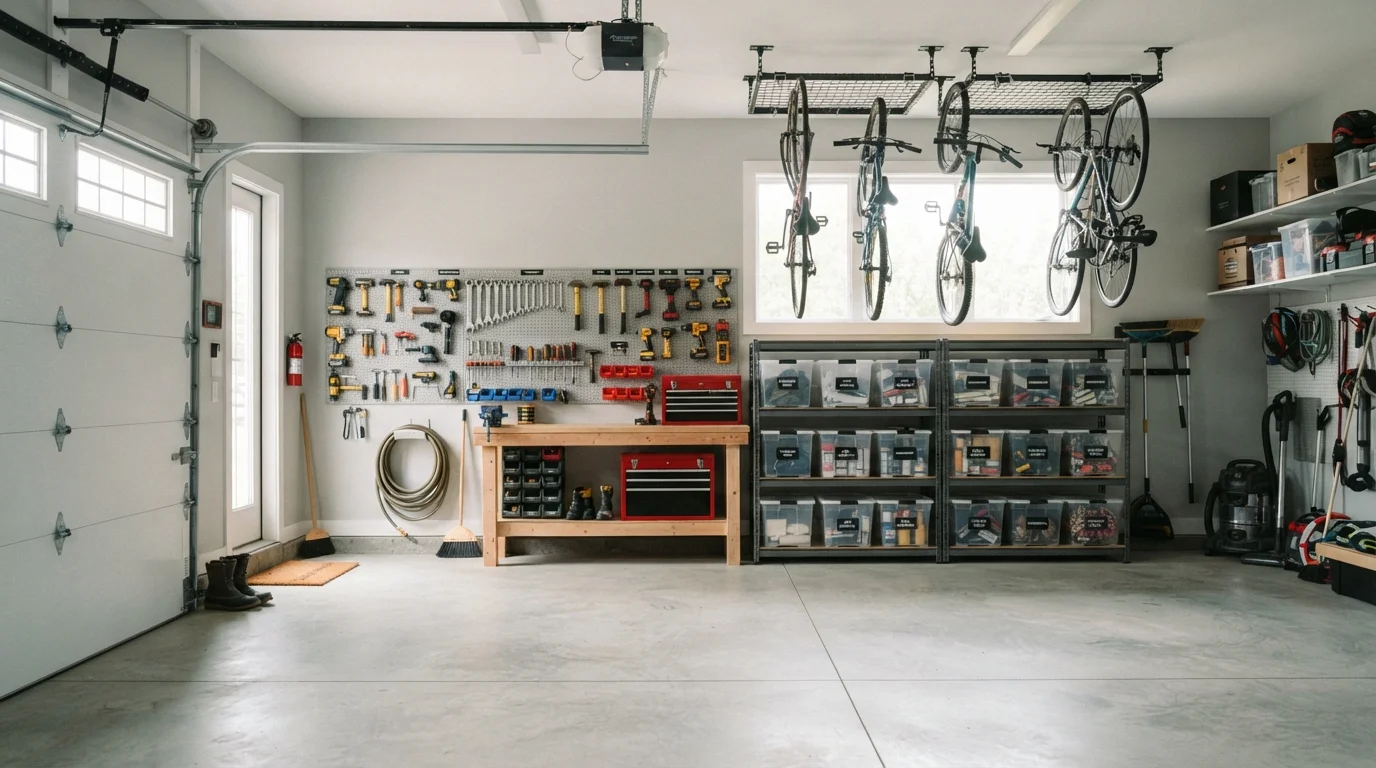
Once you have a few small wins, move to medium-difficulty zones: bedroom closets, bookshelves, or the living room. Save challenging areas - garages, attics, storage units, or sentimental collections - for when you have built real momentum. If the garage is your eventual goal, our garage organization guide walks through exactly how to approach that space.
Paper Clutter Needs Its Own System
Mixing paper sorting into a general declutter session often derails progress. Mail, financial documents, and records require specific decisions about retention periods and filing - topics that go well beyond keep-or-donate. Treat paper as a separate project with its own dedicated time.
Paper is often its own category. Mail, documents, and records accumulate faster than almost anything else and require a separate system. See our guide to managing mail and home documents for a practical starting point.
If you share your home with others who have different standards for tidiness, the process gets more nuanced. The article on organizing a shared household covers how to find common ground that everyone can actually maintain.
Building Habits That Stick
A one-time declutter will not hold unless it is supported by ongoing habits. Clutter accumulates by default - it does not require any effort on your part. Keeping it in check does.
A few practices that consistently help:
- The one-in, one-out rule - when a new item enters the home, one similar item leaves. This prevents gradual accumulation without requiring constant purges. The one-in, one-out guide explains how to apply this and similar household agreements.
- Daily resets - spend five minutes each evening returning items to their designated places before they pile up.
- Seasonal reviews - do a light sort of clothing, gear, and supplies at the change of each season.
Understanding why clutter returns is just as important as the habits themselves. If you find your home sliding back after a big declutter, the article on why clutter comes back identifies the behavioral patterns behind rebound clutter and how to interrupt them.
Decluttering from scratch is not about achieving a magazine-perfect home. It is about creating a space that functions for your real life - and maintaining it with systems simple enough to actually use.