Why Shared Households Struggle With Organization
Organizing a home you share with others is fundamentally different from organizing one you live in alone. The challenge isn't a lack of systems - it's that each person brings a different definition of "clean enough," different rhythms, and different tolerances for visible clutter. A partner who sees dishes in the sink as a minor inconvenience may live with someone who finds it deeply stressful. Neither is objectively wrong, but without a shared framework, small differences compound into recurring arguments.
The goal isn't to impose a single standard on everyone - that rarely holds. Instead, effective shared-household organization focuses on negotiated minimums: the baseline that all residents can agree to maintain, even if some naturally go further. From there, systems succeed or fail based on how frictionless they are to use daily. See our organization myths guide for a look at why overly rigid approaches tend to collapse in real households.
Core Practices for Shared-Space Organization
The following practices have proven durable across households with mismatched habits. They prioritize low-effort maintenance over perfection, and clarity over assumption.
Establish a negotiated minimum standard for shared spaces, not a personal ideal.
When one person's idea of tidy is another's 'obsessive,' enforcing one person's full standard breeds resentment. A negotiated minimum - agreed upon by everyone - is far more sustainable because it's owned collectively rather than imposed. It also sets a clear, observable bar that removes ambiguity about what 'done' looks like.
Designate personal zones where individuals control their own standards.
Giving each person full ownership of a defined space - a bedroom, a shelf, a bathroom cabinet - eliminates a major source of friction. People are more cooperative about shared spaces when they have somewhere they can relax without judgment. It also prevents the dynamic where one tidy person polices the entire home.
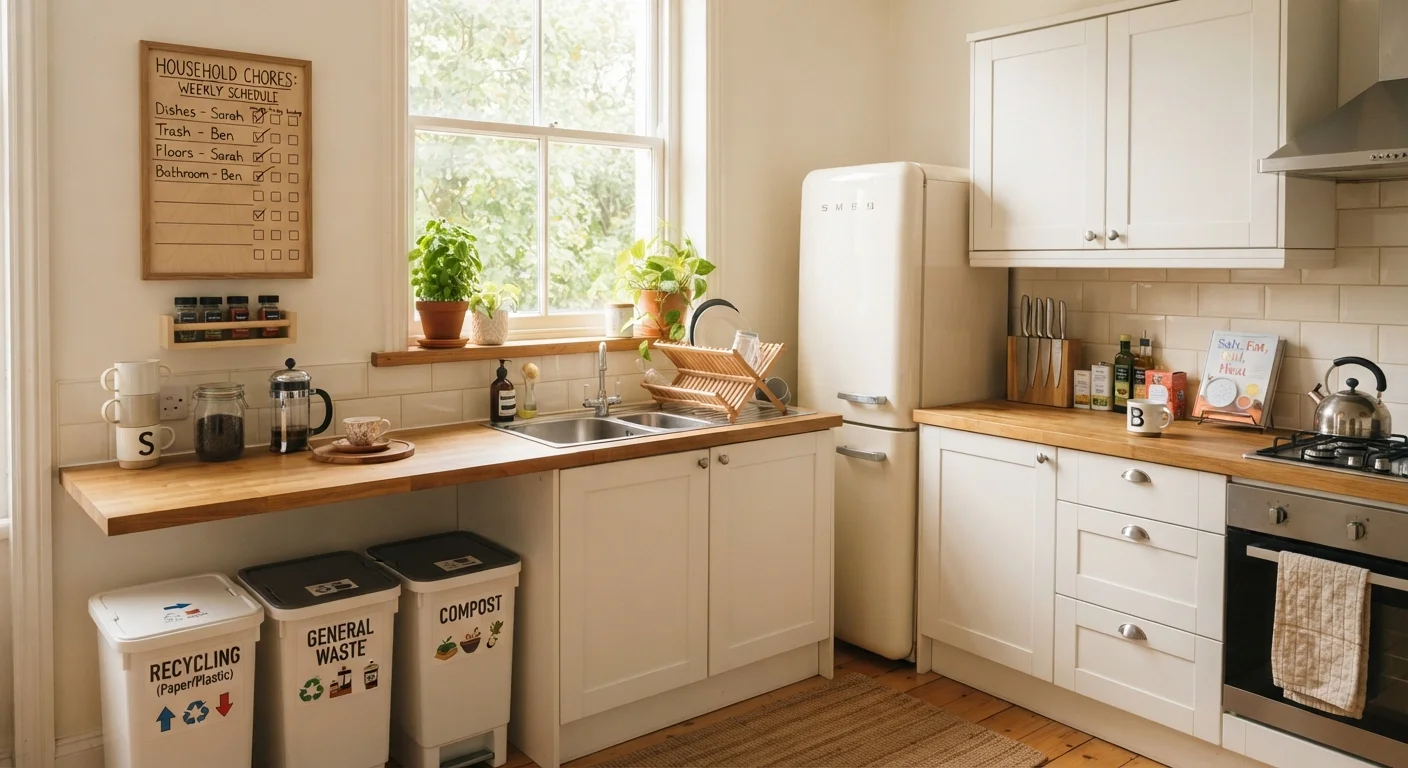
Use rotating task schedules rather than permanent role assignments.
Permanently assigning 'you do the bathroom, I'll do the kitchen' sounds efficient but often leads to imbalance over time - one job is always harder, or one person's schedule changes. Rotating tasks every week or two keeps the distribution fair and prevents the buildup of quiet resentment that erodes household goodwill.
Create visual systems that communicate expectations without requiring conversation.
Verbal reminders - especially repeated ones - feel nagging and damage relationships. Physical systems that make the correct behavior obvious reduce the need to ask. Labeled bins, designated drop spots near the door, and clearly marked shared versus personal shelves do the communicating passively. This is especially useful in households where people operate on different schedules and rarely overlap.
Agree on a 'reset' rhythm that everyone can realistically keep.
Daily resets work for some households; others can only realistically manage a weekly tidy. The right rhythm is the one that actually happens, not the one that sounds ideal. A weekly reset that everyone participates in is more effective than a daily standard that only one person upholds.
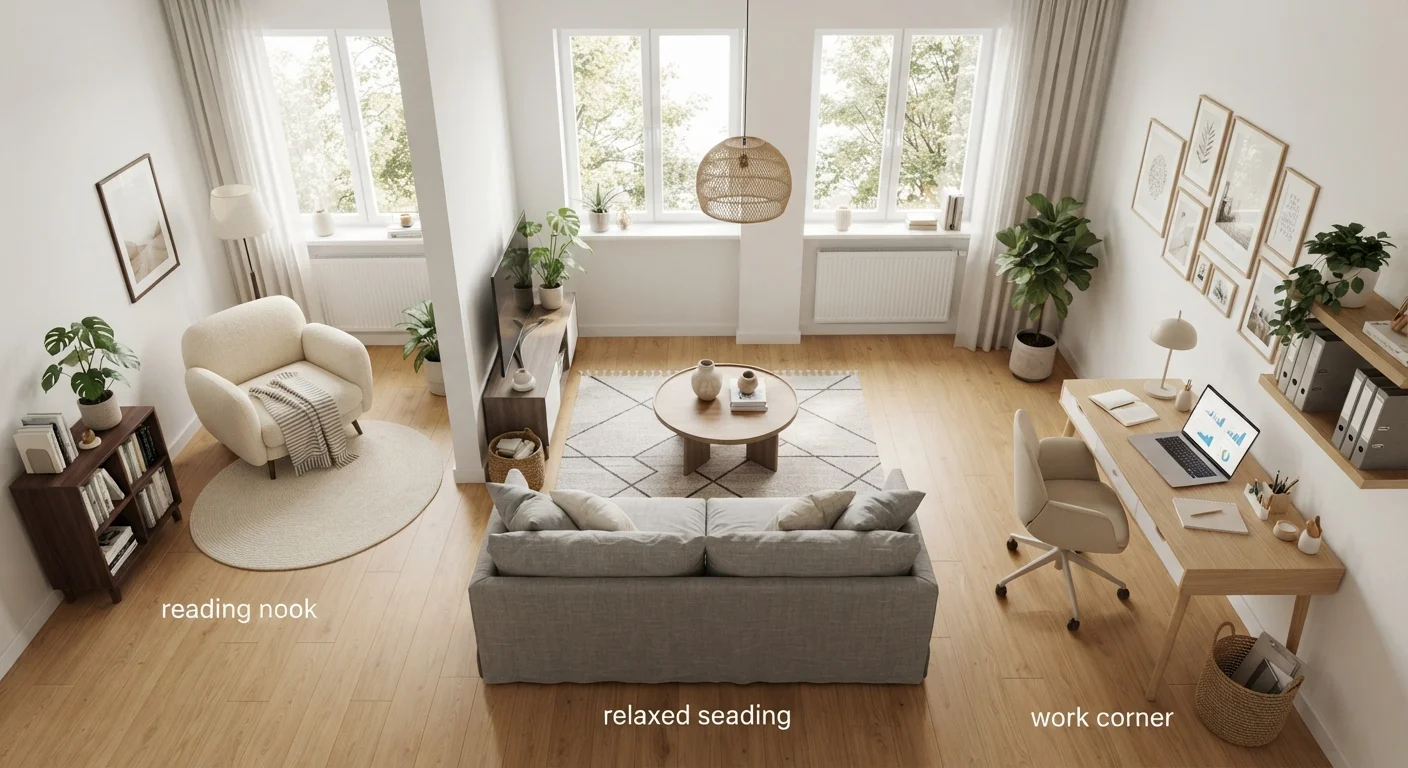
For a complementary approach to structuring shared spaces physically, the zone method offers a room-layout strategy that aligns well with these social systems.
Quick Wins You Can Set Up Today
You don't need a full household meeting to start improving shared organization. These actions create visible, immediate change that often brings skeptical housemates on board.
Once these basics are in place, you can build toward more structure - such as the household rules covered in our one-in, one-out guide - without overwhelming anyone in the process.
Sustaining the System Over Time
Even well-designed systems drift when life gets busy. A brief monthly check-in - 15 minutes over a meal or coffee - keeps the arrangement relevant. Use it to flag what's not working, rotate any assigned tasks, and adjust storage as needs change. Avoid turning these moments into complaint sessions; frame them as simple maintenance, not performance reviews.
When a System Isn't Working, Revisit the Agreement - Not the Person
If a shared system keeps breaking down, the most productive question is usually 'Is this system realistic for how we actually live?' rather than 'Why isn't this person trying harder?' Systems that require significant effort or behavior change rarely stick. Adjusting the system - simplifying it, reducing steps, or changing the reset frequency - is almost always more effective than relying on motivation alone.
Shared finances and shared spaces often intersect. If your household is also navigating joint expenses, our budgeting as a couple guide covers a similarly collaborative approach to financial decisions. You may also want to do a room-by-room audit once your shared agreements are in place, to identify where storage solutions would support the system further.