Why Room Labels Often Work Against You
Most of us organize by room: kitchen stuff goes in the kitchen, bedroom stuff in the bedroom. It sounds logical - until you consider how you actually move through your home. Homework gets done at the kitchen table. Hobbies spread across the living room floor. Medications get taken in the bathroom but stored in the kitchen. The things you need rarely align with the room you're in when you need them.
This mismatch is the root cause of most everyday disorganization. When your home is arranged around room labels rather than activities, you spend significant time retrieving items from elsewhere - and those items rarely get returned to their 'correct' room, because the return trip requires more effort than just leaving things where you used them.
The Zone Method resolves this by flipping the organizing logic. Instead of asking where does this belong by category?, you ask where do I actually use this? That shift changes everything about how storage decisions get made.
Zones Don't Have to Align With Rooms
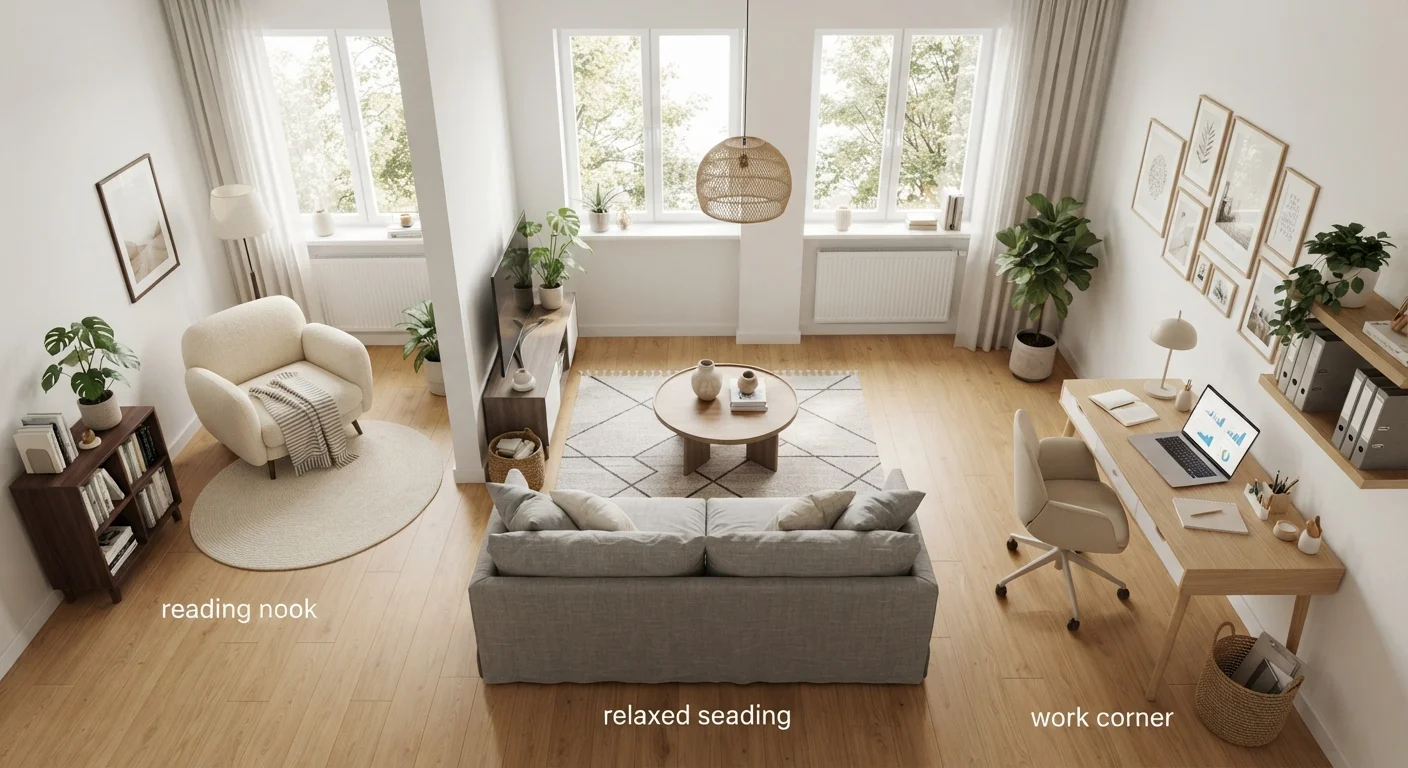
A zone can occupy one shelf in a room, or it can span multiple rooms if the activity naturally moves. A 'craft zone,' for example, might include supplies on a living room shelf and overflow storage in a closet down the hall. What matters is that everything associated with the activity is grouped and accessible - not that it fits neatly inside one room's walls.
How to Identify Your Zones
Defining zones starts with observation, not rearranging. Spend a few days noticing where specific activities actually happen in your home. Where do you pay bills? Open mail? Help kids with schoolwork? Wrap gifts? Charge devices? Do a quick first aid task? The answers may surprise you - and they may conflict entirely with where those supplies are currently stored.
Once you have a list of recurring activities, group them by location. Common zones include:
- Entry/exit zone: Keys, bags, shoes, outerwear, and anything needed on the way in or out
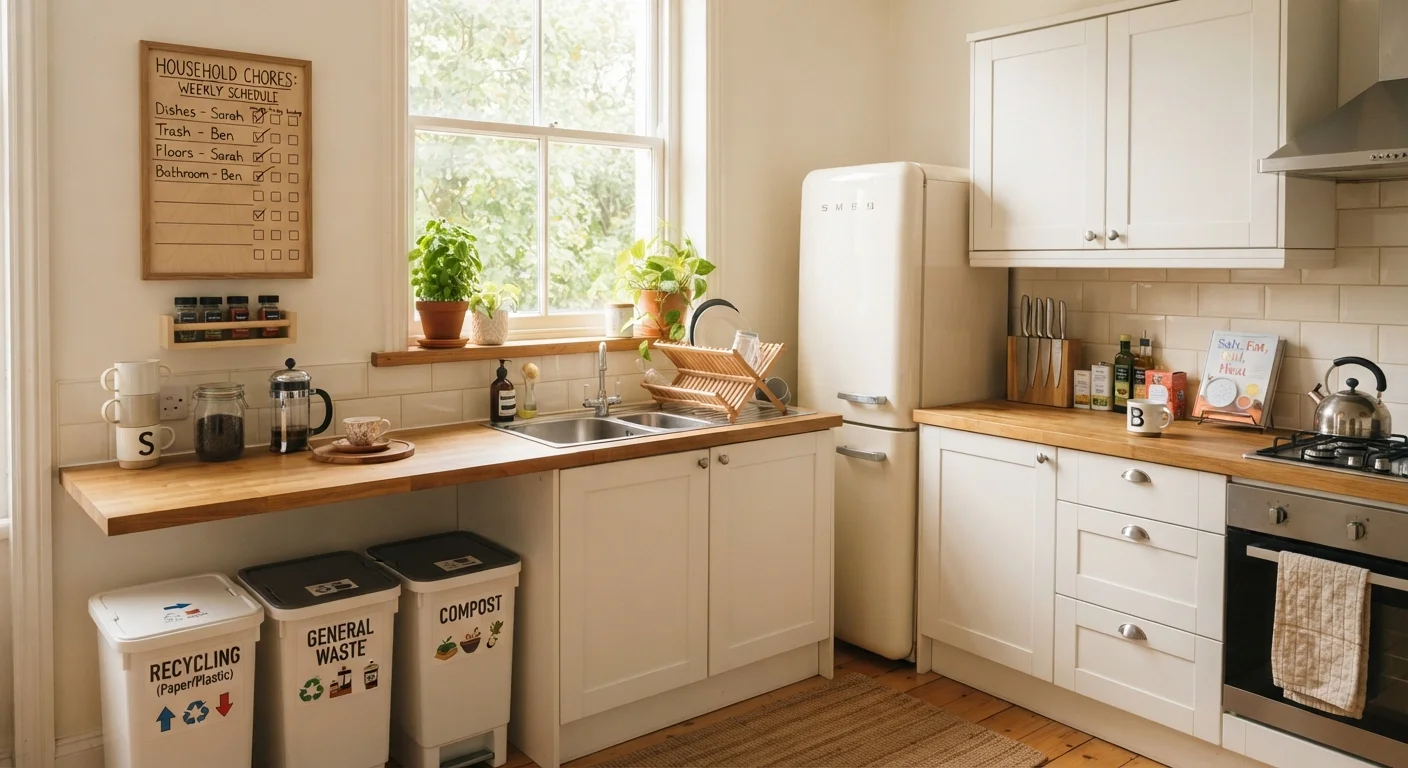
- Meal prep zone: Cooking tools, frequently used pantry items, and prep equipment near the stove
- Paperwork zone: Bills, mail, pens, stamps, and filing - wherever you actually deal with paper
- Charging zone: Devices, cables, and related accessories at a consistent spot
- Homework or work zone: Supplies grouped at the table or desk where work actually happens
- First aid zone: Medications, bandages, and health supplies at the location where you use them
Your zones will look different from this list - and they should. The point is to match your actual behavior, not replicate a suggested template.
Start With One Zone, Not the Whole House
Trying to rezone your entire home at once is a reliable path to burnout. Pick the single area that causes the most daily frustration - usually the entryway or kitchen counter - and build one functioning zone there first. Once that zone holds for a few weeks, move on to the next. Small wins create the momentum that sustains bigger changes.
Setting Up a Zone That Holds
Once you've identified an activity and its natural location, the setup follows three principles:
- Consolidate: Gather everything associated with that activity from wherever it currently lives and bring it to the zone location. This often means pulling items from multiple rooms.
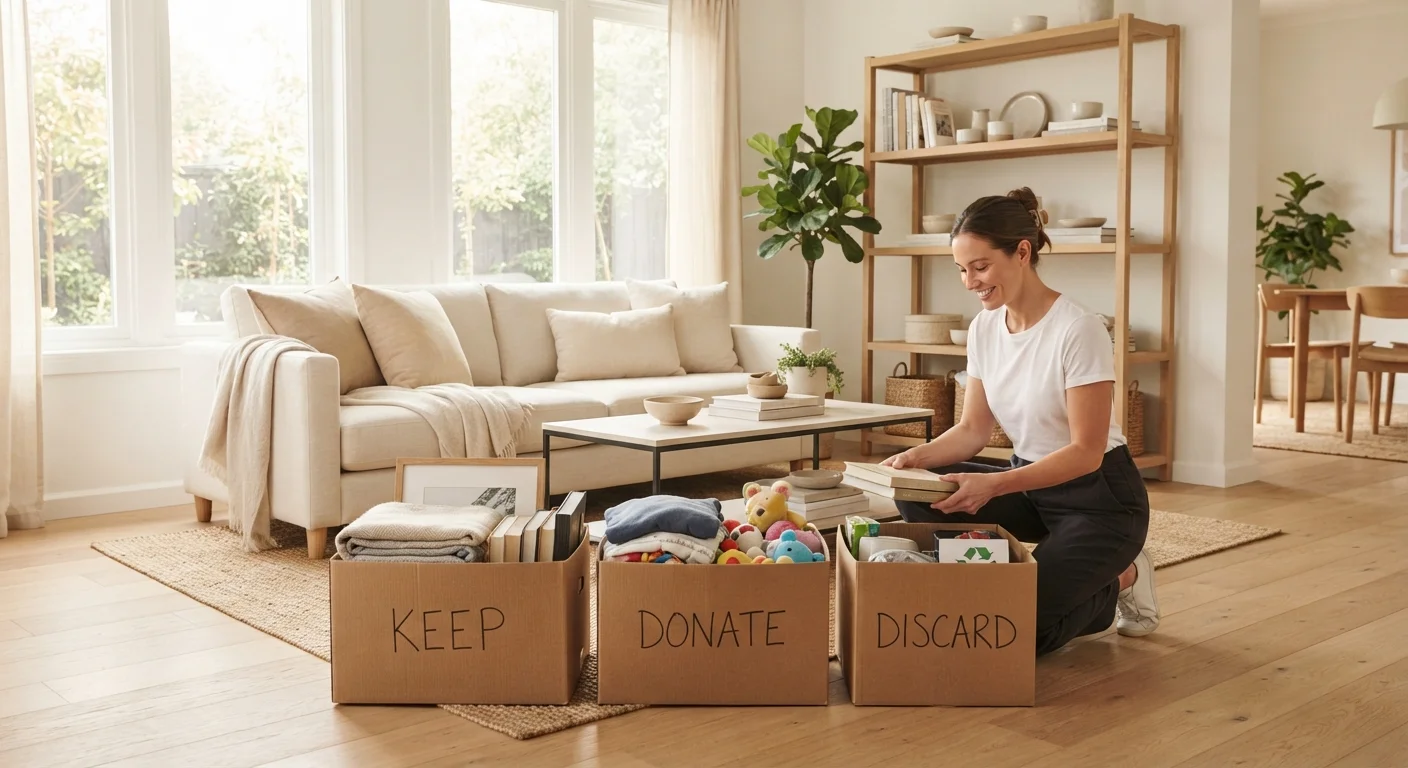
- Edit: Before storing, remove anything that doesn't belong to this activity. Mixing purposes is what makes zones break down over time.
- Store at point of use: Every item should be within reach of where the activity happens - ideally without moving more than a step or two. If something is inconvenient to access, it won't get returned consistently.
Labeling zones - even informally, with a basket or a designated drawer - gives everyone in the household a shared understanding of where things live. This is especially useful in shared homes where different people have different habits.
For spaces like garages that have accumulated years of mixed-purpose items, the garage organization guide applies zoning principles to one of the most challenging spaces in any home.
~30 min
Average time spent daily looking for misplaced items
Various time-use studies suggest Americans spend significant daily time searching for household items, with estimates typically ranging from 20 to 30 minutes per day.
80%
Of clutter attributed to disorganization, not lack of space
Professional organizers frequently cite this estimate to distinguish between a storage problem and a placement-logic problem - the Zone Method addresses the latter directly.
Maintaining Zones Over Time
Zones drift. Life changes, routines shift, and items migrate. A zone that works well in spring may need adjustment when the school year starts or when a new work-from-home routine takes hold. That's not a failure of the method - it's a normal part of living in a dynamic household.
Building in a brief seasonal review helps. Walk through each zone and ask: Is everything here still used here? Has a new activity emerged that needs its own zone? Has an old zone become obsolete? This kind of light maintenance prevents the slow creep of disorder that overtakes well-organized spaces over time. The seasonal rotation guide offers a practical framework for keeping zones current as your household's needs change.
The Zone Method isn't about achieving a magazine-ready home - it's about reducing the daily friction that makes a home feel unmanageable. When things are stored where you use them and returned to a place that makes intuitive sense, maintaining order stops feeling like a separate task and starts being a natural part of how you move through your home.
“Organization is not about perfection; it's about efficiency, reducing stress and clutter, and enabling more freedom and time.”
— Christina Scalise, Professional organizer and author on home organization systems