
How the Calculation Actually Works
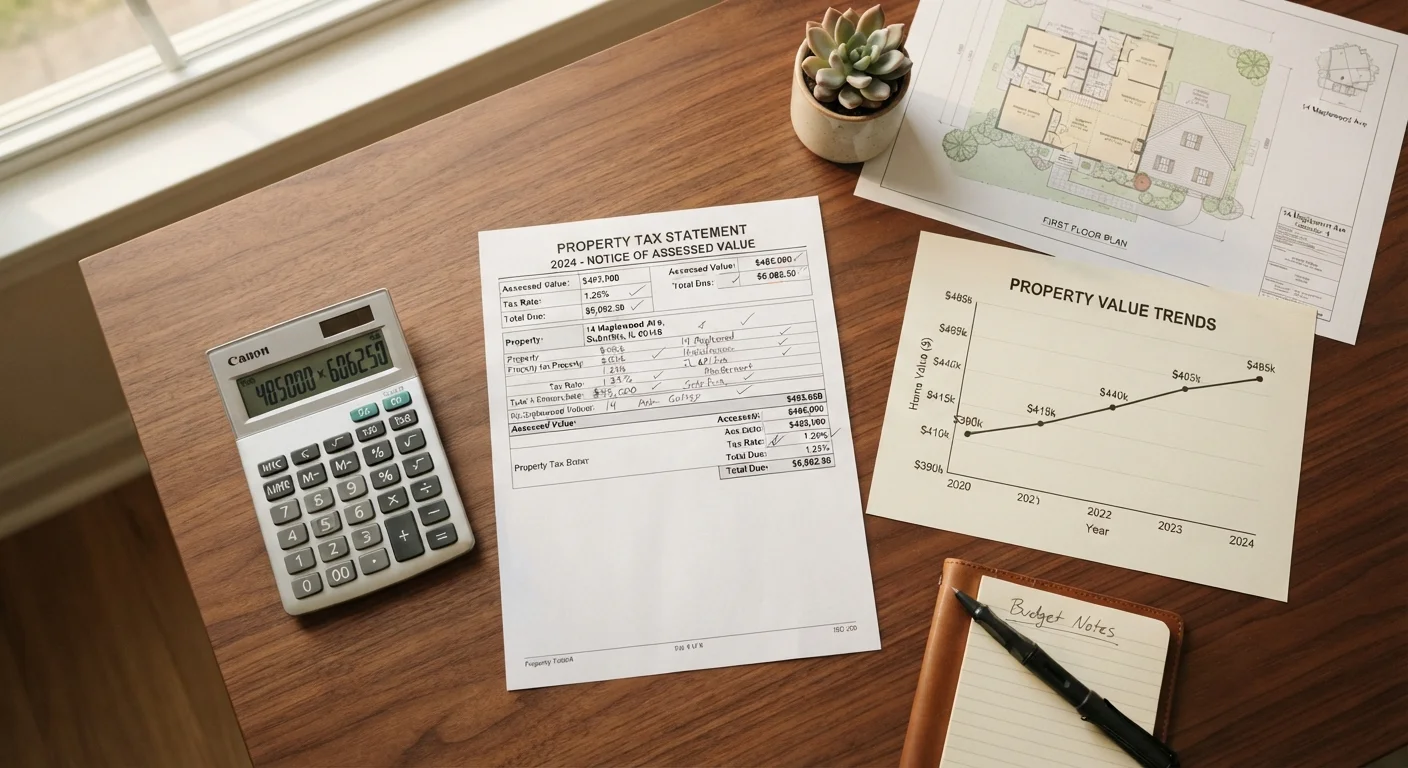
Every property tax bill comes down to a straightforward formula: Assessed Value × Tax Rate = Annual Tax Bill. Understanding each component helps you verify whether your bill is accurate and where you might find relief.
Assessed value is determined by a local government official called a property assessor. They estimate your home's market value - using recent sales of comparable homes, the condition of your property, and local market trends - then apply an assessment ratio to arrive at the taxable figure. If your home's market value is $400,000 and your jurisdiction uses an 80% assessment ratio, your assessed value for tax purposes is $320,000.
The tax rate, often expressed as a mill rate, is set by local government bodies including school boards, city councils, and county commissioners. One mill equals $1 of tax per $1,000 of assessed value. A mill rate of 25 applied to a $320,000 assessed value yields an $8,000 annual tax bill.
$3,901
Median US annual property tax payment
According to the US Census Bureau's American Community Survey, the median real estate tax paid by owner-occupied households nationally is approximately $3,901, though this varies dramatically by state.
~2.2%
Effective property tax rate in New Jersey
New Jersey consistently reports among the highest effective property tax rates in the country, while states such as Hawaii and Alabama report rates well below 0.5%, illustrating wide regional variation.
30-90 days
Typical window to appeal an assessment
Most county assessment boards accept formal appeals only within a narrow window after assessment notices are mailed; missing this deadline typically means waiting until the next assessment cycle.
Because both the assessment ratio and the mill rate vary by location, two homeowners with identically priced homes in different counties can owe very different amounts. This is why property taxes are considered a fixed but locally variable expense that requires attention every time you move or reassess your budget.
What Triggers a Change in Your Assessment
Assessors don't typically recalculate every home's value annually. Most jurisdictions reassess on a set cycle - every one, three, or four years - or trigger a reassessment when a property changes hands or receives a major improvement.
- Home sale: In many states, a sale resets the assessed value to the purchase price or a percentage of it.
- Permitted renovations: Adding a bedroom, finishing a basement, or building a garage can increase your assessed value when the assessor updates their records.
- Broad market reassessments: When local governments conduct mass appraisals, all property values in an area are updated, which can cause significant shifts in tax bills across the board.
- Rate changes: Even without a reassessment, local governments can raise or lower the mill rate in their annual budget process.
Property taxes are just one of several ongoing costs detailed in our guide on the real costs of owning a home. Knowing what drives reassessments helps you anticipate when your bill may rise.
Check Your Assessment for Errors First
Before assuming your assessed value is correct, review the assessor's property record card, which lists the details used to value your home - square footage, number of bathrooms, lot size, and condition. Errors in these records are more common than homeowners expect and are typically easy to correct by contacting the assessor's office directly, often without a formal appeal.
Exemptions and Appeals: Your Two Levers
Most jurisdictions offer exemptions that reduce the taxable portion of your assessed value - not the tax rate itself, but the base the rate is applied to.
Common exemptions include:
- Homestead exemption: Available in most states for a primary residence, this reduces assessed value by a flat amount or percentage. Eligibility typically requires the home to be your primary domicile as of a set date each year.
- Senior citizen exemption: Many counties offer additional reductions for homeowners above a certain age, sometimes combined with income thresholds.
- Veteran and disability exemptions: Qualifying veterans or homeowners with documented disabilities may receive further reductions, varying widely by state law.
Exemption Deadlines Vary by Jurisdiction
Exemptions are not always applied automatically. Many counties require an annual or one-time application, and the filing deadline is often in the early months of the calendar year. Contact your local assessor's office or visit their website to confirm the exact requirements and deadlines for your area.
If you believe your assessed value is higher than your home's actual market value, you have the right to appeal. The process typically involves filing a formal objection with your county's board of assessment review, presenting comparable sales data or a private appraisal as evidence. Deadlines are strict - usually within 30 to 90 days of receiving your assessment notice - so act promptly.
Property taxes interact directly with your overall homeownership cost picture, including insurance. Our article on homeowner's insurance coverage explains another major line item lenders and homeowners must plan for together.
This article is for general informational and educational purposes only and does not constitute tax, legal, or financial advice. Tax rules vary by state and locality. Consult a qualified tax professional or local assessor's office for guidance specific to your situation.