What 'Certified' Actually Means - and What It Doesn't
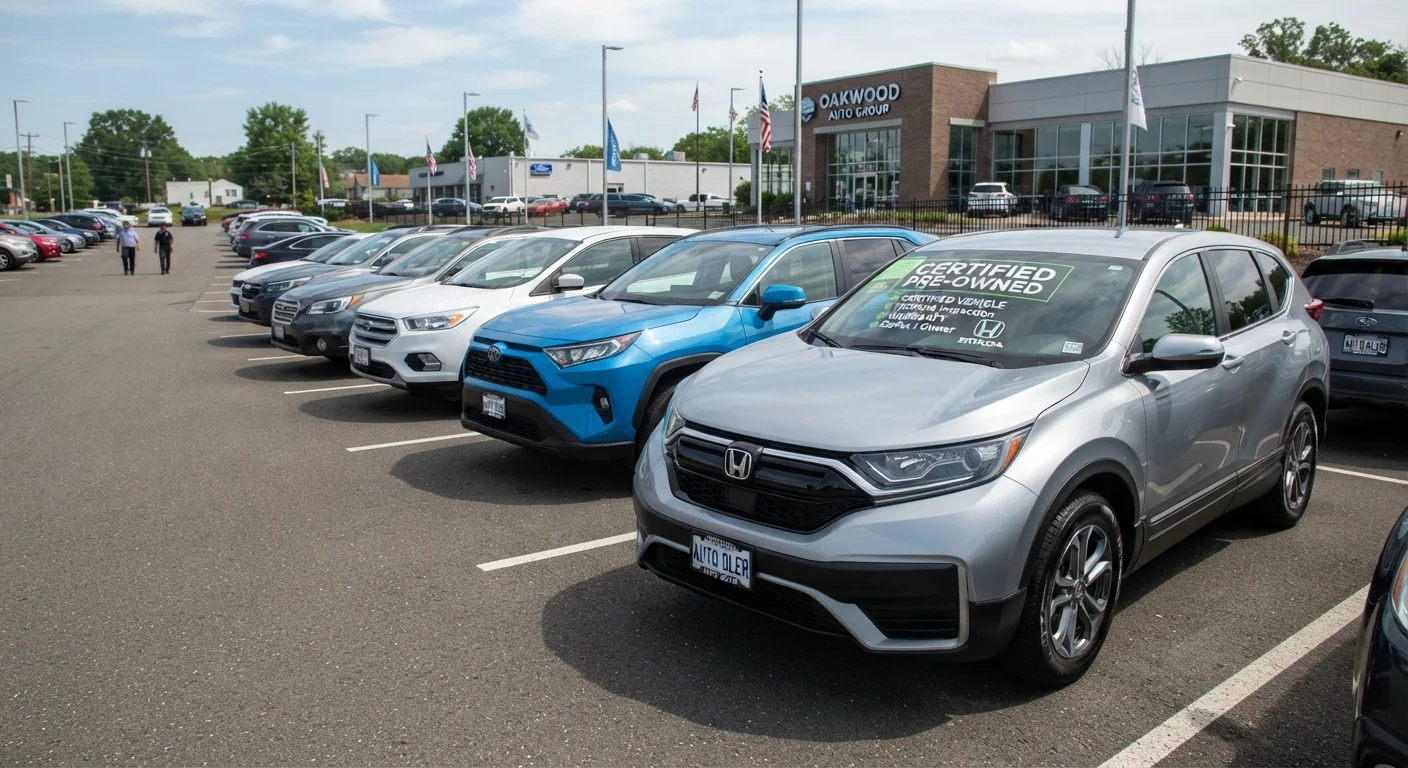
The word certified sounds reassuring, but it is not a regulated term in the automotive industry. Any dealership can technically call a used vehicle 'certified' without meeting any external standard. The quality of what you're actually getting depends entirely on who issued the certification and what their program requires.
There are two fundamentally different types of CPO programs:
- Manufacturer-backed CPO programs - run by the automaker itself with defined eligibility rules, standardized multi-point inspections, and warranties underwritten by the manufacturer.
- Dealer-certified programs - set by individual dealerships, with criteria, inspection depth, and warranty terms that vary widely from lot to lot.
When evaluating a CPO vehicle, the first question to ask is which type of program applies. Manufacturer programs are generally more consistent and carry more accountability. Dealer programs require much closer scrutiny.
If you're weighing this against buying new, see our breakdown of the real trade-offs between new and used vehicles to put CPO in broader context.
What a Manufacturer CPO Program Typically Requires
Most automaker CPO programs share a common framework, though specifics vary by brand:
- Age and mileage limits: Vehicles are typically required to be within five to six model years old and under a set mileage threshold - often 60,000 to 80,000 miles.
- Multi-point inspection: A structured checklist covering mechanical systems, safety components, and cosmetic condition. The number of inspection points varies - some programs cover 100+ items, others fewer.
- Reconditioning: Parts that don't meet program standards must be repaired or replaced before certification is granted.
- Vehicle history review: Most programs require a clean title and review the vehicle's accident and service history.
- Extended warranty: Coverage is added on top of any remaining factory warranty, typically covering the powertrain and sometimes broader systems.
100+
Inspection points in leading manufacturer CPO programs
Many top automaker CPO programs require inspections covering over 100 mechanical, safety, and cosmetic checkpoints before a vehicle can be certified.
$1,000-$3,500
Estimated price premium for CPO vs. comparable used vehicles
Industry observers note that CPO vehicles commonly sell at a notable premium reflecting reconditioning, inspection costs, and extended warranty inclusion - figures vary by make, model, and program.
Warranty deductibles, coverage limits, and whether the warranty is transferable all differ between programs. These details matter significantly if you sell the car before the coverage expires.
Manufacturer vs. Dealer Certification: A Key Distinction
When a vehicle is listed as 'certified,' it may be manufacturer-certified or dealer-certified - and these are not equivalent. Manufacturer programs are standardized across all participating franchised dealers of that brand. Dealer programs are self-defined and unregulated. If a listing doesn't clearly state which type applies, ask directly and get the answer in writing before proceeding.
Red Flags to Watch for in Any CPO Deal
A CPO label is a starting point for evaluation, not a reason to skip due diligence. Several common pitfalls trip up buyers who assume the certification does all the work:
Always Request the Full Warranty Contract
Don't rely on a verbal summary or brochure overview of CPO coverage. Ask for the complete warranty document before signing anything. Review what systems are covered, what is explicitly excluded, the deductible per visit, and whether the warranty is transferable to a future buyer. These details can meaningfully change the real value of the CPO premium you're paying.
- No inspection report provided: Ask to see the actual checklist. A credible program documents what was inspected, what was repaired, and what was cleared.
- Vague warranty language: 'Powertrain coverage' can mean different things across contracts. Get the full warranty document and confirm what is and isn't excluded.
- Short coverage windows: Some dealer-certified programs offer 30- or 60-day warranties that provide little meaningful protection.
- High deductibles: A $200-$300 deductible per repair visit can add up quickly and reduces the practical value of coverage.
- No vehicle history report: CPO status doesn't eliminate the value of reviewing a third-party vehicle history report independently.
A pre-purchase inspection checklist is worth using even for CPO vehicles. An independent mechanic's assessment adds verification no sales program can replace.
You should also ask the seller specific questions about the vehicle's history - ownership background, prior use, and service records all inform how meaningful a CPO label is in any specific case.
Factoring CPO into the Total Cost of Ownership
CPO vehicles carry a price premium over comparable non-certified used cars. That premium reflects the inspection, reconditioning, and warranty package - but whether it's worth paying depends on what the program actually delivers and how it compares to simply choosing a lower-priced vehicle and self-insuring against potential repairs.
Consider the full picture before deciding: warranty deductibles, which systems are covered, whether roadside assistance is included, and how long coverage lasts relative to how long you plan to own the vehicle. A CPO warranty that expires well before your expected ownership period has limited ongoing value.
Don't overlook what comes after the purchase. Ongoing ownership costs - insurance, maintenance, registration, and depreciation continue regardless of CPO status and should factor into your overall budget from the start.
A CPO designation can be genuinely valuable when backed by a rigorous manufacturer program and clearly documented coverage. Approached with the right questions, it's a useful tool for reducing uncertainty in the used-car market - not a substitute for doing your own homework.