Why Night Driving Demands a Different Approach
The risk of a fatal crash per mile driven is roughly three times higher at night than during the day, according to the National Safety Council. The reasons are layered: human eyes lose sharpness in low light, depth perception degrades, peripheral vision narrows, and the ability to distinguish color fades. On unlit rural roads - where most fatal nighttime crashes occur - these factors compound quickly.
Glare from oncoming headlights causes a temporary loss of visual acuity that can last several seconds. Meanwhile, fatigue tends to peak in the late evening and early morning hours, lining up precisely with when many drivers are on the road. Understanding these risks isn't about fear - it's about making deliberate adjustments that put the odds back in your favor.
See also our guide on how fatigue compares to alcohol impairment behind the wheel - the overlap is more significant than most drivers realize.
Core Habits That Reduce Night Driving Risk
The following practices are grounded in road safety research and reflect what experienced drivers and traffic safety professionals consistently recommend. None require special equipment - just intentional behavior.
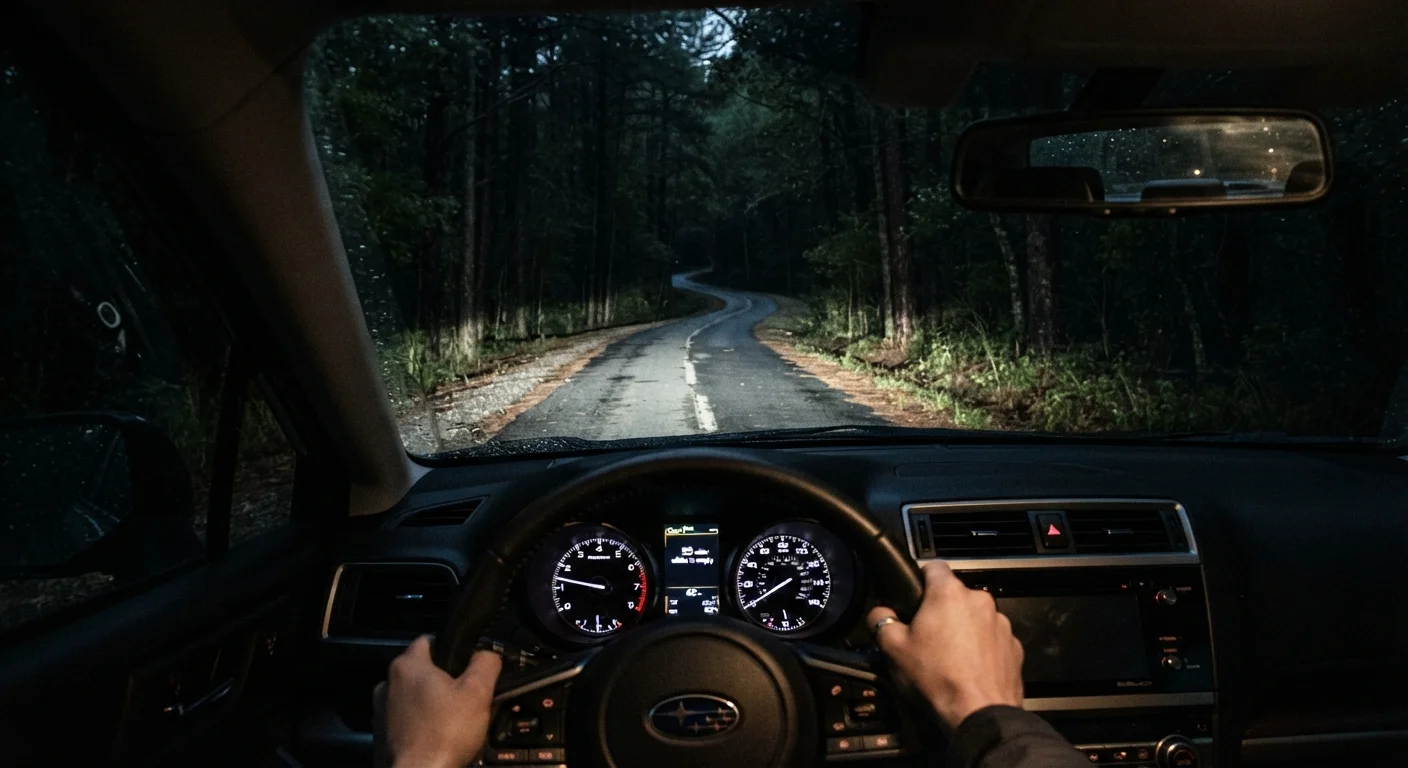
Drive within your headlight range - never faster than you can stop in the distance you can see.
On unlit roads, your headlights illuminate only a limited stretch ahead. Driving faster than that sight distance allows means you may not have enough room to brake before reaching an obstacle, animal, or curve. This principle is sometimes called 'overdriving your headlights,' and it's a leading factor in nighttime single-vehicle crashes.
Keep headlights clean and verify they are properly aimed.
Dirty or oxidized headlight lenses can reduce light output by 50 percent or more, dramatically cutting the road ahead that's visible to you. Misaimed lights - pointing too high or too low - reduce your sight line or blind oncoming drivers, both of which increase crash risk.
Use high beams on unlit roads and switch back proactively for oncoming traffic.
High beams nearly double the illuminated distance compared to low beams, giving you significantly more time to react to hazards. The key is discipline: switching back to low beams when another vehicle approaches within about 500 feet prevents blinding the other driver and avoids the retaliation behavior that can cause accidents.
Avoid looking directly at oncoming headlights - use the right edge of the road as a guide.
Staring at bright oncoming lights causes temporary glare blindness that takes several seconds to resolve, during which you are driving without full visual information. Modern LED and HID headlights from other vehicles can be especially intense. Shifting your gaze to the right edge line protects your night-adapted vision while keeping you oriented on the road.
Increase your following distance significantly at night.
Brake lights from the vehicle ahead give you a cue to react, but your perception is slower in low light and your ability to judge speed and distance is reduced. The standard three-second following distance is a minimum - on unlit roads or at highway speeds after dark, four to five seconds is a safer baseline.
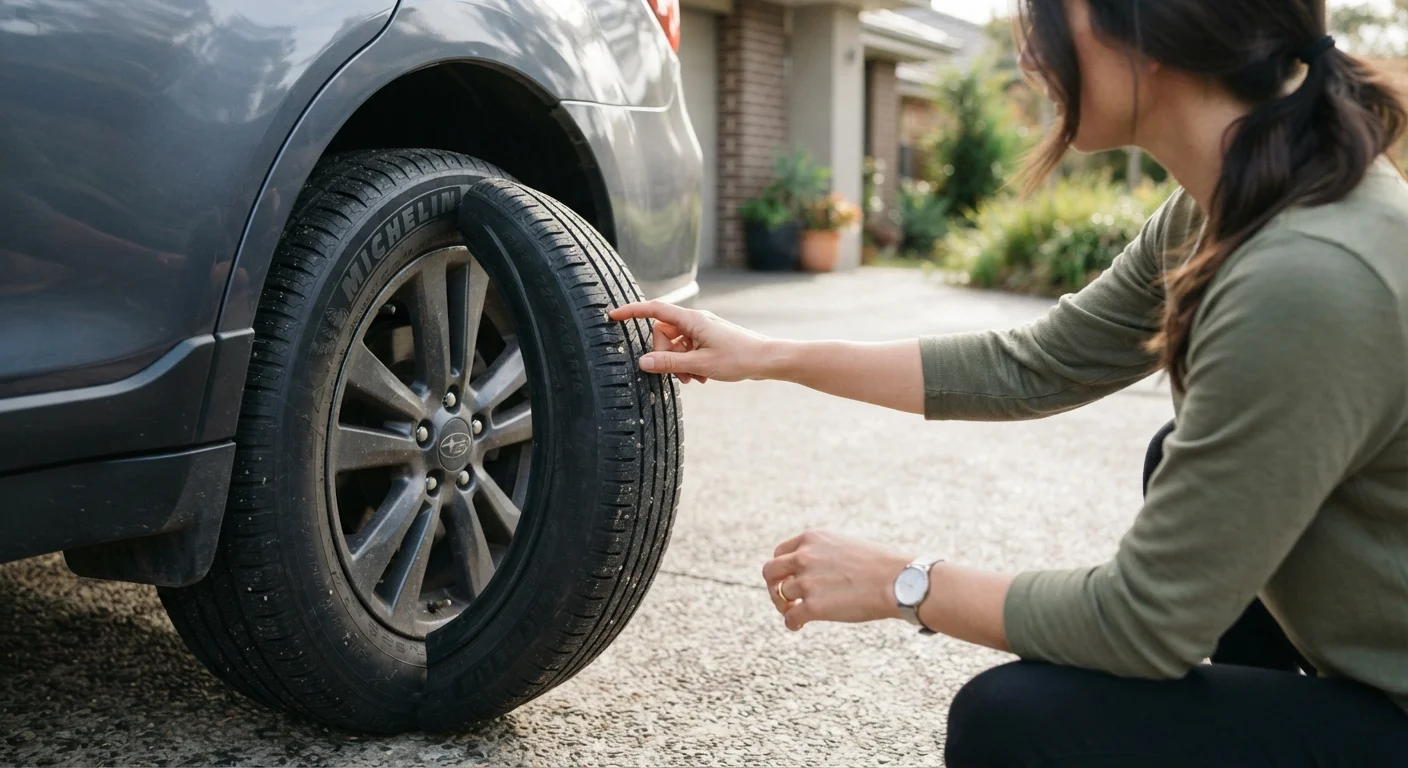
Before any night trip, it also pays to do a quick walk-around. Our pre-trip vehicle safety checklist covers headlights, tires, and other systems that matter most after dark.
Quick Wins You Can Apply Tonight
Some of the most effective adjustments take less than five minutes. Start here if you want immediate improvement in how safely you drive after dark.
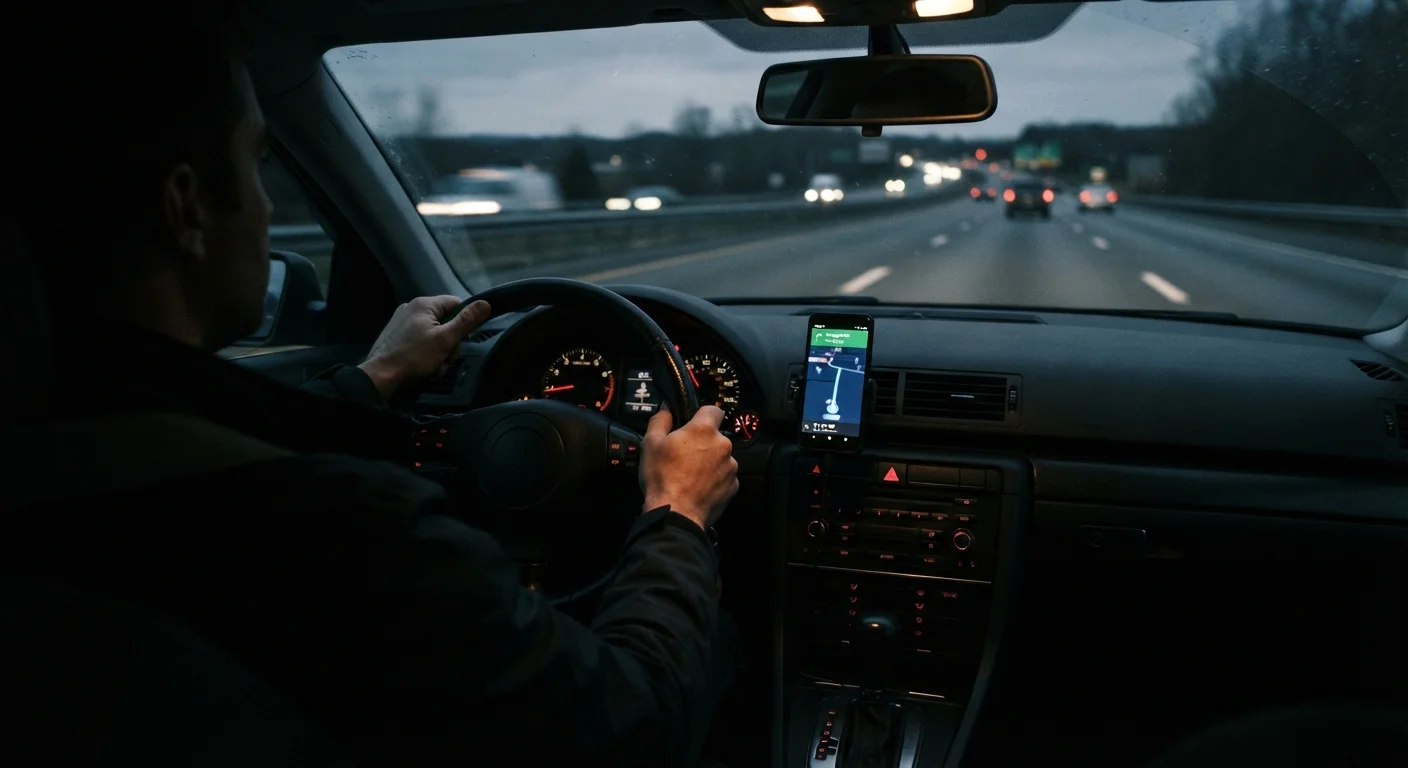
Distraction adds another layer of risk on unlit roads. Even hands-free phone use diverts cognitive attention in ways most drivers underestimate - see how phones distract drivers even without texting for the research behind this.
Managing Fatigue and Knowing When to Stop
Drowsiness and night driving are a particularly dangerous combination. The body's circadian rhythm naturally promotes sleepiness between midnight and 6 a.m., and again in the mid-afternoon - periods that overlap heavily with late-night commutes and long road trips.
Night Hours Align With Peak Drowsiness
The body's internal clock makes late-night and early-morning hours the highest-risk periods for drowsy driving. This is true even for drivers who feel alert at the start of a trip. If you know a drive will extend past midnight, plan a rest stop in advance rather than waiting until fatigue sets in - by that point, your judgment about how impaired you are is already compromised.
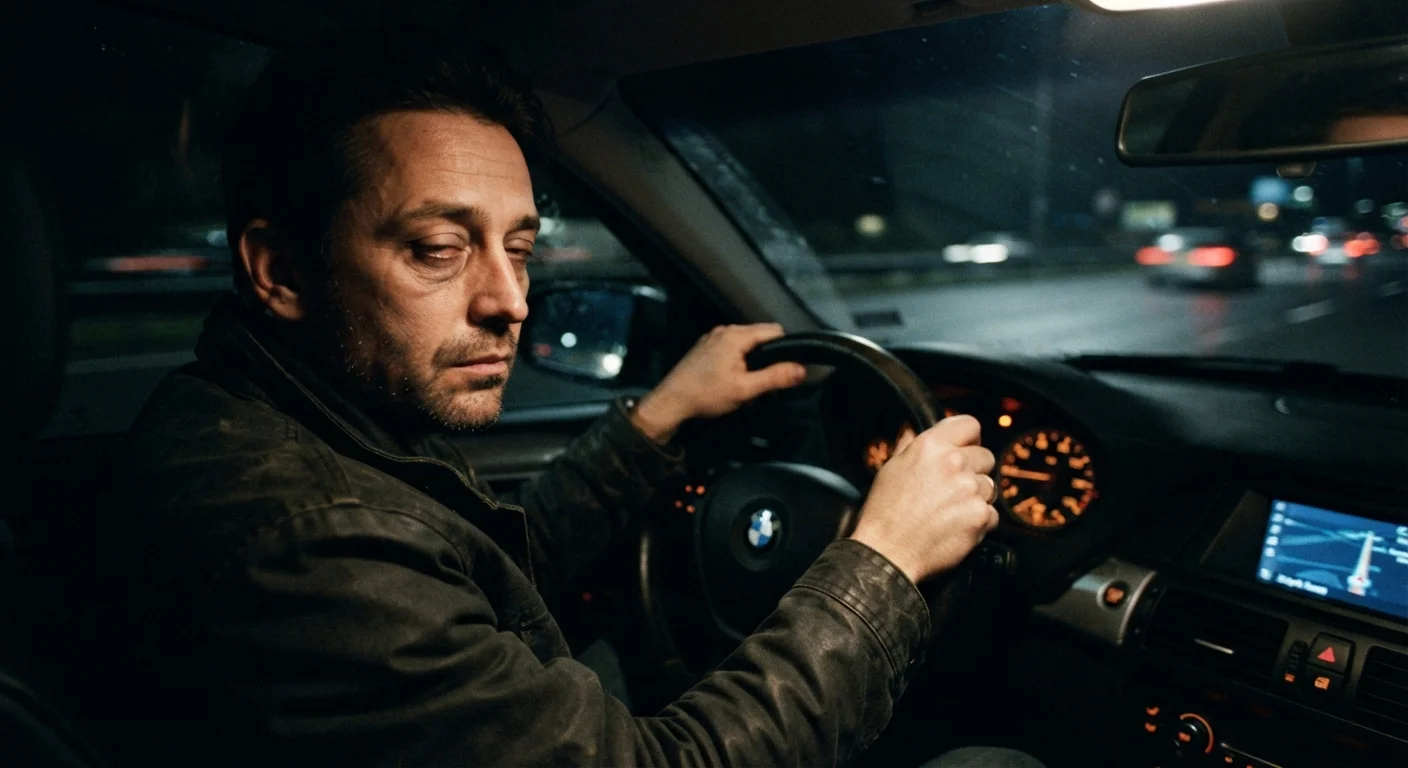
The clearest warning signs include difficulty keeping your eyes open, drifting between lanes, missing exits or turns you know well, and finding that you can't clearly recall the last few miles. If any of these occur, pull over safely as soon as possible. A 20-minute rest at a well-lit rest area or gas station is far safer than pushing through. Caffeine can provide a short-term boost, but it is not a substitute for sleep - plan accordingly before long nighttime drives.
For a deeper look at how road conditions interact with fatigue, see how rain, ice, and snow change driving technique - the stakes are highest when poor conditions and reduced alertness combine.
3x
Higher fatal crash rate at night vs. daytime
The National Safety Council reports that the fatality rate per mile driven is approximately three times higher at night than during daylight hours.
50%+
Light output lost from oxidized headlights
Industry testing has shown that heavily oxidized or dirty headlight lenses can reduce effective light projection by more than half compared to clean lenses.