Why 'Not Texting' Isn't the Same as 'Not Distracted'
The public conversation around phone distraction behind the wheel has focused heavily on texting - and for good reason. But that framing has created a blind spot: many drivers believe that as long as they're not looking at a screen, they're driving safely. That assumption is wrong.
Distraction behind the wheel comes in three forms: visual (eyes off the road), manual (hands off the wheel), and cognitive (mind off the task of driving). Texting is dangerous partly because it hits all three at once. But phone use in almost any form - including a call through a car's Bluetooth - triggers the third type, and that's the one most drivers underestimate.
Just as fatigue impairs driving in ways that feel invisible, cognitive distraction operates below conscious awareness. You're looking at the road. You're steering normally. And yet your brain is allocating significant processing power elsewhere.
Cognitive Distraction Is Not the Same as Inattention
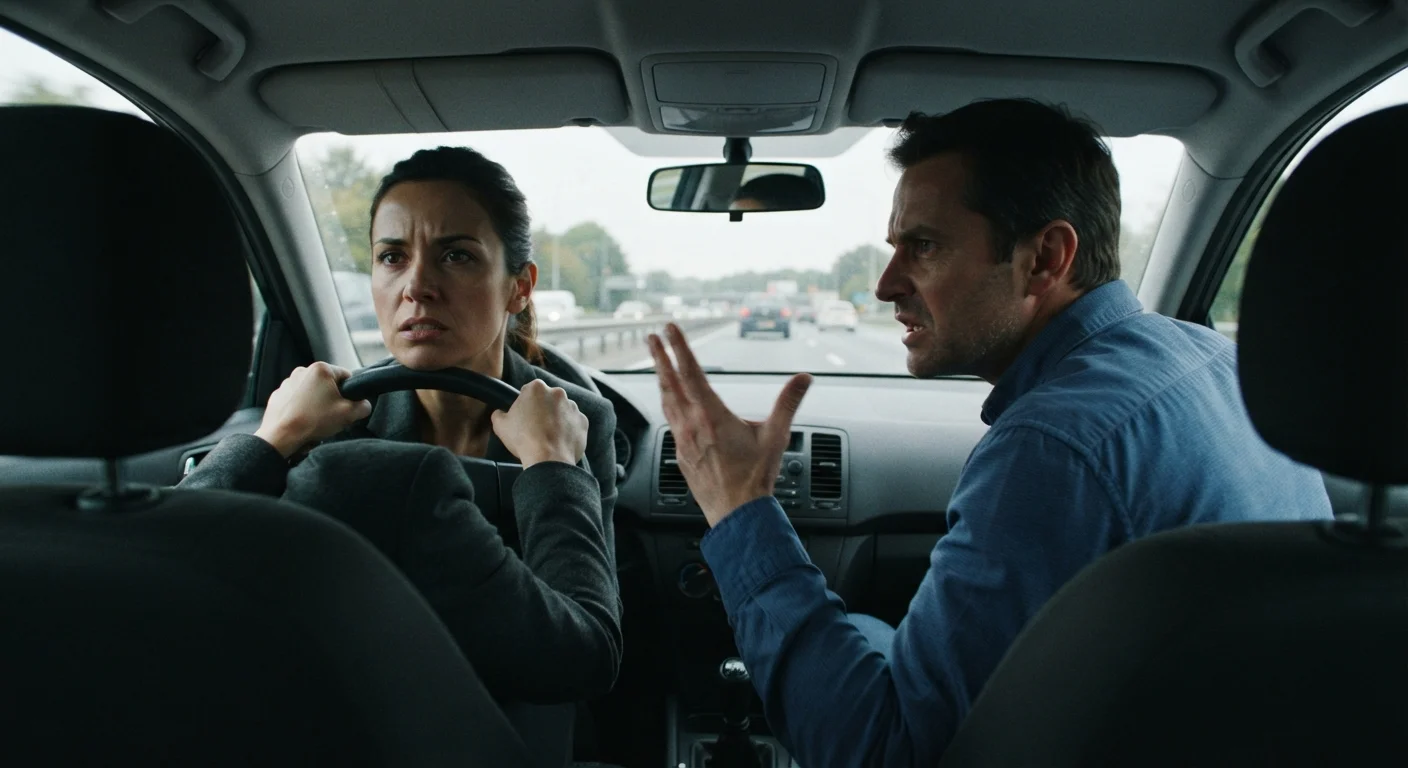
Cognitive distraction doesn't mean a driver is daydreaming or ignoring the road. A cognitively distracted driver is actively trying to pay attention - their brain is simply overloaded. This distinction matters because it explains why drivers often don't realize how impaired their focus has become.
What Happens Inside Your Brain During a Phone Call
Human attention isn't infinitely divisible. Driving is a cognitively demanding task - it requires continuous monitoring of speed, lane position, following distance, traffic signals, pedestrian movement, and unpredictable hazards. A phone conversation adds a competing demand for that same mental bandwidth.
Studies using neuroimaging and driving simulators have found that listening to language activates large portions of the brain, including areas involved in spatial processing - exactly the regions needed for driving. When those areas are pulled into a conversation, the brain compensates by narrowing its visual focus. This is sometimes called inattention blindness: a driver's eyes scan the road, but the brain fails to fully register and respond to what it sees.
The AAA Foundation for Traffic Safety has published research showing that hands-free calls produce a moderate-to-high level of cognitive demand - higher than listening to the radio or talking to a passenger, and in the same range as some speech-to-text tasks.
27 sec
Cognitive distraction after ending a hands-free call
According to AAA Foundation for Traffic Safety research, mental focus can remain impaired for up to 27 seconds after finishing a hands-free phone conversation.
~4x
Crash risk increase during phone use while driving
The National Safety Council has cited research suggesting phone use while driving increases crash risk by approximately four times compared to undistracted driving.
3 in 4
Drivers who believe hands-free is significantly safer
Surveys have found a large majority of drivers consider hands-free calls substantially safer than handheld calls, despite research showing cognitive impairment persists in both cases.
The Specific Phone Habits That Catch Drivers Off Guard
Beyond voice calls, several phone-related behaviors create cognitive load that drivers often don't flag as risky:
- Voice-to-text messaging: Composing a message by voice requires you to formulate sentences, monitor accuracy, and often correct errors - all while keeping an ear out for the result. It's more cognitively demanding than many drivers expect.
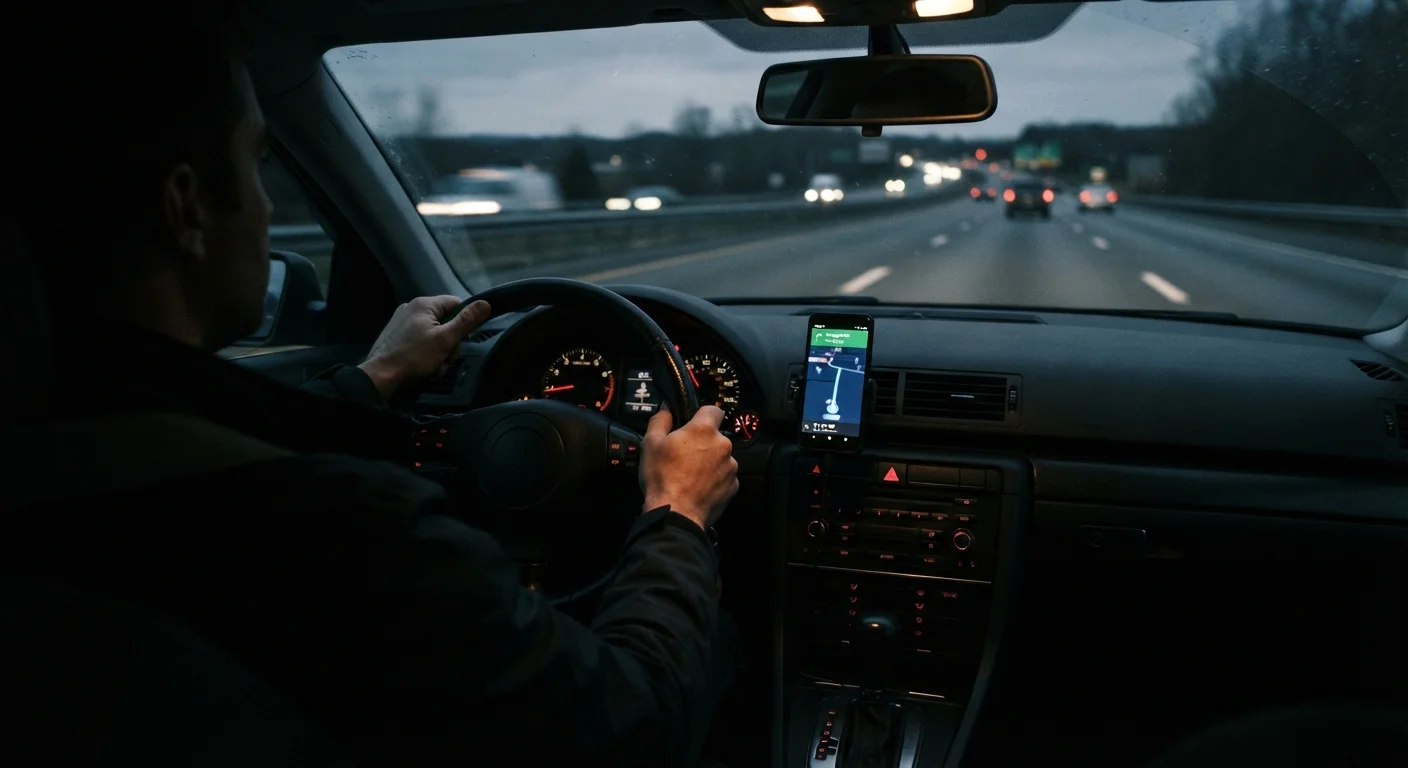
- Navigation audio prompts: Brief and seemingly benign, turn-by-turn instructions still require processing. When a prompt arrives at the wrong moment - mid-lane-change, at a busy intersection - the driver's attention is briefly split.
- Podcast and audiobook engagement: Passive listening is lower risk than active conversation, but complex narrative or emotionally engaging content can pull cognitive focus in ways that simple music typically doesn't.
- Waiting for a call: Anticipating an important call can create a background level of mental tension that subtly reduces driving focus even before the phone rings.
This is why conversations with passengers also affect driver focus - though passengers have a built-in safety advantage: they can see the road and naturally pause when conditions demand it.
Set Your Phone to Driving Mode Before You Start
Most smartphones and in-vehicle systems offer a driving mode that silences non-urgent notifications and can auto-reply to messages. Activating this before you put the car in drive removes both the interruption and the anticipatory distraction of waiting for a notification. Make it a habit like buckling your seatbelt.
What Drivers Can Actually Do About It
Awareness is the first step. Recognizing that hands-free doesn't mean risk-free lets drivers make more honest choices about when to take or make calls.
A few practical approaches:
- Use Do Not Disturb driving modes. Most smartphones have a setting that silences notifications and auto-replies to messages while the vehicle is moving. It removes the temptation and the anticipation effect.
- Treat the first few minutes after a call as a reset period. Research suggests attention isn't immediately restored once a call ends. Give yourself time - especially before a lane change or complex maneuver.
- Understand that complexity matters. A quick, low-stakes call may be less demanding than a tense conversation about something stressful. Emotional engagement amplifies cognitive load.
- Keep navigation simple. Pre-set your route before you drive. Adjusting navigation while moving - even by voice - is a meaningful distraction.
The same attentional principles apply in other risk scenarios. Night driving already taxes focus - adding phone-related cognitive load on top of low visibility multiplies risk significantly. Similarly, following distance suffers when attention degrades; tailgating becomes far more dangerous when a driver's reaction time is delayed by even a fraction of a second.