Why Most Home Cooks Taste Too Late
The most common tasting mistake isn't tasting badly - it's not tasting at all until the dish is already on the plate. At that point, your options are limited. You can shake some salt on top, add a squeeze of lemon, or accept what you have. You can't go back and correct a sauce that reduced too salty, a soup that needed depth an hour ago, or a braise that never developed its base flavors.
Professional cooks taste constantly - not because they distrust recipes, but because they understand that a recipe is a set of instructions written for average conditions. Your stove may run hotter. Your tomatoes may be less acidic. Your broth may be saltier than the recipe writer's. Tasting as you go is how you translate a recipe into your actual kitchen. Before you even turn on the heat, reading the full recipe carefully helps you understand where the flavor-building moments will happen.
The Three Tasting Stages of Any Dish
Think of cooking in three distinct flavor phases, each with a different tasting goal:
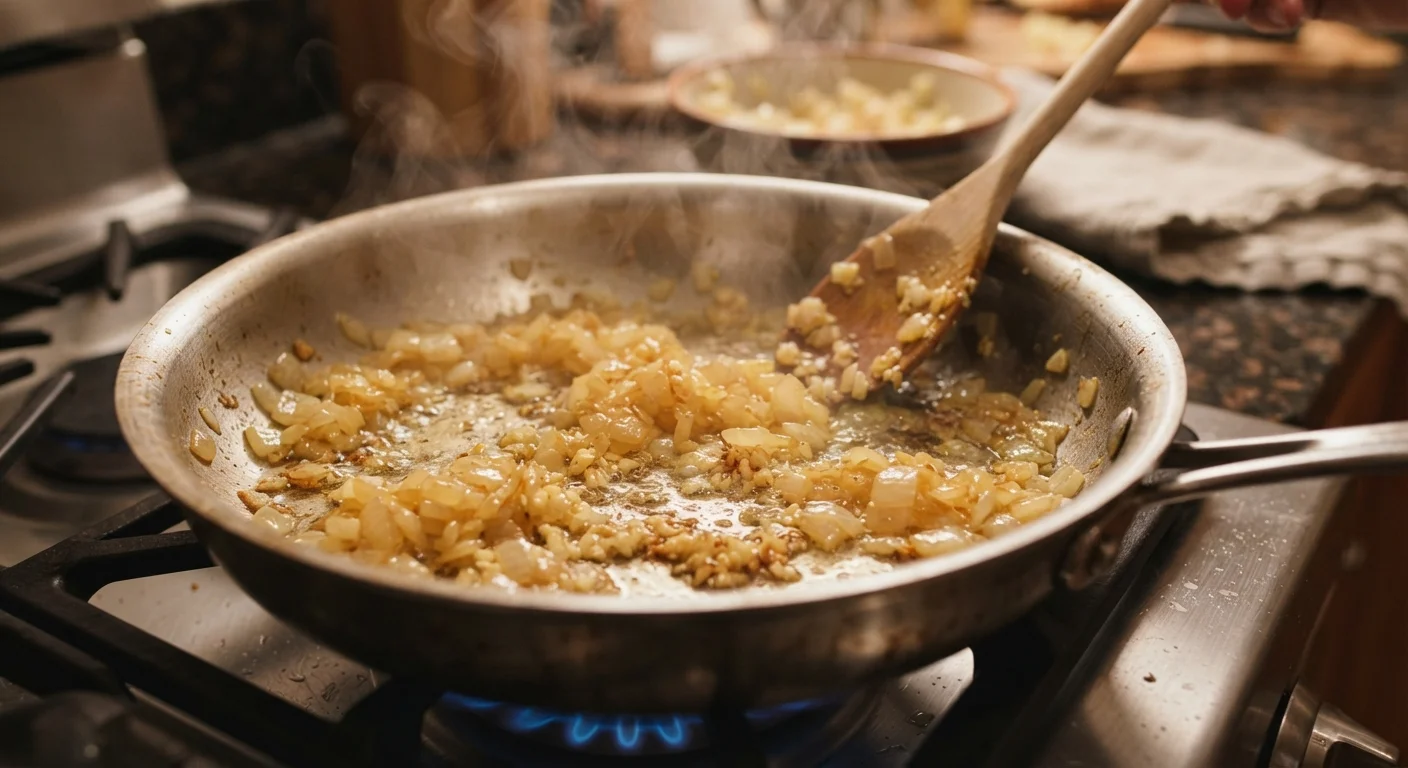
- Building phase: Early in cooking - when you're softening aromatics, browning meat, or making a base. Taste here to confirm your foundation is on track. Are your onions sweet and soft, or still raw and sharp? Does the broth have enough body? This is your opportunity to catch problems before they compound. Understanding how aromatics develop flavor makes this stage much easier to read.
- Balancing phase: Mid-cook, as the dish comes together. This is where most adjustments happen. Taste for seasoning, acidity, and overall direction. A stew that tastes thin and one-dimensional at this stage still has time to be corrected.
- Finishing phase: Just before serving. Small, precise adjustments only - a pinch of salt, a drop of vinegar, a last crack of pepper. You're not rebuilding here; you're refining.
Cool It Down Before You Taste
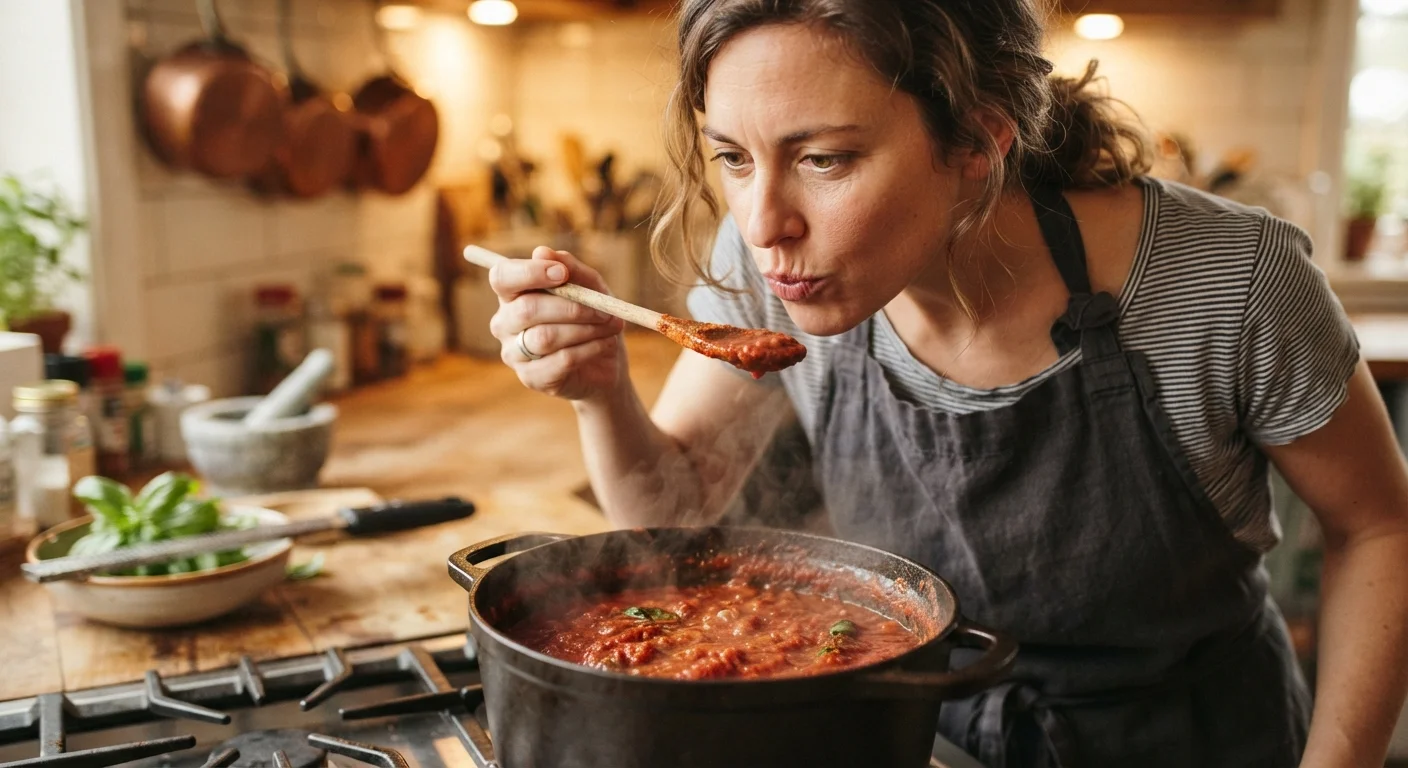
Very hot food temporarily dulls your ability to detect salt and sweetness accurately. When tasting a simmering soup or sauce, let the spoonful cool for 10-15 seconds before assessing. You'll get a much more reliable read on the actual flavor balance - and avoid burning your tongue in the process.
The Four Flavor Levers Every Cook Should Know
When you taste something and it doesn't work, the fix usually falls into one of four categories:
Add salt in layers, not all at once at the end
Salt added at different stages penetrates and interacts with food differently. A pinch added to onions while they soften draws out moisture and enhances sweetness; the same amount added at the plate just sits on the surface. Layering salt builds depth rather than just saltiness.
Use acid to lift a dish that tastes flat or heavy
Acid - from lemon juice, vinegar, wine, or even a splash of tomato - brightens other flavors and creates contrast. When a dish tastes muddy, dull, or one-dimensional, acid is often the missing element. It doesn't make food taste sour; it makes it taste more alive.
Recognize when fat is balancing versus masking
Fat carries flavor and softens harsh edges, which is why a pat of butter or a drizzle of olive oil at the end makes so many dishes taste richer and more cohesive. But fat added to compensate for missing seasoning or acid just makes the dish heavier. Taste critically after adding fat to make sure it's integrating, not covering up.
Trust your taste over recipe timings when reducing or seasoning
Recipe instructions like "cook for 20 minutes" or "add 1 teaspoon of salt" are approximations. Stove output, pot size, ingredient water content, and initial ingredient quality all affect the outcome. Your palate, not the clock, is the most reliable guide to when a dish is ready to move to the next step.
Taste neutral foods before adding them to a dish
Pasta, rice, potatoes, and beans absorb surrounding flavors but also dilute them. Tasting these components before combining them with a sauce or broth tells you how much seasoning headroom you have left. An underseasoned grain will pull flavor out of a well-seasoned sauce.
Understanding these four levers gives you a diagnostic framework. Instead of thinking "something's off," you can ask: Is it flat (needs salt)? Dull (needs acid)? Harsh (needs fat or more cooking time)? Too thin (needs reduction or body)? That shift from vague disappointment to specific diagnosis is what separates reactive cooking from confident cooking.
~75%
Of flavor perception driven by aroma
Research in sensory science consistently shows that most of what we experience as 'taste' is actually smell, which is why tasting warm food mid-cook gives more useful feedback than tasting it cold.
4
Core flavor levers: salt, acid, fat, heat
Culinary educators widely frame seasoning decisions around these four elements, as outlined in foundational cooking education curricula across culinary institutions.
Building the Habit: Practical Tips for Active Tasting
Knowing you should taste more often and actually doing it are two different things. Here's how to make it a natural part of your cooking routine:
“Seasoning is not just about salt - it's about tasting at every stage and asking what the food needs right now, not what the recipe said ten minutes ago.”
— Samin Nosrat, Chef and author of Salt, Fat, Acid, Heat
Keep a clean tasting spoon nearby at all times - switching between stirring and tasting with the same spoon discourages frequent tasting. Use a small bowl or spoon rest to hold your tasting utensil. When you taste, take a moment to think rather than react immediately: let the flavor develop, swallow, and then assess. If you're cooking with lots of salt or reducing a sauce significantly, taste after each meaningful change, not after every stir. And remember: many rules home cooks follow aren't actually based in sound technique. Tasting regularly is one habit that is always justified.