What a Grain Actually Looks Like Before Processing
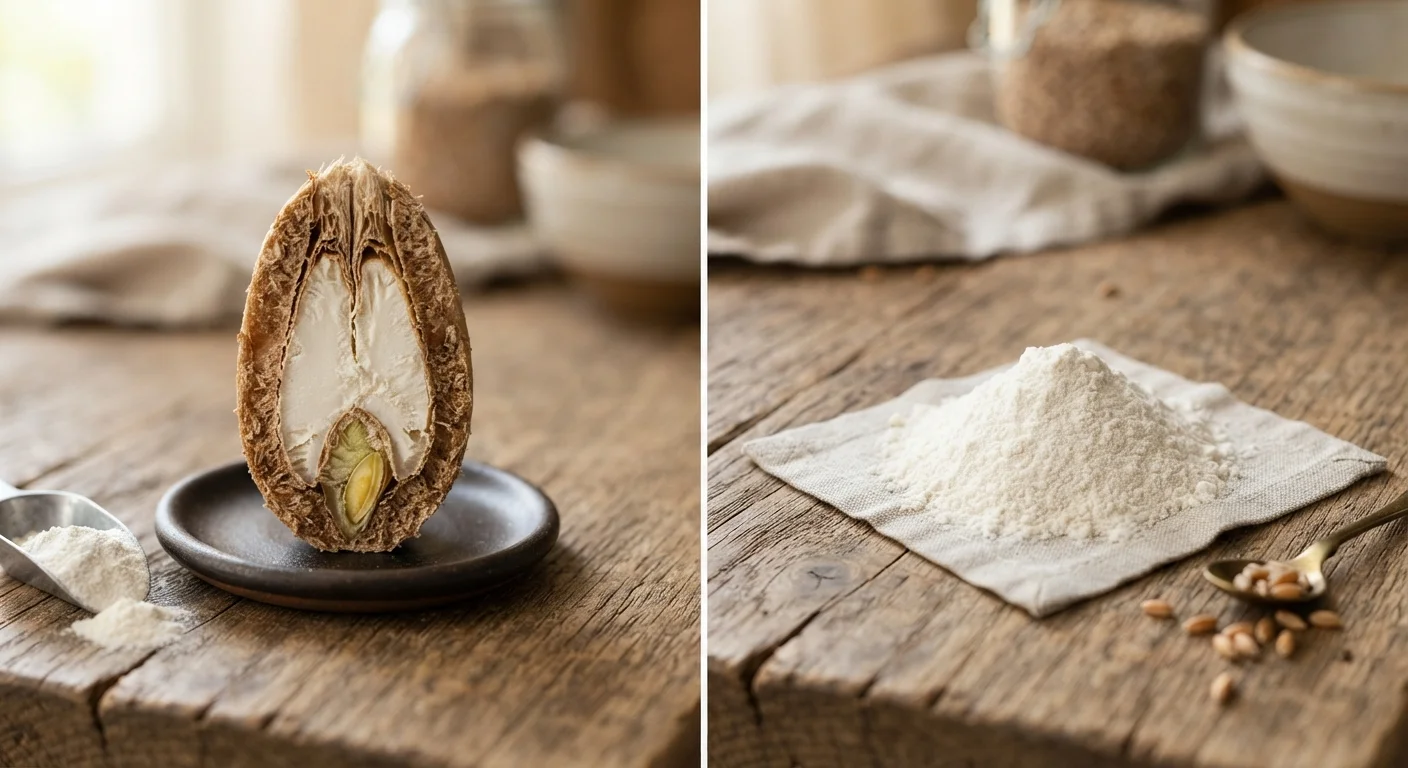
Every grain of wheat, oats, rice, or corn starts as a whole kernel made up of three distinct parts. Understanding these layers is the foundation of this entire comparison.
- Bran: The hard outer shell. It's packed with fiber, B vitamins (like thiamine, niacin, and folate), and trace minerals such as iron and zinc.
- Germ: The nutrient-dense embryo at the core. It contains healthy fats, vitamin E, B vitamins, and antioxidants.
- Endosperm: The starchy interior that makes up the bulk of the kernel. It provides carbohydrates and some protein, but very little fiber or micronutrients.
A whole grain product uses all three layers. A refined grain product - like white flour or white rice - has had the bran and germ mechanically removed, leaving only the endosperm.
What's Actually Lost in the Milling Process
The milling of wheat into white flour is efficient and dramatically extends shelf life (the oils in the germ can turn rancid). But the nutritional trade-off is significant.
| Criterion | Whole Grains | Refined Grains |
|---|---|---|
| Grain layers retained | Bran, germ, and endosperm | Endosperm only |
| Dietary fiber | Significantly higher | Very low (mostly removed) |
| B vitamins (natural) | Thiamin, niacin, folate, B6 | Most removed; some added back |
| Vitamin E | Present in germ | Removed; not typically restored |
| Iron and minerals | Naturally present | Mostly removed; iron often enriched back |
| Shelf life | Shorter (oils in germ go stale) | Longer |
| Texture in baked goods | Denser, heartier | Lighter, softer |
| Digestion speed | Slower (fiber slows breakdown) | Faster |
The U.S. Food and Drug Administration requires that refined grain products labeled as "enriched" have four B vitamins (thiamin, riboflavin, niacin, and folic acid) and iron added back. Calcium is sometimes added as well. However, enrichment doesn't restore everything - fiber, vitamin E, magnesium, potassium, and various phytonutrients are typically not replaced.
What "Enriched" Actually Means
Enrichment is the process of adding specific nutrients back to refined grains after milling strips them away. U.S. federal standards require enriched flour to contain added thiamin, riboflavin, niacin, folic acid, and iron. While enrichment reduces some of the nutritional gap, it doesn't fully replicate the naturally occurring nutrient profile of a whole grain. Fiber - one of the most significant losses - is not part of the enrichment requirement.
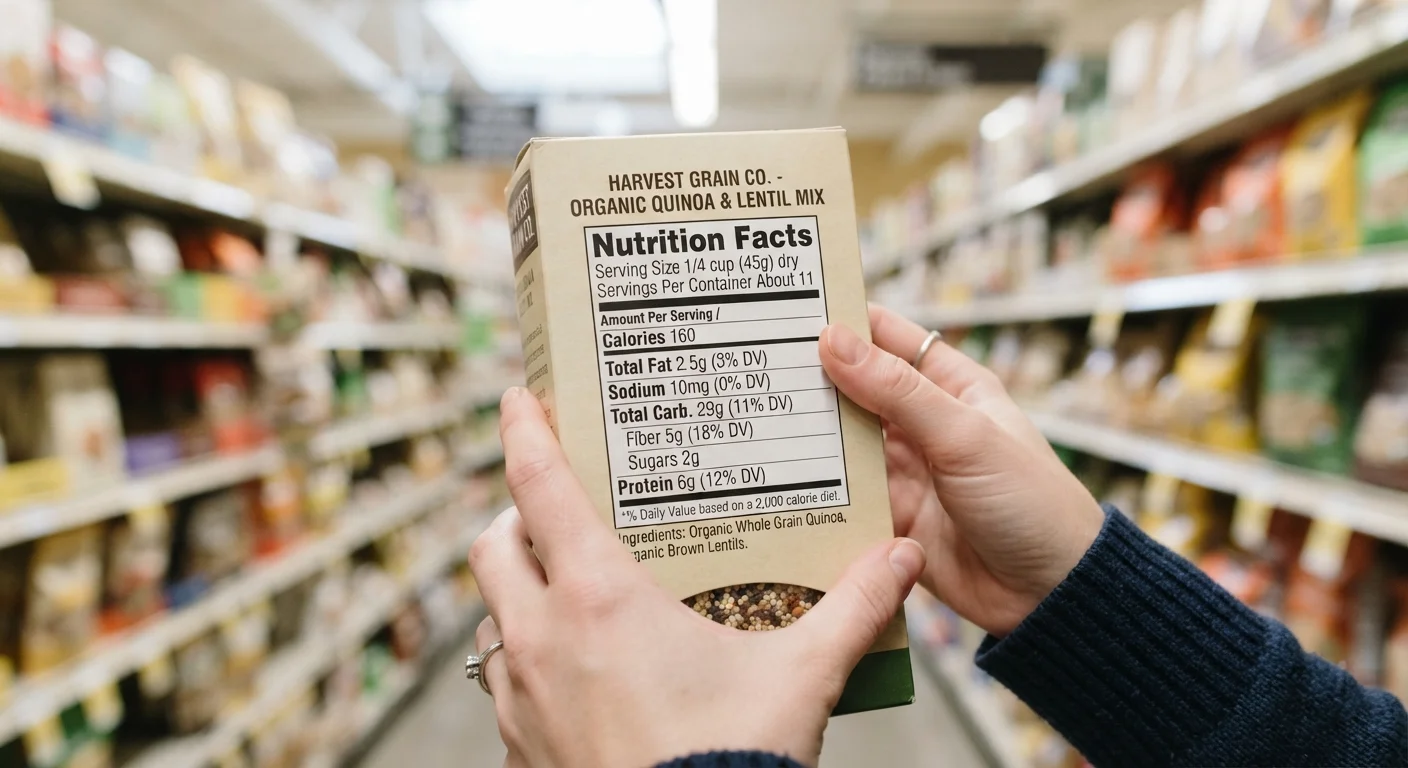
This is worth keeping in mind when scanning food labels. As our guide to reading a Nutrition Facts label explains, the fiber line on the panel is one of the quickest ways to gauge how processed a grain product is.
How Whole Grains and Refined Grains Behave Differently in Your Body
The presence or absence of fiber changes how quickly your digestive system processes a food - and that has downstream effects on how you feel after eating.
When you eat refined grains, the endosperm starches are broken down relatively quickly. Glucose enters your bloodstream at a faster rate, which can produce a sharper rise in blood sugar followed by a dip that may leave you feeling hungry sooner. Whole grains digest more slowly because the fibrous bran physically slows the process, resulting in a more gradual glucose release.
~25%
Fiber retained after wheat milling
Milling whole wheat into white flour removes roughly 75% of the original fiber content, according to USDA grain composition data.
3+
Grams of fiber per serving in whole grain products
Nutrition guidelines generally consider 3 grams of fiber per serving a meaningful threshold for a grain food to support digestive health.
~40%
Of daily grain intake recommended as whole grains
The U.S. Dietary Guidelines for Americans recommend making at least half of all grains consumed whole grains.
It's worth noting that diet and blood sugar management are complex topics involving many factors beyond grain type alone. People with diabetes or prediabetes should work with a registered dietitian or physician rather than making changes based on general information alone.
This article is for general educational purposes and does not constitute medical or dietary advice. Consult a qualified healthcare professional for guidance specific to your health needs.
How to Spot Whole Grains on a Food Label
Marketing language on packaging can be misleading. Terms like "multigrain," "wheat bread," "stone-ground," or "made with whole grains" don't guarantee the product is primarily whole grain.
The ingredient list is your most reliable tool. Look for the word "whole" before the grain name as the first ingredient - for example, "whole wheat flour," "whole oat flour," or "whole grain brown rice." If the first ingredient reads "enriched wheat flour" or simply "wheat flour," it's a refined grain product.
The Whole Grain Council's yellow stamp - found on many packaged foods - also indicates a certified whole grain content level, which can simplify label-reading. Fiber content per serving is another useful proxy: products with 3 grams or more of fiber per serving are generally more intact than those with 1 gram or less. For a deeper look at interpreting labels, see our plain-language Nutrition Facts label walkthrough.
If you're also trying to understand other label distinctions - like the difference between naturally occurring and added sugars in grain-based products - our article on added sugar vs. natural sugar provides useful context.