What Each System Actually Means
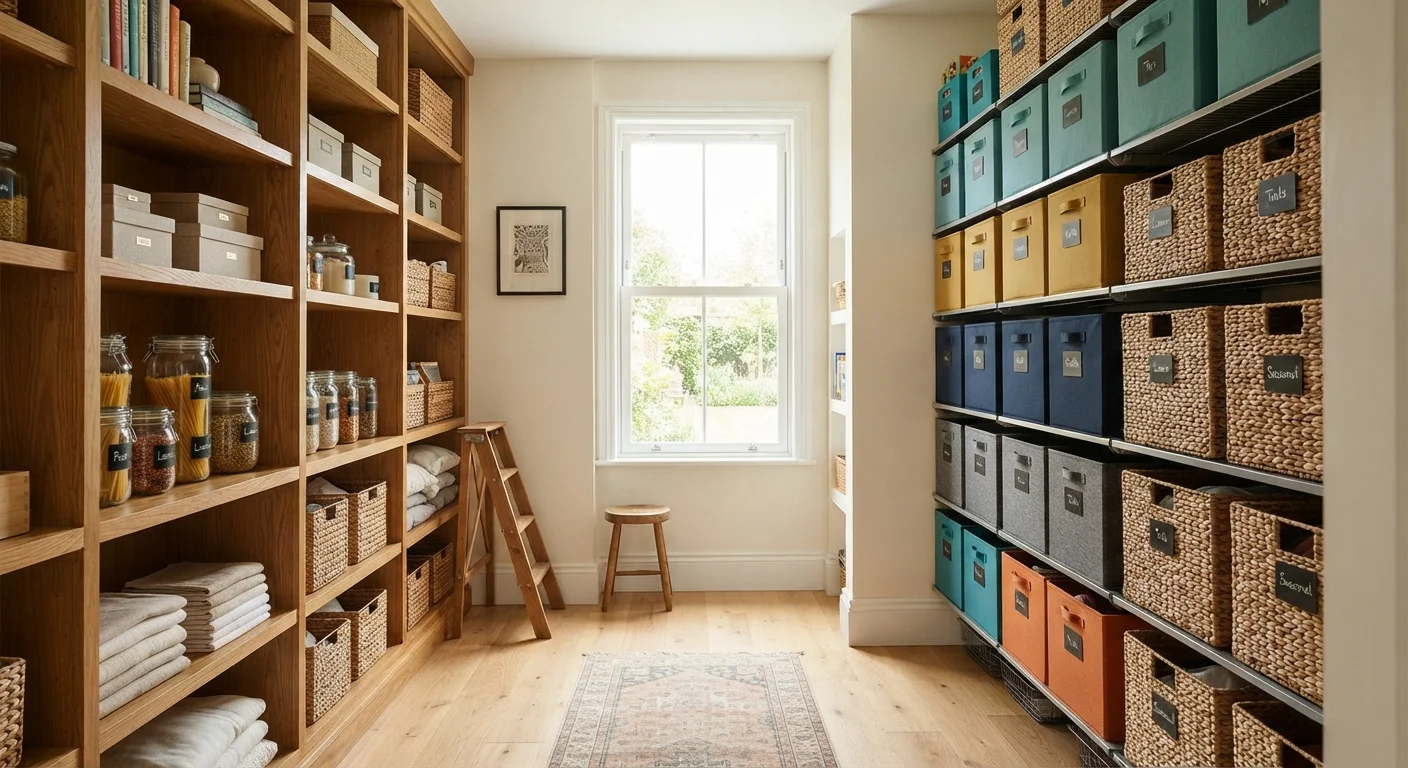
Fixed organizers include built-in shelving, custom closet systems, wall-mounted cabinetry, and any storage that is attached to the structure of your home. Once installed, they stay put. Flexible bins refers to modular, freestanding, or stackable systems - think fabric cubes, rolling carts, drawer organizers, and open-top containers - that can be rearranged, repurposed, or moved without tools.
The distinction matters because no storage system is universally better. What works is the one that fits how your household moves through space, what you store, and how often those things change. See how this same principle applies room by room in our guide to open shelving vs. closed cabinets.
The Case for Fixed Organizers
Fixed storage earns its place in homes where needs are predictable and long-term investment pays off. A well-designed built-in can maximize every inch of an awkward closet, reach floor-to-ceiling efficiently, and add measurable value to a home.
- Durability: Built-ins withstand heavy loads and daily use better than most freestanding alternatives.
- Space efficiency: Custom configurations eliminate wasted corners and dead zones that generic bins can't address.
- Aesthetic cohesion: Fixed systems can be designed to match trim and cabinetry throughout the home.
- Low maintenance: Once installed correctly, there's nothing to restack, reassemble, or replace seasonally.
The tradeoffs are real: installation often requires a contractor, costs more upfront, and may need permits depending on scope. If your needs change - a new baby, a hobby switch, a move - fixed storage doesn't adapt without significant effort. For spaces where you're maximizing limited square footage, also consider how vertical vs. floor storage factors into the decision.
Start With a Needs Audit Before Committing
Before investing in any fixed system, spend two to four weeks observing how you actually use the space - not how you intend to. Note what gets dumped, what stays tidy, and where the real friction points are. Fixed storage designed around real behavior will serve you far better than a system built around an idealized routine.
The Case for Flexible Bins and Modular Systems
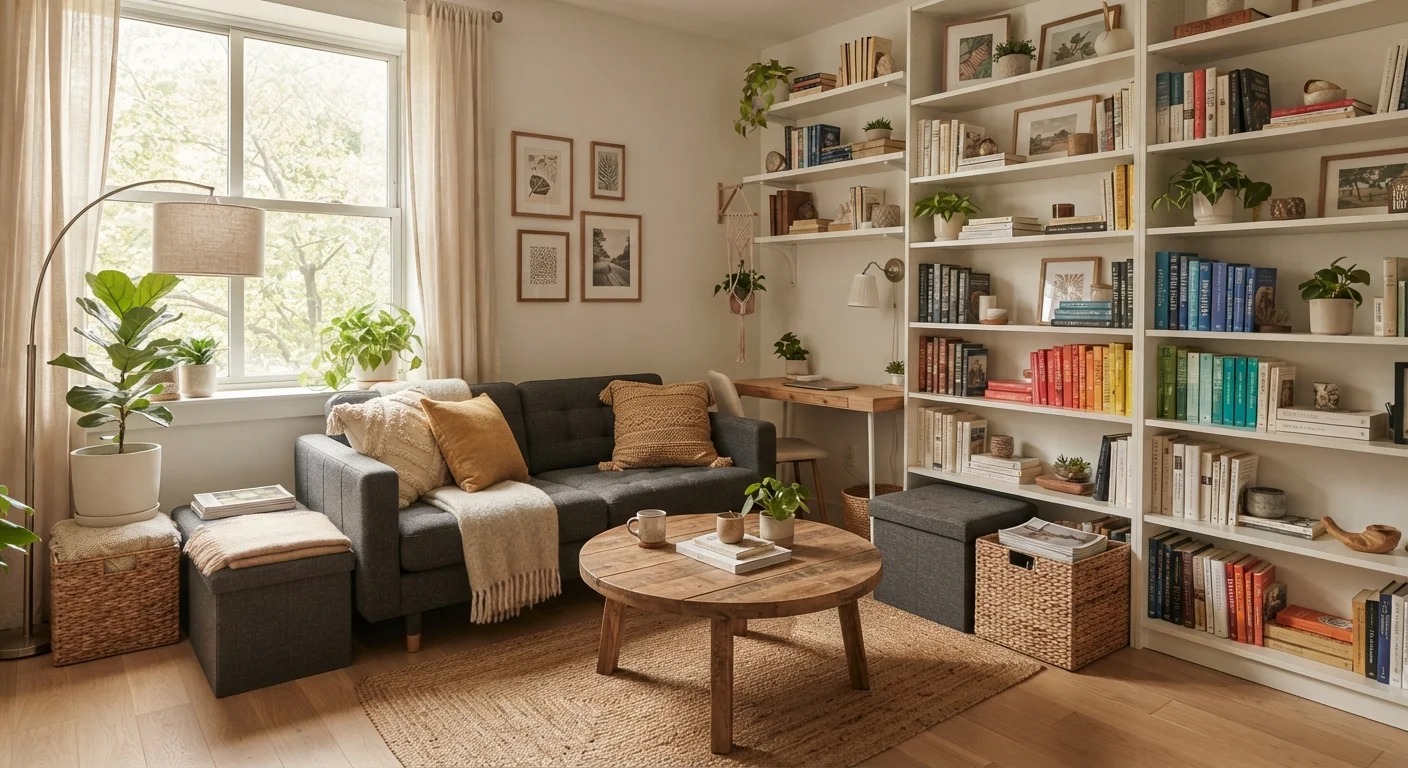
Flexible storage thrives in households where life is still taking shape - children growing up, hobbies changing, roommates coming and going. The core advantage is adaptability: you can reconfigure a modular system on a Saturday afternoon without a single tool.
- Low upfront cost: Entry-level modular systems are generally accessible for most household budgets.
- Renter-friendly: No drilling or permanent installation means you leave with your storage intact.
- Iterative design: You can test a layout, see what doesn't work, and adjust - a major advantage when you're still learning your own storage patterns.
- Portability: Bins and carts move with you, protecting your investment across multiple homes.
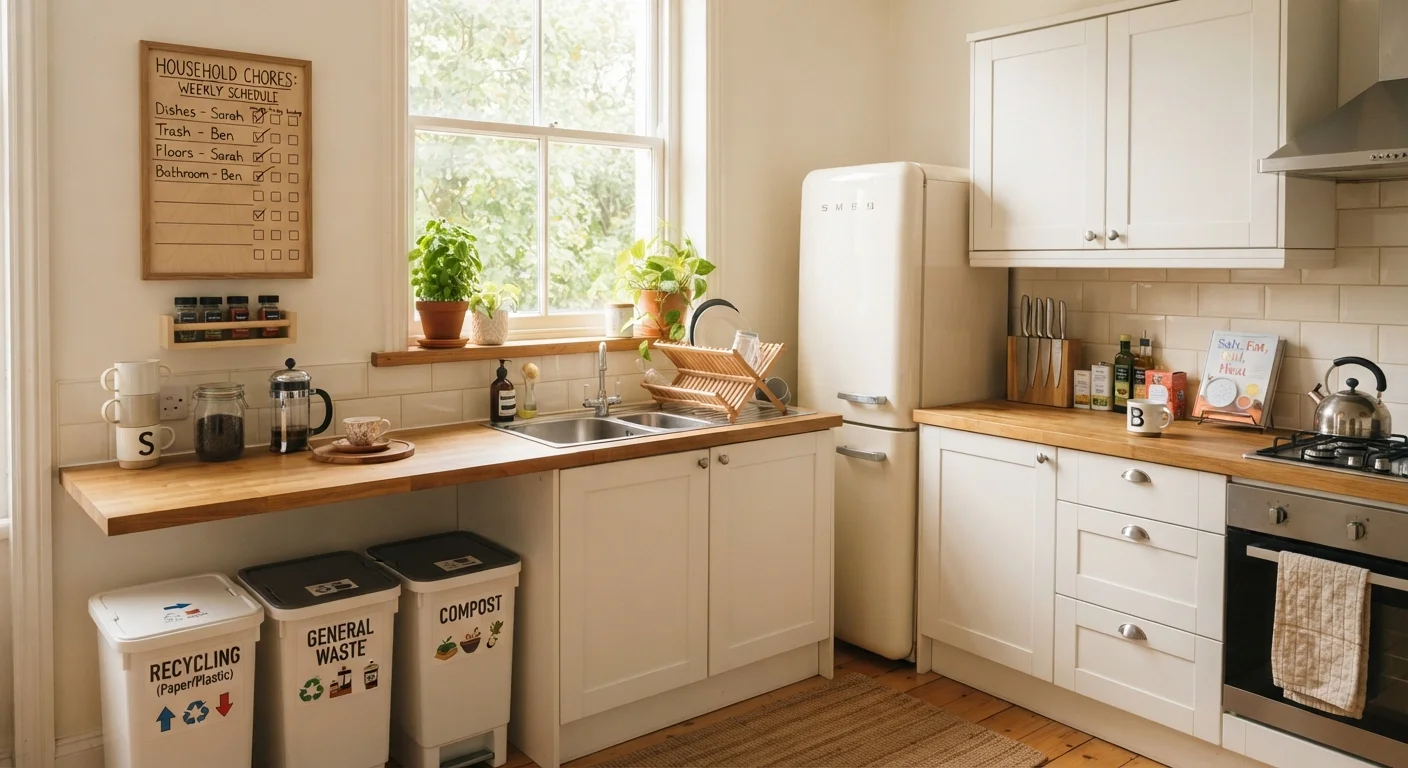
Flexible systems have limits, too. They tend to look less polished, may shift or tip if not secured, and can become clutter magnets if not maintained. Shared households especially need agreed-upon rules for flexible systems to function - something our guide on organizing a shared household covers in depth.
Flexible Doesn't Mean Maintenance-Free
Modular bins and open-top containers can quickly become catch-alls without a clear system for what belongs where. Before purchasing, assign every bin a category and involve everyone in the household in that decision. A flexible system with no agreed rules often creates more clutter than it solves.
Comparing the Two Approaches
The table below breaks down how fixed and flexible systems stack up across the criteria that matter most to everyday households.
| Fixed Organizers | Flexible Bins | |
|---|---|---|
| Upfront cost | Higher - installation often required | Lower - accessible entry price point |
| Adaptability | Low - changes are difficult and costly | High - reconfigure without tools |
| Durability | Excellent for heavy, daily use | Moderate - varies by material |
| Best for renters | No - leaves with the property | Yes - fully portable |
| Space efficiency | High - custom fit to every corner | Medium - limited by standard sizes |
| Aesthetic polish | High - can match home finishes | Variable - depends on system chosen |
| Ideal for growing families | Limited - hard to reconfigure frequently | Strong - adapts as needs change |
How to Decide - and When to Combine Both
Rather than choosing one system for your entire home, map your storage needs by zone. Ask two questions for each area: How stable are my storage needs here? and How long do I plan to stay?
If both answers lean toward long-term and consistent - a primary closet, a garage tool wall, a laundry room - fixed storage is likely the smarter investment. If either answer is uncertain - a playroom, a home office shared with guests, a pantry you're still figuring out - start with flexible bins and revisit once patterns emerge.
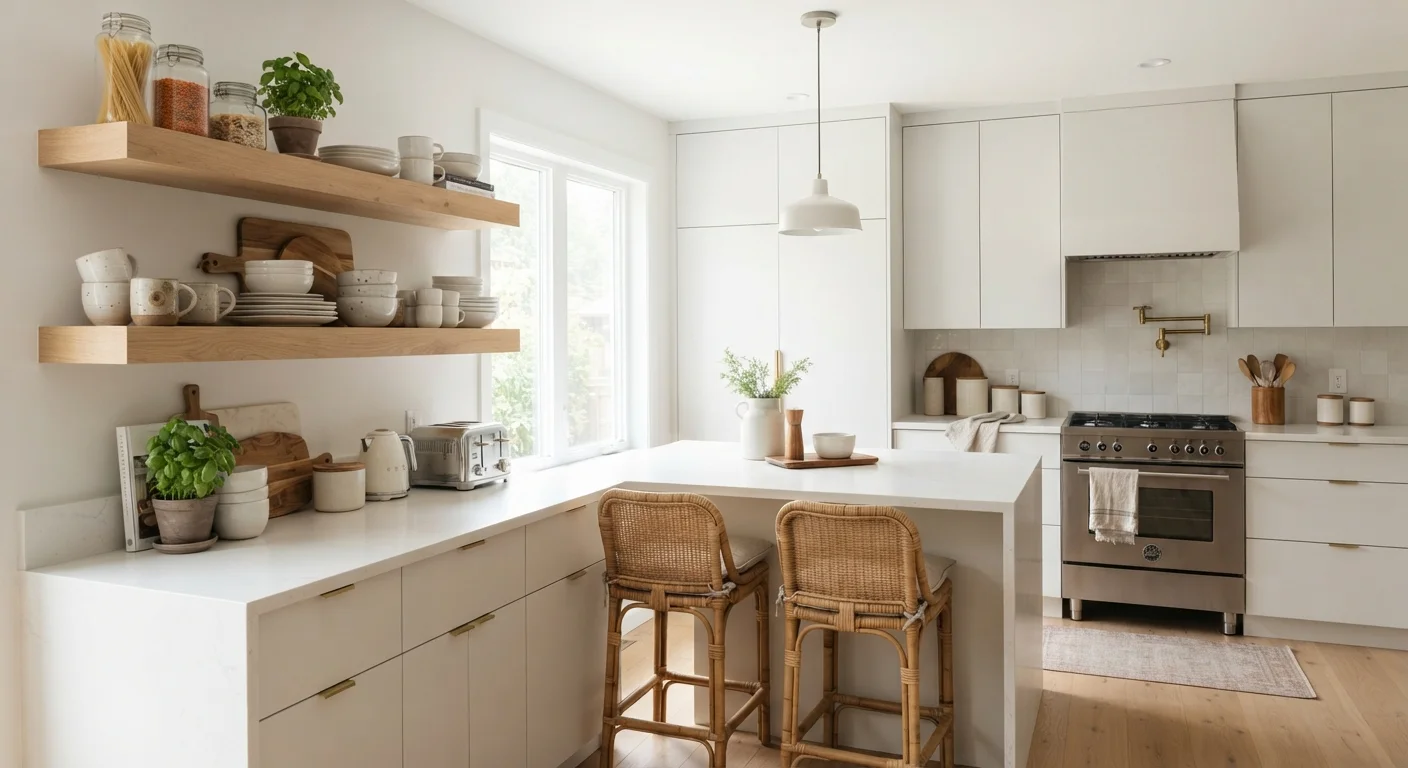
Kitchens are a practical example of the hybrid approach: fixed cabinetry handles pots, pans, and dishes, while flexible drawer organizers and modular pantry bins handle the categories that shift with your cooking habits. For a closer look at that specific challenge, see our article on reorganizing kitchen drawer chaos.
Budget is another honest factor. If funds are limited, flexible bins let you build incrementally rather than committing to a large installation. For broader household budget strategies, the budgeting basics hub offers practical frameworks for managing home improvement spending.