What Each Approach Actually Means
Storage strategy in a small home comes down to one fundamental question: where do you put things when floor space is already spoken for? Vertical storage uses wall height - shelves, wall-mounted racks, pegboards, and tall cabinets that climb toward the ceiling. Floor storage keeps everything at ground level - bins, baskets, ottomans, low credenzas, and under-bed containers.
Neither approach is inherently superior. Each makes real tradeoffs between accessibility, visual weight, and how much of your room stays usable for living. Understanding those tradeoffs is what lets you build a system that holds up in a real household - not just a staged photo.
For a related angle on how your storage containers themselves affect organization habits, see Fixed Organizers vs. Flexible Bins.
| Criterion | Vertical Storage | Floor Storage |
|---|---|---|
| Floor space used | Minimal | Moderate to high |
| Accessibility | Lower for high items | Easy, no reaching |
| Visual impact | Draws eye upward, opens floor | More visible clutter risk |
| Renter-friendly | Often requires wall anchoring | No wall modification needed |
| Best item types | Seasonal, decorative, books | Daily-use, heavy, bulky items |
| Safety considerations | Must anchor to studs; needs step stool | Low risk; watch for floor trip hazards |
| Flexibility | Fixed once installed | Easily repositioned |
Where Vertical Storage Wins
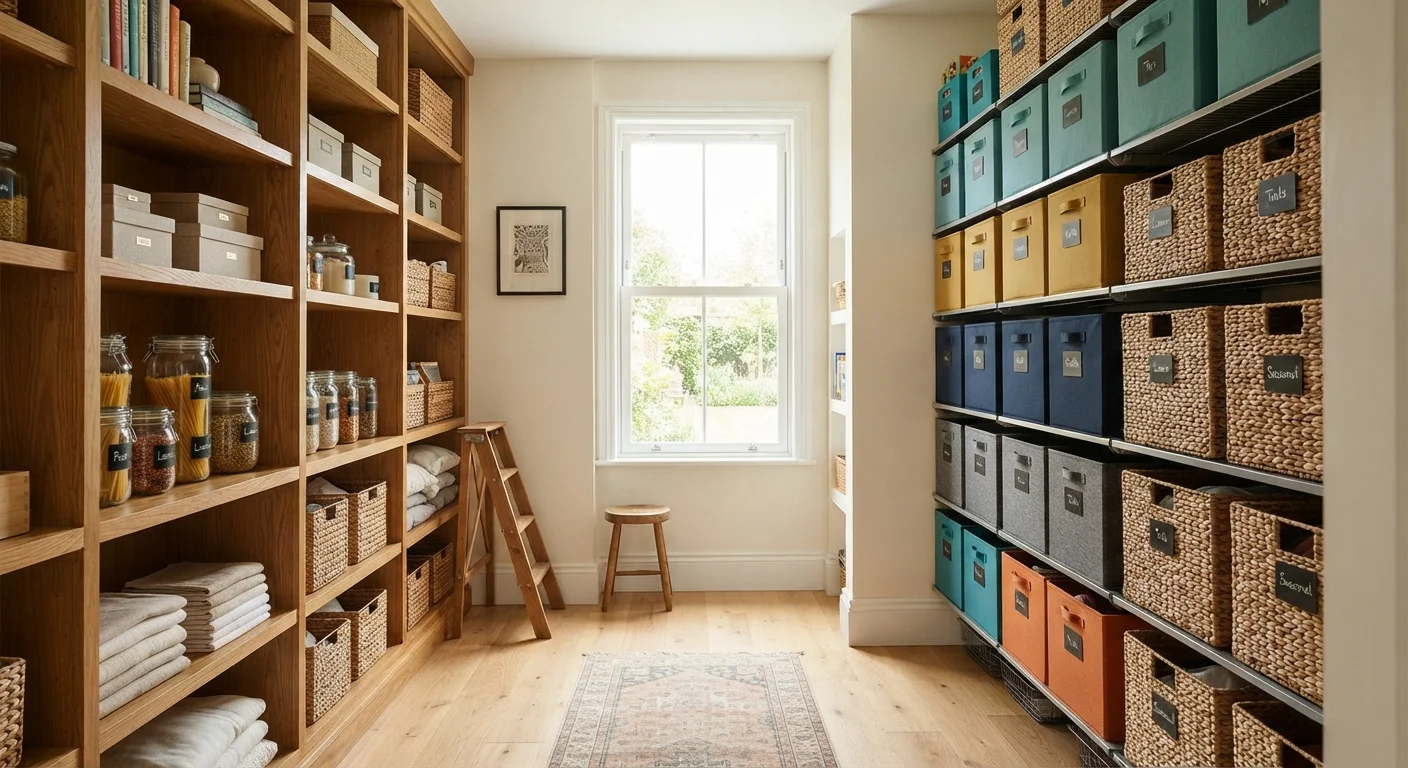
In rooms where floor space is genuinely scarce - studios, galley kitchens, narrow home offices - going vertical is often the most effective move available. A wall of shelving from waist height to ceiling can hold the equivalent of several floor-standing units without consuming any additional square footage at ground level.
Vertical storage also gives a room more visual breathing room. When floors are clear, spaces feel larger and easier to navigate. This matters practically, not just aesthetically: open floor space is easier to clean and reduces the sense of visual clutter that makes small rooms feel chaotic.
~60%
Usable wall height typically left empty
Home organization professionals commonly note that most households use only the lower third of their wall height for storage, leaving significant vertical capacity untapped.
8-10 ft
Standard ceiling height in US homes
Most US homes built after 1990 have 8- to 10-foot ceilings, providing meaningful vertical storage potential well beyond standard furniture heights.
That said, vertical storage has real limitations. Items stored above shoulder height require a step stool or ladder to retrieve safely, making it unsuitable for frequently used everyday essentials. Wall-mounted systems also require secure anchoring - especially in homes with older drywall or plaster. Heavy shelving units must be anchored to wall studs to prevent tipping, a safety requirement rather than an option. If you're renting, check your lease before drilling.
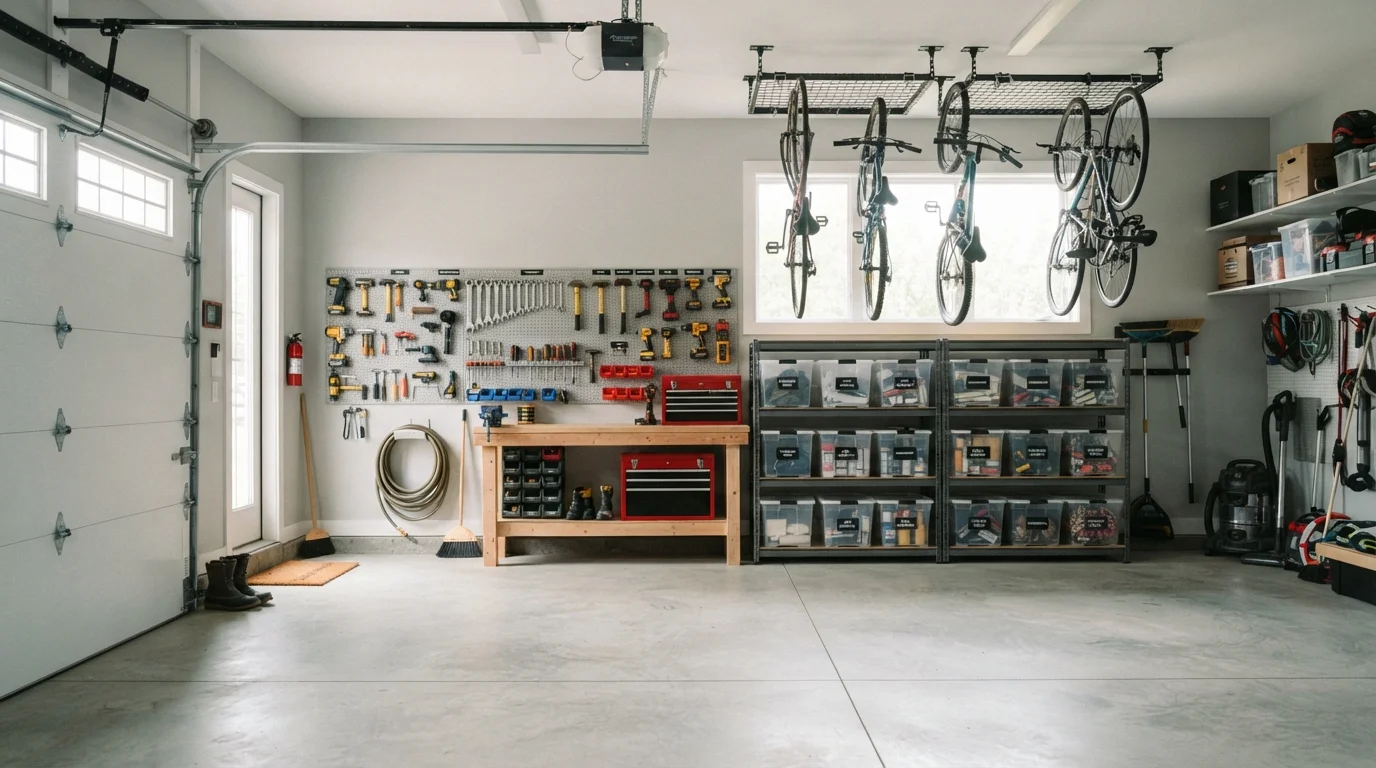
Vertical storage shines brightest for: seasonal items, reference books, rarely accessed tools, and decorative objects that don't need regular handling. For utility areas, see garage organization strategies that apply vertical principles to high-clutter zones.
Where Floor Storage Holds Its Own
Floor storage earns its place through one undeniable advantage: accessibility. Items kept at waist level or below don't require reaching, climbing, or searching overhead. For households with children, older adults, or anyone managing mobility considerations, this matters significantly.
Floor storage also tends to be more flexible. Freestanding bins, low shelves, and storage furniture can be repositioned as needs shift without tools or wall repairs. This adaptability makes floor storage the practical default for renters, frequent movers, and households whose storage needs evolve regularly.
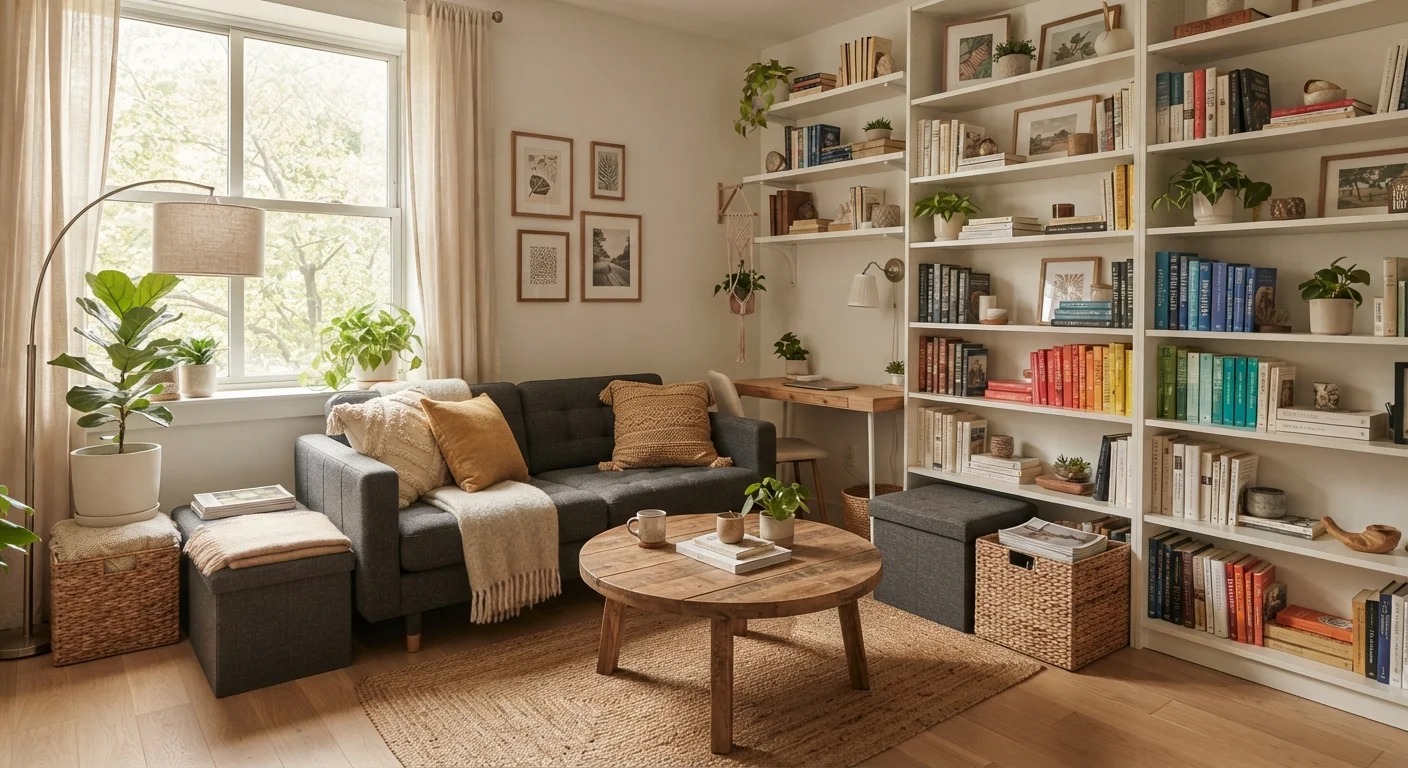
Multi-function floor storage - an ottoman with interior storage, a bench with drawers, a bed frame with under-bed compartments - delivers genuine efficiency in small spaces by combining furniture and storage in a single footprint.
The downside is real, though. Floor storage competes directly with the space you need for living. Every bin, basket, and low shelf occupies floor area that could otherwise be open, and in genuinely small rooms, this accumulation can feel suffocating quickly. Floor-level clutter also tends to be more visually prominent than items stored high.
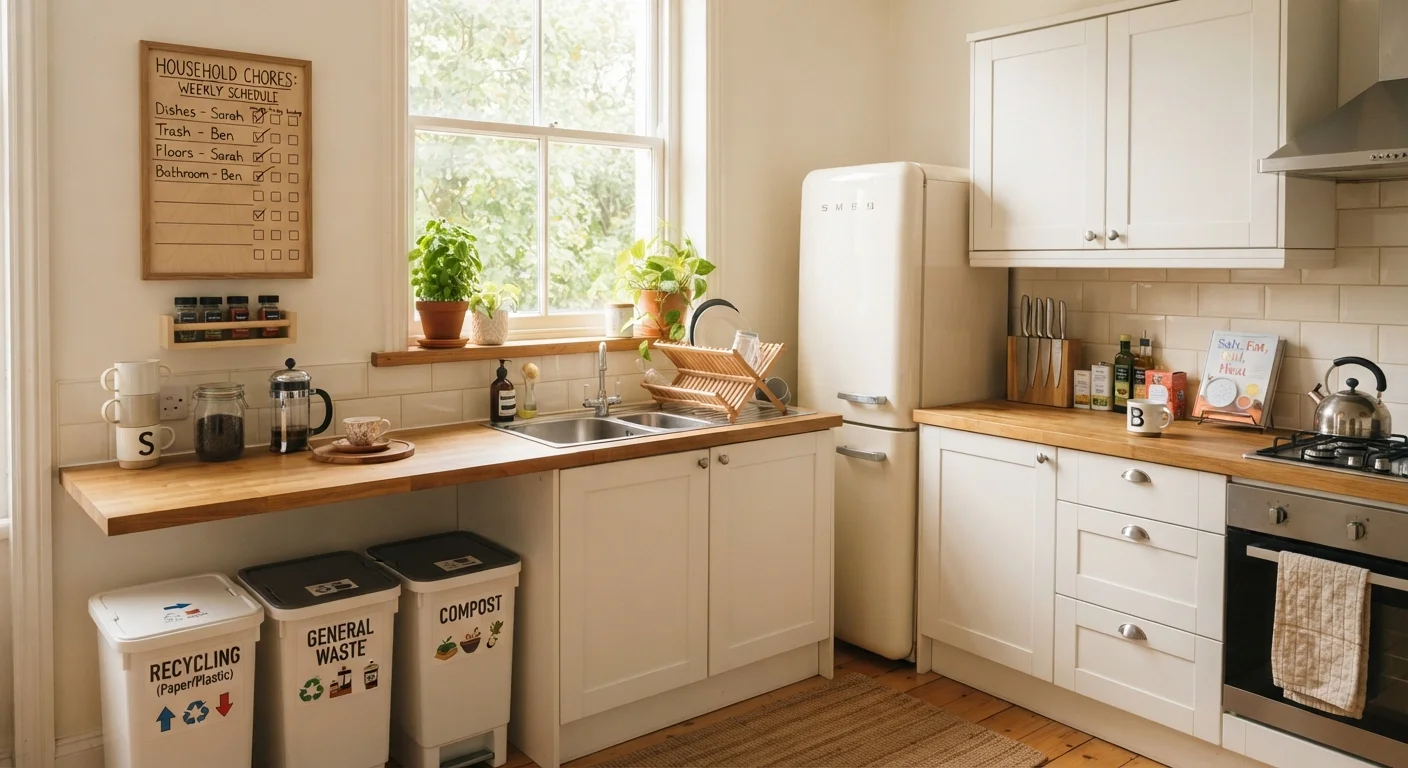
If a shared household is involved, floor storage often needs more defined systems to prevent creep - the tendency for items to migrate and multiply. Shared household organization frameworks can help align different tidiness standards around consistent floor-level systems.
Building a Hybrid System That Actually Works
Most small spaces benefit most from a deliberate combination of both approaches, assigning storage height based on use frequency and item weight. A practical rule of thumb: daily-use items at waist to eye level, occasional items above eye level, and rarely accessed items at the very top or under furniture.
Start by auditing what you actually access daily versus monthly. Seasonal items - clothing rotations, holiday gear, occasional-use tools - are strong candidates for high vertical storage. Seasonal rotation strategies can make this system more intentional without requiring more space.
Consider also the visual difference between open and closed storage at each height zone. Open shelving higher up tends to feel lighter; closed cabinets at floor level reduce visual noise. For more on that specific decision, open shelving vs. closed cabinets covers the tradeoffs directly.
Safety First with Tall Shelving
Any freestanding shelving unit taller than roughly 36 inches should be anchored to a wall stud to prevent tipping - this is especially critical in homes with children. Wall anchoring requirements vary by unit weight and wall construction type. When in doubt, consult a handyperson or follow the manufacturer's anchoring instructions precisely.
The goal isn't to choose one system permanently - it's to match storage height to how items are actually used, so everything has a place that's both logical and realistic to maintain.