
What Debt Consolidation Actually Does
Debt consolidation replaces multiple separate debts-typically credit card balances, medical bills, or personal loans-with a single new loan or credit line. The goal is usually to secure a lower interest rate, reduce the number of payments you manage each month, or both.
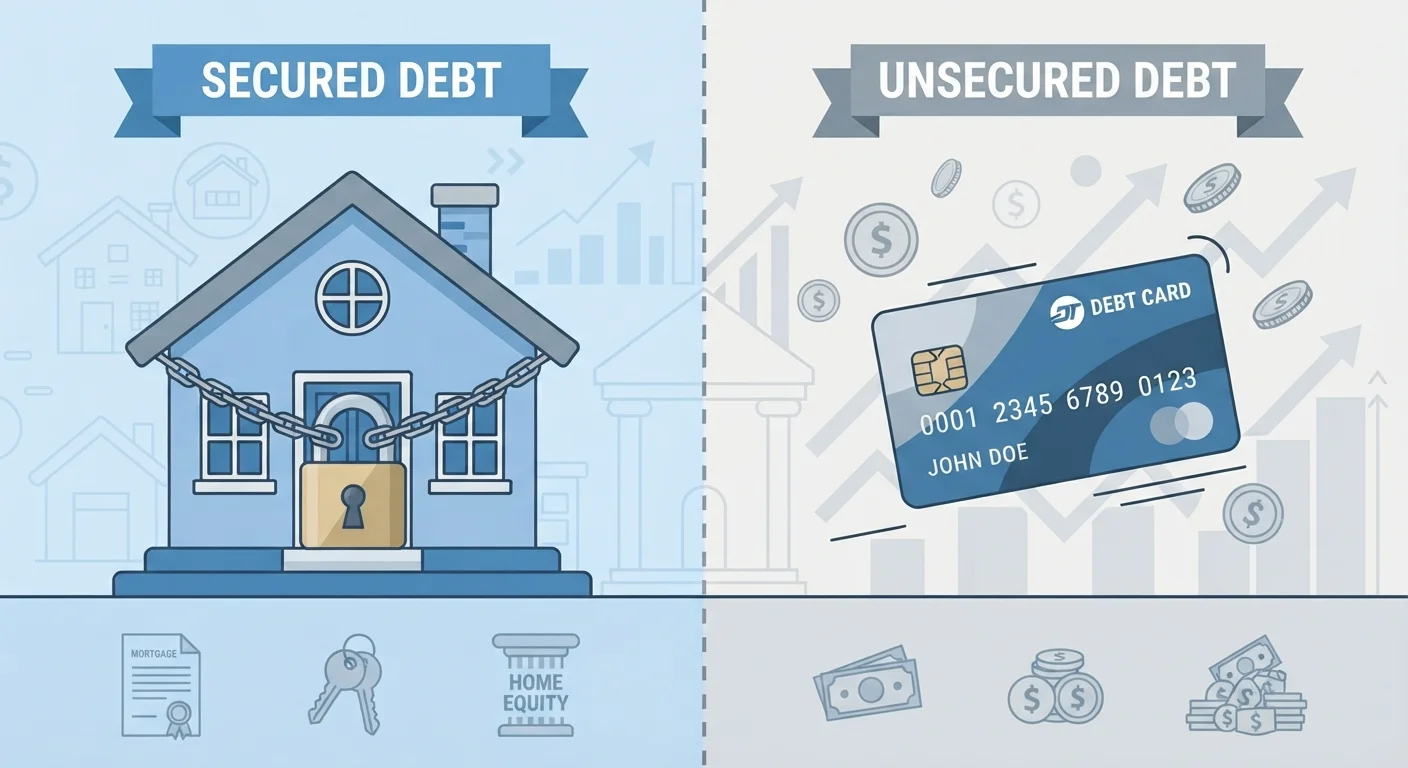
The two most common methods are a personal consolidation loan (an unsecured loan used to pay off existing balances) and a balance transfer credit card (which moves existing balances onto a new card, often with a promotional low or zero-percent interest period). Home equity loans or lines of credit can also be used, though those convert unsecured debt into debt secured by your home-a meaningful risk distinction. See how secured versus unsecured debt differs in risk before considering that route.
What consolidation does not do is reduce the principal you owe. The balance transfers with you. The benefit comes entirely from more favorable terms-rate, repayment structure, or both.
Consolidation vs. Refinancing: A Quick Distinction
Debt consolidation and refinancing are related concepts but not identical. Refinancing typically replaces one existing loan with a new one on better terms-common with mortgages. Consolidation combines multiple debts into one. If you own a home and are also evaluating your mortgage, the core concepts behind mortgage refinancing apply a similar analytical framework to that decision.
The Real Advantages
When the numbers align, consolidation offers measurable benefits.
Single monthly payment reduces management complexity
Tracking and paying one loan instead of five or six eliminates the risk of forgetting a due date, which protects your payment history and reduces administrative stress.
Potential for a lower interest rate
Borrowers with good credit may qualify for a personal loan rate well below the average credit card APR, reducing how much interest accrues each month.
Fixed repayment timeline adds predictability
Unlike revolving credit card debt, a personal consolidation loan has a defined end date, giving you a concrete payoff target.
Can improve credit utilization ratio
Moving credit card balances to an installment loan frees up revolving credit, which can lower your utilization rate and positively affect your credit score over time.
For borrowers with multiple high-rate credit card balances, moving to a fixed-rate personal loan can cut the interest cost significantly. The Consumer Financial Protection Bureau notes that credit card rates are often substantially higher than personal loan rates for qualified borrowers, making the interest savings real and calculable.
Simplifying to one payment also reduces the risk of missed payments-which directly protects your credit score. If you want to understand how balance management affects your score more broadly, read about credit utilization and what it actually does.
The Trade-Offs Promotions Often Skip
Consolidation is frequently marketed with an emphasis on lower monthly payments-but a lower payment usually means a longer loan term, which can mean more total interest paid over the life of the debt, even at a lower rate. Always compare total repayment cost, not just monthly payment size.
Lower payment may mask a longer, costlier timeline
Extending your repayment period to reduce monthly payments often means paying more total interest even at a lower rate-always calculate the full repayment cost.
Upfront fees reduce net savings
Personal loans often carry origination fees of 1%-8%; balance transfer cards typically charge a transfer fee of 3%-5%, which must be weighed against projected interest savings.
Promotional rates eventually expire
Balance transfer introductory rates are time-limited; any balance remaining when the promotional period ends will accrue interest at the card's standard rate.
Does not address underlying spending behavior
Consumers who consolidate but continue charging on paid-off cards often end up with more total debt within a few years, worsening their financial position.
Requires creditworthiness to get favorable terms
The best rates go to borrowers with strong credit profiles; those with fair or poor credit may not qualify for terms that make consolidation financially worthwhile.
Using home equity converts unsecured to secured debt
Pledging your home as collateral to consolidate credit card debt puts your property at risk if repayment becomes difficult-a significant escalation of consequence.
Balance transfer cards carry another common pitfall: the promotional rate expires, often after 12-21 months, and any remaining balance then accrues interest at the card's standard rate, which can be high. Origination fees on personal loans-typically 1%-8% of the loan amount-also reduce the net benefit and must be factored into any comparison.
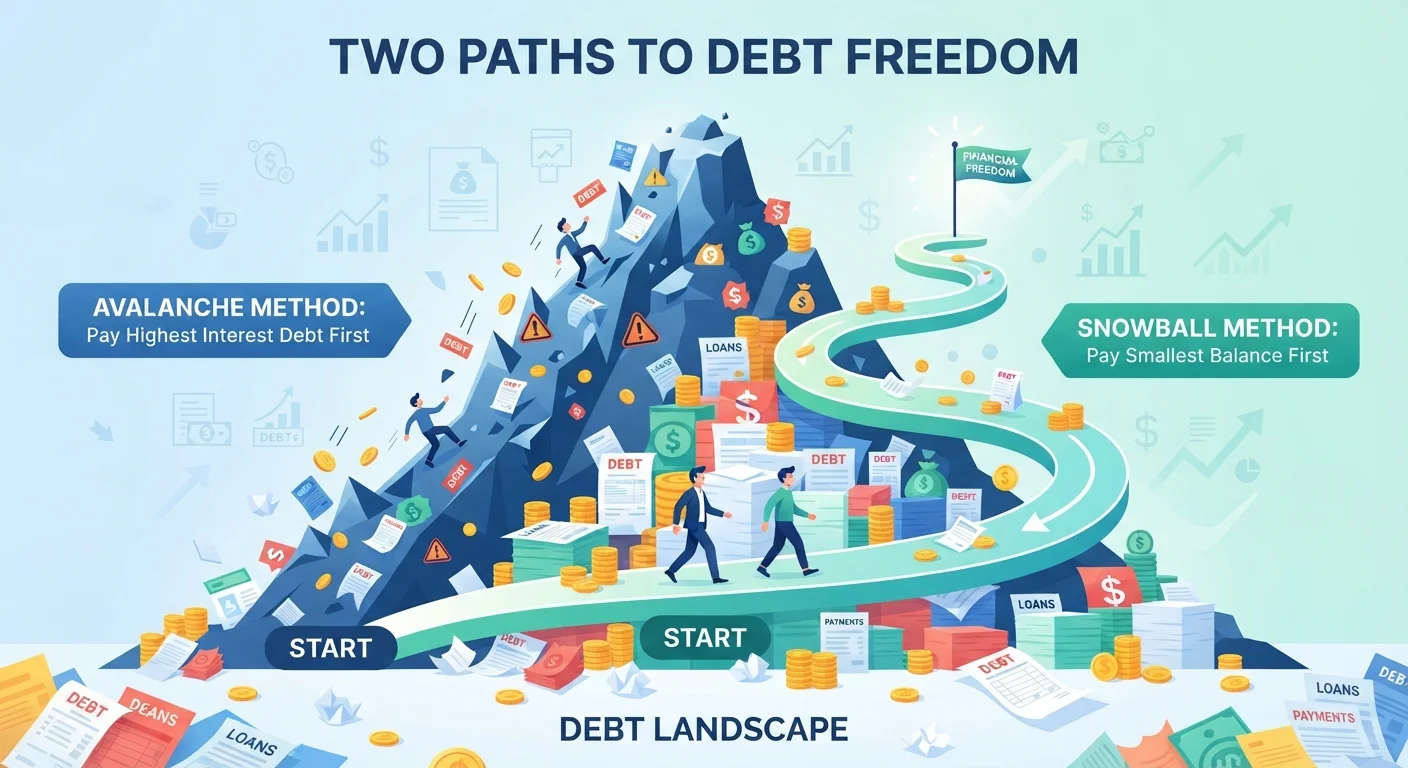
If DIY payoff strategies are on the table, it's worth understanding the alternatives. The debt avalanche and debt snowball methods can eliminate debt without adding a new loan, depending on your discipline and cash flow.
How It Affects Your Credit
Applying for a consolidation loan or balance transfer card triggers a hard inquiry, which typically causes a small, temporary dip in your credit score. Opening a new account also lowers your average account age, another short-term negative factor.
20%+
Average credit card interest rate in the US
Federal Reserve data has shown average credit card rates exceeding 20% APR, underscoring the potential savings from qualifying for a lower consolidation rate.
35%
Weight of payment history in FICO score
FICO's published scoring criteria identify payment history as the single largest factor, making on-time consolidation payments a meaningful credit-building tool.
On the other side, consolidation can improve your credit utilization ratio-the share of available revolving credit you're using-if it moves balances off credit cards onto an installment loan. Lower utilization generally helps scores over time. And making consistent on-time payments on the new account builds positive payment history, the single largest factor in most credit scoring models.
The net effect on your score depends heavily on your specific profile and how you manage credit afterward. For those already dealing with damaged credit, rebuilding credit after a financial setback outlines a more structured path forward.
When Consolidation Is and Isn't the Right Move
Consolidation makes the most sense when you can qualify for a rate genuinely lower than your current weighted average rate across all debts, when the fees don't erode the savings, and when you have a clear plan to avoid accumulating new balances on the accounts you just paid off.
It is less appropriate when your credit profile won't qualify you for favorable terms, when fees make the math neutral or negative, or when the root cause of the debt-spending patterns, income gaps-hasn't been addressed. In those cases, a nonprofit credit counseling agency's debt management plan may be a better fit, offering structured repayment with negotiated rates without requiring new credit approval.
Consolidation is a restructuring tool, not a resolution. The debt is real and still there. Whether it helps depends entirely on the terms you obtain and the habits you maintain after signing.
This article is for general informational purposes only and does not constitute personalized financial, legal, or tax advice. Consult a qualified financial professional before making decisions about your debt or credit situation.