Why Mixing Terms Matter
Recipes use verbs like "fold," "whisk," and "stir" as if they're interchangeable. They aren't. Each term describes a specific motion that produces a specific result - and using the wrong one can flatten a soufflé, overdevelop gluten in a muffin, or leave lumps in a sauce. Before you ever read a recipe through, it helps to know what these action words actually ask of you.
The difference isn't about technique snobbery. It's about understanding what's physically happening to your ingredients. Air, gluten, emulsification - every mixing method either builds or protects one of these things. Once you understand the goal behind each term, you'll make better decisions even when a recipe's instructions are vague.
Stir
A casual, circular mixing motion used to combine ingredients without needing to aerate or be particularly gentle. Appropriate for soups, sauces, and simple batters where texture development isn't critical.
Whisk
Rapid motion using a wire whisk that simultaneously breaks up clumps and incorporates air into a mixture. Used for smooth sauces, custards, and lightly aerated preparations.
Beat
Sustained, forceful mixing - often with an electric mixer - that aerates and structurally transforms ingredients. Examples include creaming butter and sugar or beating egg whites to stiff peaks.
Fold
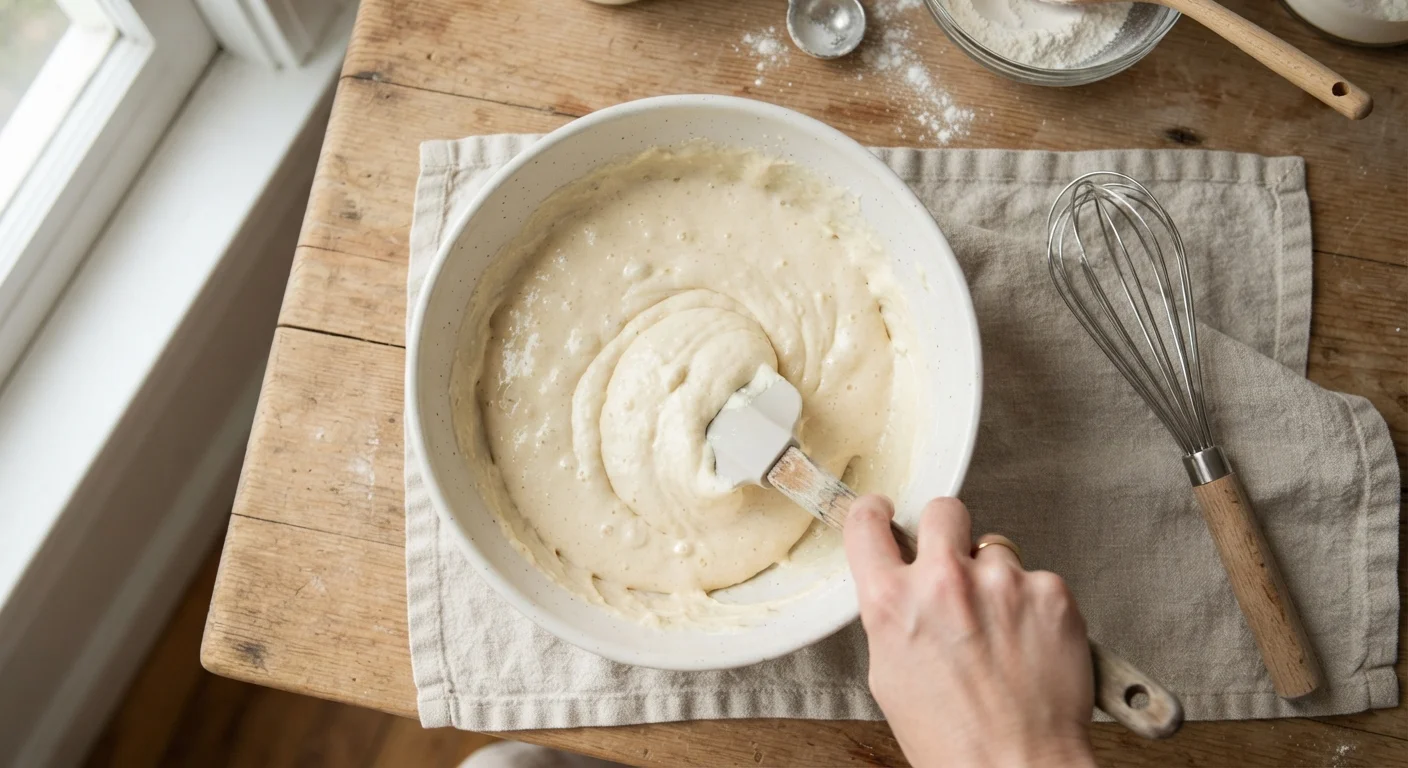
A gentle technique using a rubber spatula to combine mixtures without deflating air. The spatula cuts down through the center, sweeps the bottom, and lifts the mixture over itself in a deliberate arc.
Gluten
A protein network that forms when flour is mixed with water. The more aggressively you mix, the stronger the gluten network - which is desirable in bread but leads to toughness in cakes or muffins.
Aeration
The incorporation of air bubbles into a mixture through mixing. Aeration is what makes cakes rise, mousses light, and whipped cream fluffy - and it can be destroyed by overmixing.
Stir, Whisk, Beat, and Fold - Defined
Stir is the most casual of the four. You move a spoon or spatula in a circular or figure-eight motion to combine ingredients without any particular goal beyond basic uniformity. Stirring is appropriate when the recipe doesn't need aeration and gentle handling isn't critical - think combining a wet and dry ingredient mixture for a quick bread, or moving a pot of soup so it doesn't scorch. Speed and pressure don't matter much here.
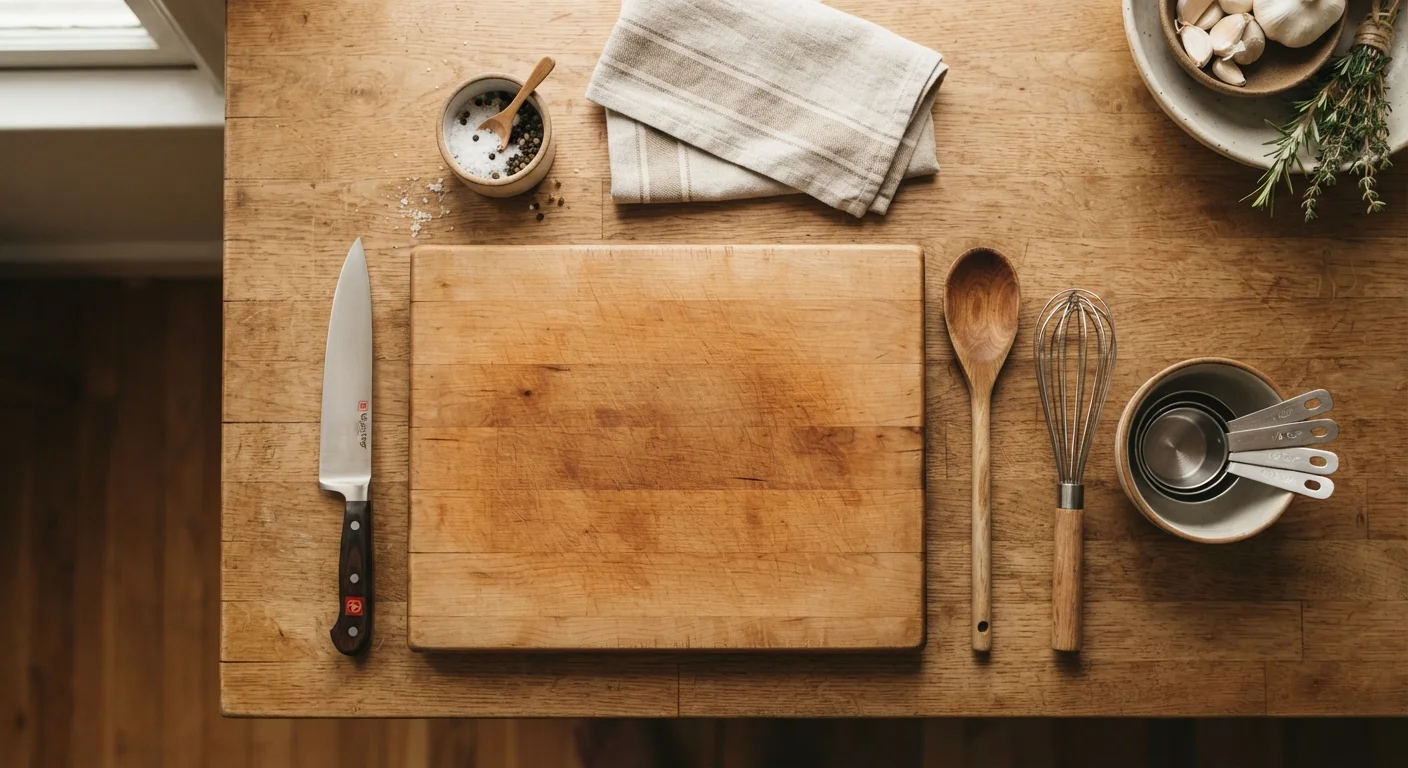
Whisk involves rapid, circular motion using a wire whisk. The wires create turbulence that does two things: it breaks up clumps and it incorporates air. Whisking is called for when you need a smooth, lump-free result (like a pan sauce or custard base) or when you need to aerate (like whipping cream or egg whites to soft peaks). The tool matters - a fork works in a pinch, but the multiple wires of an actual whisk do the job faster and more effectively. See our guide to useful kitchen tools for more on why the right equipment helps.
Beat is a more forceful, sustained version of whisking, often done with a hand mixer or stand mixer. The goal is maximum aeration and structural change - think creaming butter and sugar together until pale and fluffy, or beating egg whites to stiff peaks. Beating physically changes the texture of ingredients in ways that stirring or even whisking cannot.
Fold is the most delicate technique. You use a wide rubber spatula to cut down through the center of the mixture, sweep along the bottom of the bowl, and lift the batter up and over itself - rotating the bowl a quarter turn between each pass. The goal is to combine two mixtures (usually a light, airy one with a heavier one) without deflating the air you've worked to create. Overmix a folded batter and you'll lose the volume that makes a mousse light or a chiffon cake tall.
| Best tool for stirring | Wooden spoon or silicone spatula |
| Best tool for whisking | Wire whisk (balloon or French style) |
| Best tool for folding | Wide, flexible rubber or silicone spatula |
| Best tool for beating | Hand mixer or stand mixer |
| Overmixing risk | Tough texture in quick breads, muffins, and pancakes |
| Undermixing risk | Uneven texture, streaks, or separated ingredients |
Common Mistakes - and How to Avoid Them
The most frequent error beginners make is stirring when a recipe says fold. Stirring is faster and feels more thorough, but the aggressive motion pops the air bubbles in whipped egg whites or cream - collapsing exactly the structure you need. When in doubt, fold more gently than you think necessary and stop as soon as the streaks disappear.
Whisking when a recipe says stir is less destructive, but it can overwork ingredients with gluten - like pancake batter - leading to a tough, chewy result instead of a tender one. A few lumps in pancake batter are normal and fine; a perfectly smooth batter achieved by aggressive whisking often produces dense pancakes.
Beating by hand when a recipe assumes an electric mixer is another source of frustration. Beating butter and sugar to the right consistency by hand is possible but takes significantly longer and produces inconsistent results. Knowing what a technique is actually trying to achieve helps you judge whether you've gotten there - not just follow the motion blindly.
Understanding the why behind technique pairs directly with other kitchen fundamentals. Just as pan temperature shapes the outcome of stovetop cooking, mixing technique shapes the texture and structure of baked and mixed dishes. Both are invisible variables that recipes often undersell.
When a Recipe Says 'Just Until Combined'
This phrase is the recipe's way of telling you to stop mixing as soon as you no longer see dry streaks - even if the batter looks a little lumpy. It's a signal that more mixing will hurt, not help. Recipes for muffins, pancakes, and quick breads use this language specifically because those batters are sensitive to gluten overdevelopment. Trust the instruction.