Why Plant Protein Deserves a Closer Look
Protein is essential for building and repairing tissue, producing enzymes and hormones, and supporting immune function. While animal foods are often the default reference point, a wide range of plant foods deliver meaningful amounts of protein - along with fiber, vitamins, and minerals that meat typically lacks.
The key concept to understand is amino acid completeness. Proteins are made up of amino acids, nine of which are classified as essential - meaning your body cannot make them and must get them from food. Most plant proteins are considered "incomplete" because they're low in at least one essential amino acid. The solution isn't to abandon plant proteins but to eat a variety of them over the course of a day. Combining complementary sources - such as rice and beans - covers all nine essential amino acids collectively, even if no single food does so alone.
If you're exploring how protein fits into a broader eating approach, our overview of popular dietary patterns offers useful context on plant-based, Mediterranean, and other frameworks.
Lentils
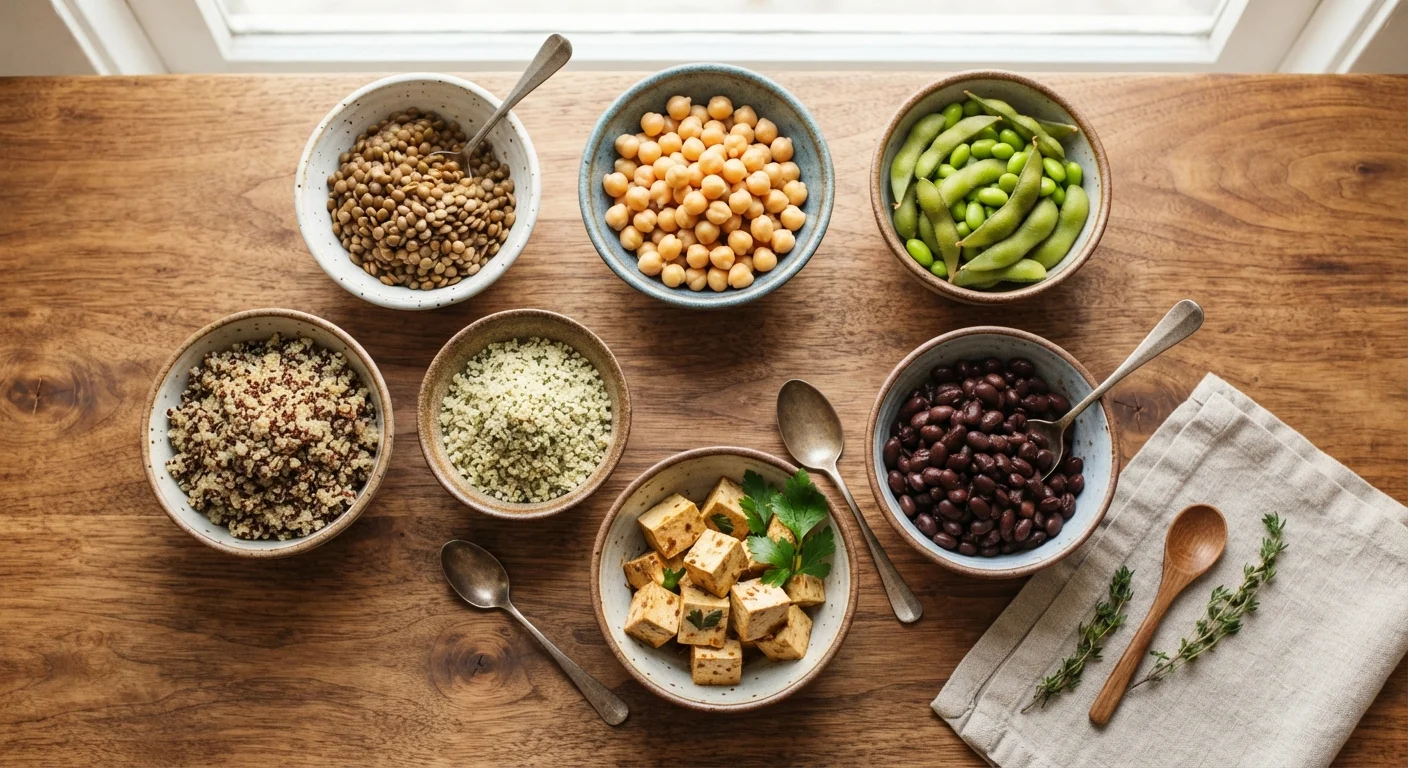
Lentils are one of the most accessible and affordable plant proteins available. A cooked cup delivers roughly 18 grams of protein, along with substantial iron, folate, and dietary fiber. They're low in the essential amino acid methionine, but pairing them with a grain like rice or farro fills that gap easily.
From a preparation standpoint, lentils have a major advantage over other legumes: they don't require soaking and cook in 20-30 minutes depending on the variety. Red lentils break down into a creamy texture ideal for soups and dals; green and brown lentils hold their shape better for salads and grain bowls.
One cup of cooked lentils provides around 18 grams of protein with minimal prep time.
Chickpeas and Other Legumes
Chickpeas, black beans, kidney beans, and navy beans each offer between 14 and 17 grams of protein per cooked cup. Like lentils, most legumes are low in methionine but rich in lysine - an amino acid that grains tend to lack - making legumes and grains a well-established complementary pair in cuisines worldwide.
Canned legumes are nutritionally comparable to home-cooked versions, though they can be higher in sodium. Rinsing canned beans removes a significant portion of added salt. If cooking dried beans from scratch, soaking them for 8 hours reduces cooking time and breaks down oligosaccharides, compounds that can cause digestive discomfort.
Legumes and grains have been a protein-complementing duo in global cuisines for centuries.
Edamame and Soy Foods
Soy is nutritionally unique among plant proteins: it contains all nine essential amino acids in proportions comparable to animal proteins, making it a complete protein. Edamame (young soybeans) provides about 17 grams of protein per cooked cup. Tofu and tempeh - both derived from soybeans - offer 10-20 grams per serving depending on firmness and serving size.
Tempeh, which is made from fermented whole soybeans, tends to be higher in protein than tofu and also provides probiotics from the fermentation process. Tofu's mild flavor makes it highly versatile; its texture varies from silken (suited for smoothies and sauces) to extra-firm (suited for stir-frying and grilling).
Soy is the only widely available plant food considered a complete protein source.
Quinoa
Quinoa is technically a seed but is typically used and categorized as a grain. It stands out because it's another complete protein, containing all nine essential amino acids. One cooked cup provides approximately 8 grams of protein - less than legumes, but higher than most other grain-category foods.
Quinoa cooks in about 15 minutes and has a mild, slightly nutty flavor that works in salads, bowls, and as a side dish. It's also naturally gluten-free. A quick rinse before cooking removes saponins, naturally occurring compounds on the outer coating that can lend a bitter taste.
Quinoa delivers all nine essential amino acids, setting it apart from most grains.
Hemp Seeds
Hemp seeds (also called hemp hearts when shelled) are a compact, versatile protein source that's easy to add to meals without altering flavor. Three tablespoons deliver around 10 grams of protein and a favorable ratio of omega-3 to omega-6 fatty acids. Like soy and quinoa, hemp provides all nine essential amino acids.
They require no cooking and can be stirred into oatmeal, blended into smoothies, sprinkled on salads, or mixed into yogurt. Because they're calorie-dense due to their fat content, a small amount goes a meaningful distance nutritionally.
Three tablespoons of hemp seeds contain about 10 grams of complete protein with no cooking required.
Pumpkin Seeds and Other Seeds
Pumpkin seeds (pepitas) are among the most protein-rich seeds, offering about 9 grams per ounce when roasted. They're also a good source of magnesium, zinc, and iron. Sunflower seeds and chia seeds contribute smaller but still meaningful amounts of protein per serving, along with healthy fats and fiber.
Seeds in general are easy to incorporate: toss them into salads, blend into nut butters, or mix into baked goods. Chia seeds absorb liquid and form a gel-like texture, making them useful in puddings and as an egg substitute in certain recipes.
Pumpkin seeds offer roughly 9 grams of protein per ounce alongside key minerals like zinc and magnesium.
Building Protein Into Your Everyday Eating
Variety is the practical strategy here. Rotating through legumes, whole grains, seeds, and soy foods across your meals naturally distributes different amino acid profiles throughout the day. You don't need to engineer perfect pairings at every meal - nutritional research suggests that eating a range of plant proteins over a full day is sufficient for most healthy adults.
Simple Ways to Boost Plant Protein Daily
You don't need to overhaul your diet to increase plant protein intake. Start by swapping one meal per day to include a legume or soy food as the main protein source. Add hemp seeds or pumpkin seeds to foods you're already eating - oatmeal, salads, or smoothies. These small adjustments accumulate without requiring a major cooking overhaul.
Digestibility is worth keeping in mind. Factors like cooking method, soaking dried beans before cooking, and sprouting grains or legumes can meaningfully improve how well your body absorbs the protein and other nutrients. Raw or undercooked legumes in particular can contain compounds that inhibit nutrient absorption.
For a practical framework on structuring meals around these foods, our weekly plate audit guide and meal planning checklist can help you put these principles into a realistic routine. For more on nutrition and diet fundamentals, explore our dedicated hub.
This article provides general nutrition information and education. It is not intended as medical or dietary advice. Consult a qualified healthcare professional or registered dietitian before making significant changes to your diet, especially if you have a health condition or specific nutritional needs.