What Sets Perennials and Annuals Apart
The core difference between these plant categories comes down to life cycle. Perennials live for more than two years, dying back to the ground in winter and re-emerging each spring from established root systems. Annuals complete their entire life cycle - germination, flowering, and seed production - within a single growing season, then die off.
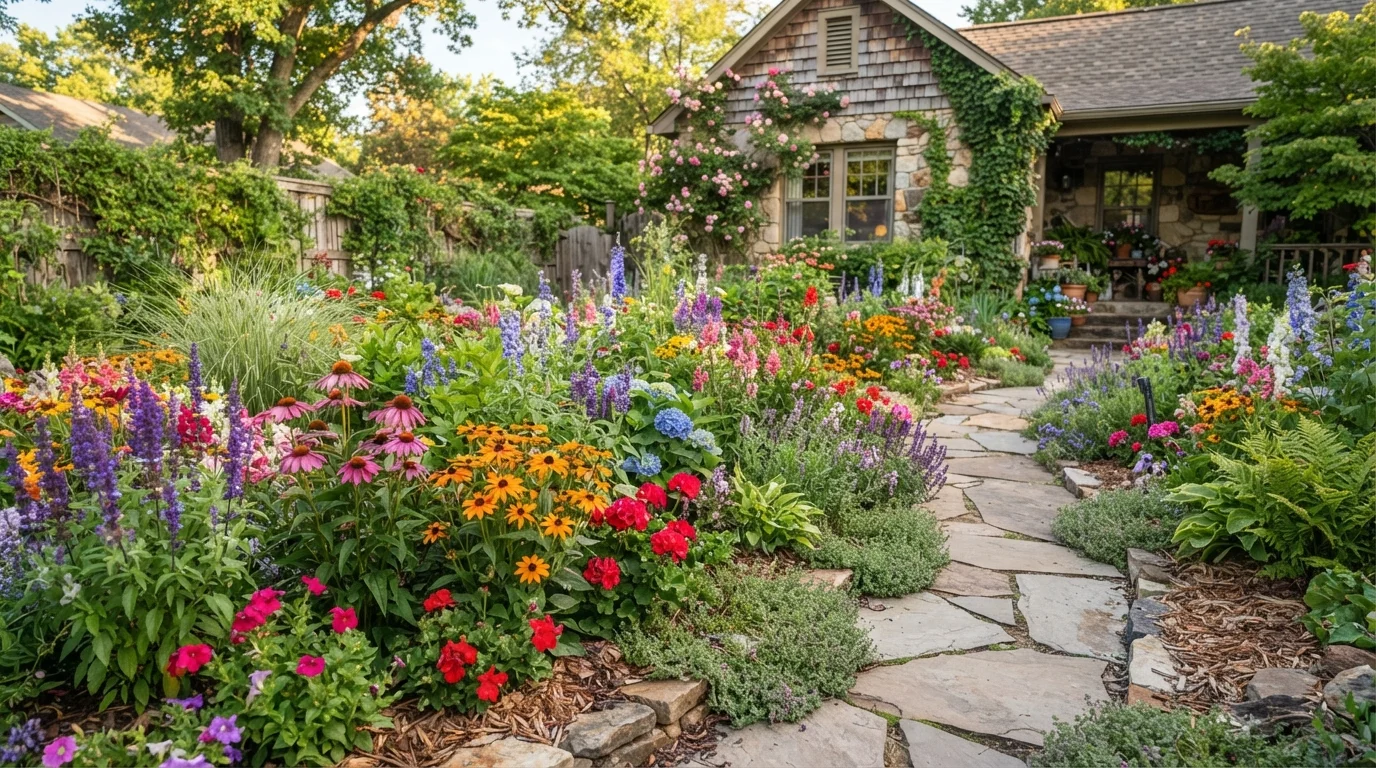
This distinction shapes how each type performs in your yard and how much ongoing effort and money it demands. Perennials like coneflower (Echinacea), black-eyed Susan, and daylily typically have a shorter or more defined bloom window - often two to six weeks - but grow back reliably without any annual replanting cost. Annuals such as marigolds, petunias, and zinnias bloom from spring through frost, keeping color in the garden for months at a stretch. For low-light situations, shade-tolerant options exist in both categories - see our guide on shade gardening strategies for plant-specific ideas.
The Real Cost Comparison
Upfront, annuals appear affordable - a six-pack of transplants is often inexpensive. But that cost repeats every single year. Perennials carry a higher initial price tag per plant, yet that investment spreads across many growing seasons. A perennial clump can also be divided every few years, multiplying your plants for free.
| Perennials | Annuals | |
|---|---|---|
| Lifespan | 3+ years from single planting | One growing season only |
| Upfront cost | Higher per plant | Lower per plant or pack |
| Long-term cost | Lower - no yearly repurchase | Higher - replanted annually |
| Bloom duration | Typically 2-6 weeks per plant | Spring through first frost |
| Design flexibility | Fixed position, consistent look | Easily changed each season |
| Maintenance | Divide every few years | Remove and replant each year |
| Best use case | Garden structure and backbone | Color gaps and seasonal variety |
The economics tip decisively toward perennials over a five- to ten-year horizon, especially in larger beds. However, annuals remain cost-effective for filling gaps in new gardens while perennials establish, or for container displays where seasonal variety is the point. If container gardening is your primary setup, our container gardening guide covers potting considerations for both plant types.
Color, Bloom Time, and Design Flexibility
Perennials give a garden its bones - reliable form, seasonal texture, and year-over-year presence. The trade-off is that most individual perennials bloom for a limited window. Thoughtful succession planting (choosing perennials that bloom in early, mid, and late season) can extend color without relying on annuals at all, but it requires planning.
Annuals fill design gaps with ease. Want a burst of red in July to complement your purple salvias? A flat of annuals placed strategically delivers that in days. They also allow you to completely reinvent a bed's color scheme from one year to the next - something perennials, with their fixed positions, cannot offer.
Stagger Your Perennial Bloom Times
When selecting perennials, check each plant's bloom period and aim to have at least one variety flowering in early spring, midsummer, and early fall. This succession approach keeps the garden visually active with minimal annual spending. A simple bloom calendar written out before you purchase plants saves significant guesswork later.
Pairing annuals with perennials also creates natural companion-planting opportunities. Some combinations genuinely benefit both plants through pest control or pollinator attraction - the companion planting guide separates evidence-backed pairings from garden folklore.
How to Build a Balanced Garden Plan
A practical approach for most home gardeners is to anchor beds with perennials - targeting roughly 60-70% of planted area - and use annuals to fill gaps and add season-long color in the remaining space. Here's a simple framework:
- Map your bloom calendar. Identify which perennials bloom in early, mid, and late season so color is distributed across spring, summer, and fall.
- Identify the gaps. Periods with little perennial color are prime spots for annuals - typically midsummer, when many spring perennials have finished and fall bloomers haven't started.
- Prioritize natives where possible. Native perennials adapted to your region typically need less water and fertilizer. Our overview of native plant benefits explains why ecologists consistently recommend them.
- Use annuals for containers and edges. High-visibility spots like porch pots and bed borders benefit from the continuous bloom that annuals provide.
If you're deciding between raised beds and traditional planting as the physical foundation for this mix, the trade-offs in drainage and soil control are worth reviewing - see our raised beds vs. in-ground planting comparison for guidance.
3-5 years
Typical perennial cost payback period
Garden educators commonly cite this window as when a perennial's multi-season return outweighs its higher upfront price versus annual replacements.
~70%
Perennial share recommended for low-maintenance beds
University cooperative extension programs frequently suggest a perennial-dominant ratio for gardeners seeking beauty with reduced recurring labor and expense.