Understanding Shade: It's Not All the Same
Before choosing plants or adjusting your soil, it helps to know exactly what kind of shade you're working with. Not all low-light conditions are equal - a spot beneath a dense Norway spruce behaves very differently from the filtered light under a honey locust.
| Full shade definition | Less than 3 hours of direct sun per day |
| Partial shade definition | 3-6 hours of direct sun, often morning light |
| Dappled shade definition | Filtered light through a loose tree canopy all day |
| Dry shade challenge | Common under shallow-rooted trees like maples and beeches |
| Most adaptable shade perennial | Hosta (tolerates partial to full shade) |
| Soil amendment frequency | Top-dress with compost once or twice per year |
Spend a day tracking sunlight across your yard in one-hour intervals, noting where direct sun lands and for how long. This observation step is foundational - skipping it leads to mismatched plant choices. If you're building out your first garden space entirely, this beginner's ground-up guide covers site assessment in detail.
Plants That Genuinely Thrive in Low Light
The good news: the plant palette for shade is far wider than most gardeners realize. The key is matching light tolerance to your specific shade type.
Perennial Groundcovers and Foliage Plants
- Hostas - Available in dozens of sizes and leaf colors, hostas are workhorses of the shade garden. They prefer partial to full shade and consistent moisture.
- Astilbe - Feathery plumes in pink, white, and red bloom in partial shade. Astilbe performs best with moist, humus-rich soil.
- Ferns (native varieties) - Ostrich, cinnamon, and autumn ferns add texture and movement. Most tolerate deep shade once established.
- Heuchera (coral bells) - Grown primarily for striking foliage in bronze, burgundy, and lime green. Tolerates dry shade better than most perennials.
Flowering Annuals for Seasonal Color
- Impatiens - Classic shade annuals delivering continuous color through summer. Note that downy mildew has affected some varieties; look for resistant strains.
- Begonias (wax and tuberous) - Both types handle partial shade well, with tuberous begonias preferring cooler, shadier spots.
- Torenia (wishbone flower) - An underused annual that thrives in full shade and self-seeds lightly.
Balancing perennials with annuals gives you reliable structure year after year while keeping seasonal color flexible. See how to combine both effectively without replanting everything each spring.
Full shade
A garden area receiving fewer than three hours of direct sunlight daily. Most vegetable crops cannot thrive here, but many ornamental perennials and ferns do.
Partial shade
An area receiving three to six hours of direct sun, typically in the morning. This is the most versatile light condition and supports the widest range of shade-tolerant plants.
Dappled light
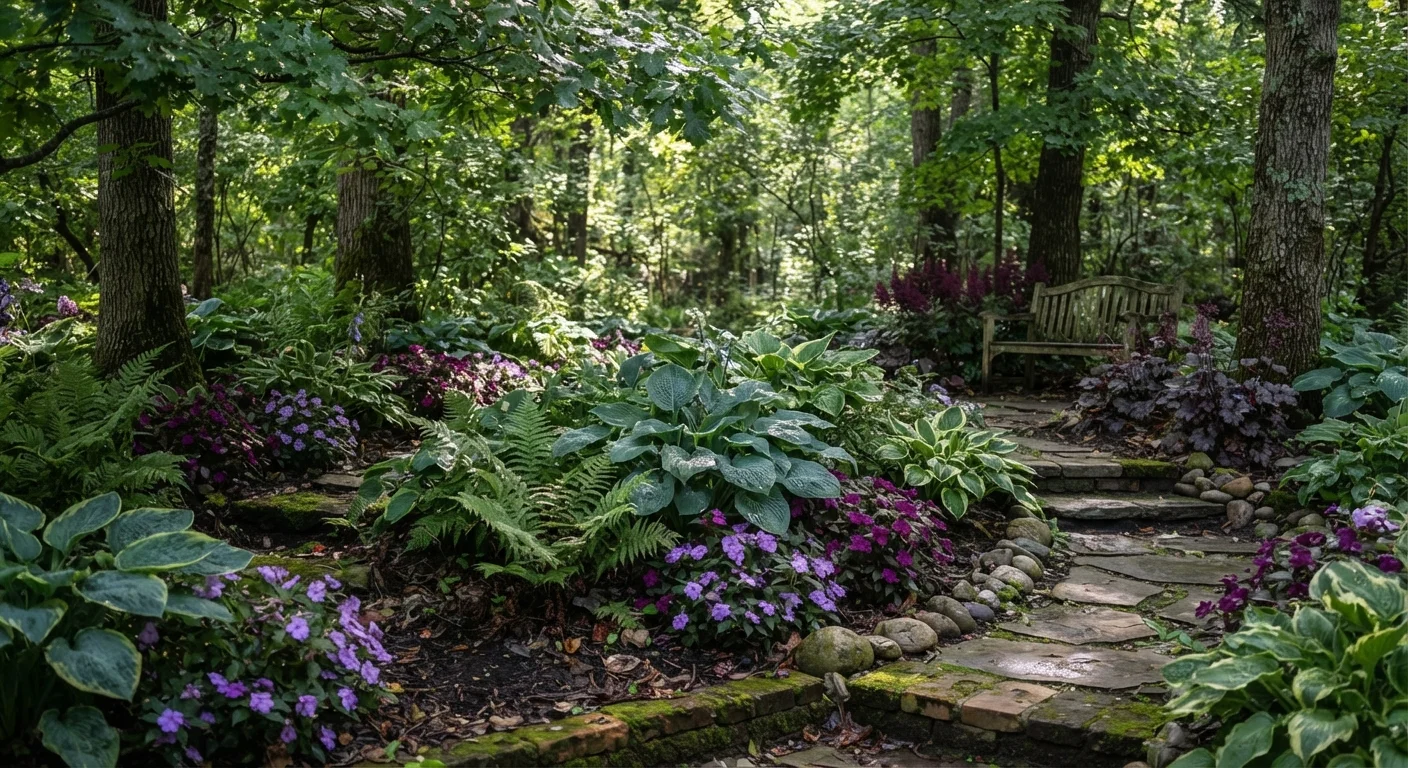
Indirect, shifting light filtered through a tree canopy throughout the day. It mimics conditions on a natural woodland floor and suits many native perennials.
Dry shade
A shaded area where soil moisture is consistently low, often due to competition from nearby tree roots or rain being blocked by a dense canopy. Requires drought-tolerant, shade-adapted plants.
Humus-rich soil
Soil with a high content of decomposed organic matter, which improves moisture retention, drainage, and nutrient availability - particularly important for shade plants that need consistent moisture.
Soil and Site Preparation for Shaded Areas
Shade gardens often come with a hidden challenge: root competition. Trees that create shade also extract significant moisture and nutrients from surrounding soil. Surface roots from maples and beeches, in particular, can make planting difficult.
Improving Soil in Competitive Root Zones
Rather than fighting dense root systems, work with them. Add 2-4 inches of compost to the soil surface annually - this feeds both the trees and your plants without damaging shallow roots through deep digging. Avoid tilling aggressively near mature trees.
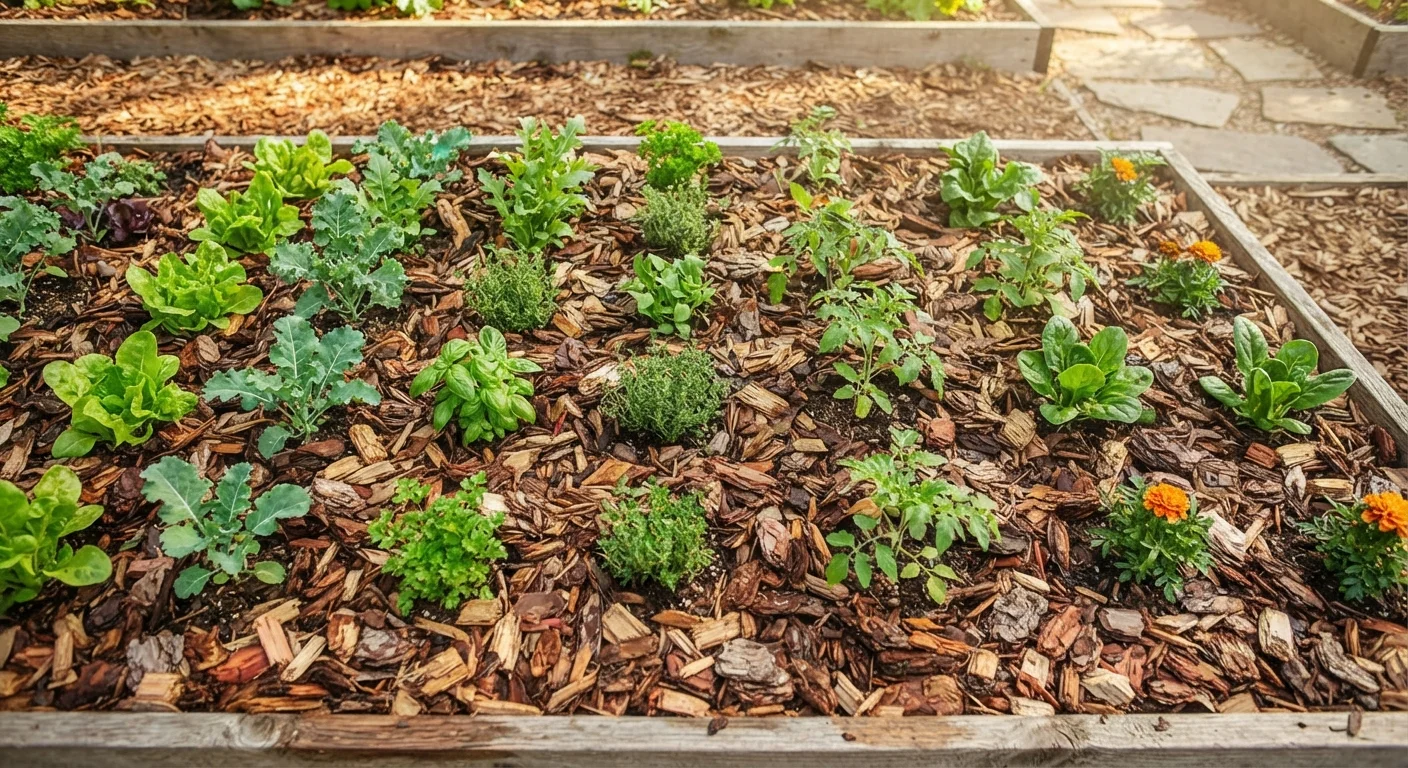
Mulching is especially valuable in shade gardens, where soil can swing between dry (under a dense canopy in summer) and waterlogged (in heavy rain). A 2-3 inch layer of organic mulch moderates both extremes. Learn which mulch materials and depths work best for different garden conditions.
When Raised Beds Make Sense
In spots where root competition is severe, a low raised bed (6-8 inches) can give shade-tolerant plants their own soil zone. Weigh the trade-offs between raised and in-ground planting before committing to either approach.
Avoid Planting Too Close to Large Tree Trunks
The area within 12-18 inches of a mature tree trunk is typically too root-dense and dry for most plants to establish well. Focus new plantings at the drip line or beyond, where soil conditions are more hospitable. This also protects tree bark from moisture buildup that can cause rot or disease.
Design Strategies That Make Shade Gardens Feel Intentional
A well-designed shade garden reads as a deliberate, calming space - not a problem area. A few compositional principles help get there.
Lean Into Foliage Contrast
With fewer blooms than a sun garden, shade planting relies more heavily on leaf texture, size, and color. Pair large-leaved hostas with fine-textured ferns. Layer tall astilbe behind low heuchera. Use variegated foliage - creamy edges or silver markings - to brighten darker corners without adding artificial light.
Use Light-Colored Hardscape and Accessories
Light stone, pale gravel paths, or white-painted furniture reflect available light back into the space and make the area feel brighter. If you're developing a full outdoor living area in a shaded yard, these design considerations for year-round outdoor spaces apply directly.
~30%
Of US residential lots are significantly shaded
Estimates from landscape industry surveys suggest roughly a third of suburban yards have areas that receive fewer than four hours of direct sun daily.
2-3 inches
Recommended organic mulch depth for shade beds
A consistent mulch layer at this depth is widely recommended by cooperative extension programs to retain moisture and moderate soil temperature.
Think in Layers
Even in shade, a layered planting - taller shrubs like oakleaf hydrangea or viburnum at the back, medium perennials in the middle, and groundcovers at the front - creates depth and visual interest across the full growing season.