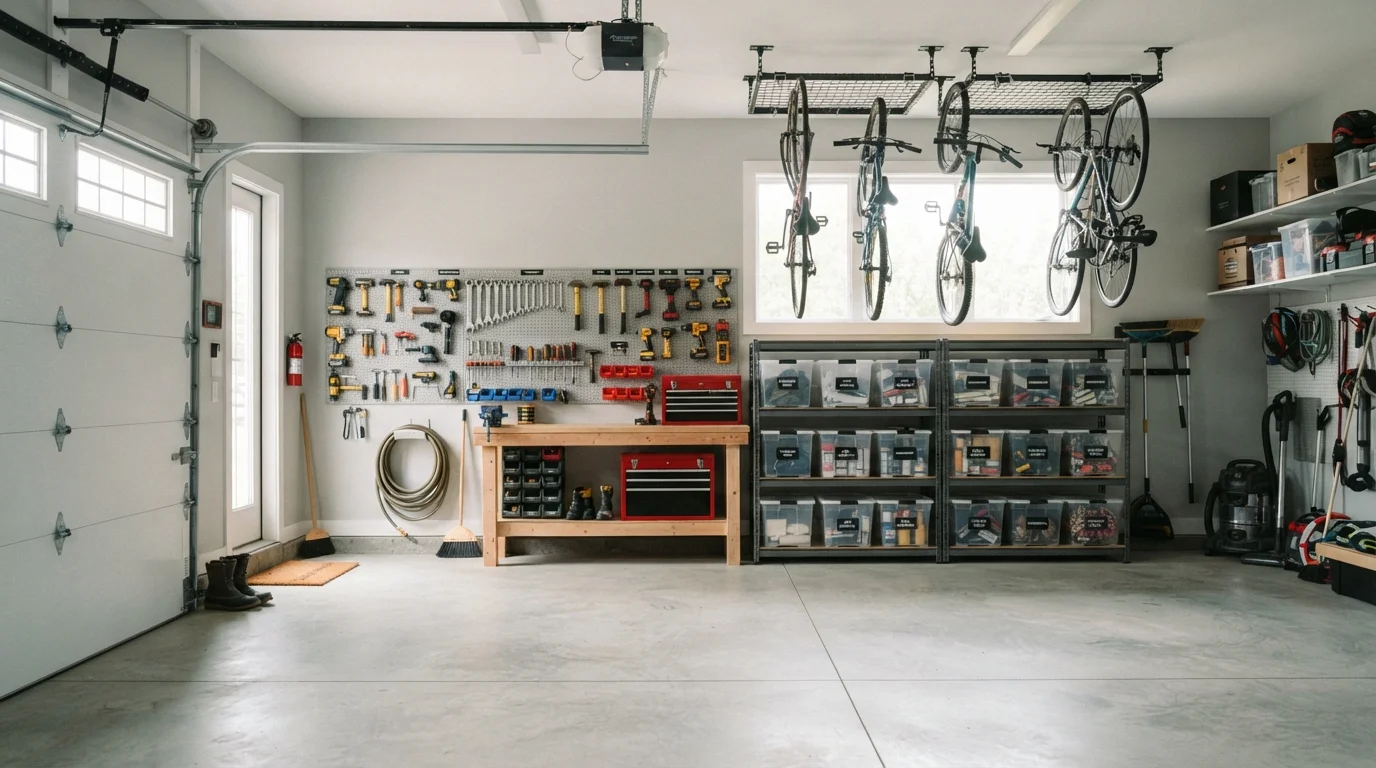

Why Rotation Beats Adding More Storage
Most homes don't suffer from a lack of storage-they suffer from storing everything all at once. Winter coats compete with summer sandals. Pool floaties share shelf space with ski goggles. The result is an overstuffed system where nothing is easy to find and every closet feels too small.
Seasonal rotation solves this by treating your accessible storage as a curated, rotating inventory. Only what's useful right now lives at arm's reach. Everything else is packed away properly until its season comes around. This approach can make even a modest home feel organized and spacious without a single renovation. For guidance on how storage structure affects this equation, see fixed vs. flexible storage systems to find the right fit for your household.
Rotation Works in Any Home Size
Whether you have a basement, an attic, under-bed space, or only a hall closet, the rotation principle applies. The storage location changes, but the logic stays the same: accessible space holds only what's currently useful. Vertical vs. floor storage strategies can help you identify which formats work best within your available footprint.
Best Practices for a Rotation System That Holds Up
A successful rotation system isn't complicated, but it does need structure. These proven practices will keep the cycle running smoothly season after season.
Use standardized, stackable bins with clear, consistent labels for every category.
Uniform containers maximize the space in storage areas like attics, basements, and under-bed zones. Clear labels eliminate the need to open every bin during a swap, saving significant time and frustration.
Schedule two fixed rotation dates on your household calendar each year.
Without a committed date, rotation gets postponed indefinitely, and the system collapses back into clutter. Treating it like a recurring appointment gives it the same priority as other household tasks.
Run a brief declutter pass before packing anything away.
Rotation is the natural moment to assess what still fits, what's worn out, and what was never actually used. Packing away only items you'll realistically use again keeps stored volume manageable.
Store off-season items at the least-accessible points in your home.
Prime real estate-eye-level shelves, front closet space, reachable under-bed areas-should be reserved for what you need daily. Seasonal storage belongs in attics, high shelves, or back corners of closets.
Photograph the contents of bins before sealing them.
A quick photo stored on your phone eliminates the guesswork when you're searching for a specific item months later. It takes seconds and prevents unnecessary rummaging.
What to Rotate-and When
Rotation isn't limited to clothing. Nearly every category of household goods cycles through relevance across the year. Here's a practical breakdown:
- Clothing and footwear: Swap warm-weather and cold-weather wardrobes twice a year, typically in April and October.
- Bedding: Flannel sheets, heavy duvets, and electric blankets come out in fall; lightweight cotton sets take their place in spring.
- Outdoor and recreational gear: Camping, beach, and garden equipment peak in summer; snow shovels, sleds, and ice melt belong at the front in winter. Our garage organization guide covers how to zone outdoor gear effectively.
- Holiday and seasonal décor: Rather than permanent shelving space, décor earns its place only during its season.
- Kitchen and entertaining tools: Ice cream makers, slow cookers, and large roasting pans rotate in when needed, out when not.
Thinking about your outdoor spaces as part of this cycle also pays off. Designing an outdoor living space that works year-round offers ideas for making transitions smoother between seasons outside, too.
Making the System Work for Everyone in the Home
A rotation system only stays functional if everyone in the household understands and participates in it. Assign clear ownership-each person manages their own seasonal items using the shared labeling convention. Keep the swap process visible: a simple checklist posted inside a closet door or noted in a shared calendar removes ambiguity about when and how to rotate.
If your household has multiple people with differing organization habits, shared household organization systems offers practical frameworks for finding common ground. Pairing zone-based thinking with rotation also strengthens the overall system-the zone method can help you map where each season's gear naturally belongs.
Use the 'One Full Season' Rule
If an item sat untouched through its entire relevant season, it's a strong candidate for removal rather than storage. Rotating the same unused items year after year wastes bin space and makes every swap harder. Apply this test ruthlessly before resealing any container.
Finally, tie your rotation schedule to your regular home maintenance rhythm. A season-by-season home maintenance calendar is a natural pairing: when you're already checking gutters or servicing your HVAC, it's the ideal moment to swap seasonal bins too.