How Each Heat Source Actually Works
Before you can choose the right method, it helps to understand what each heat source is physically doing to your food.
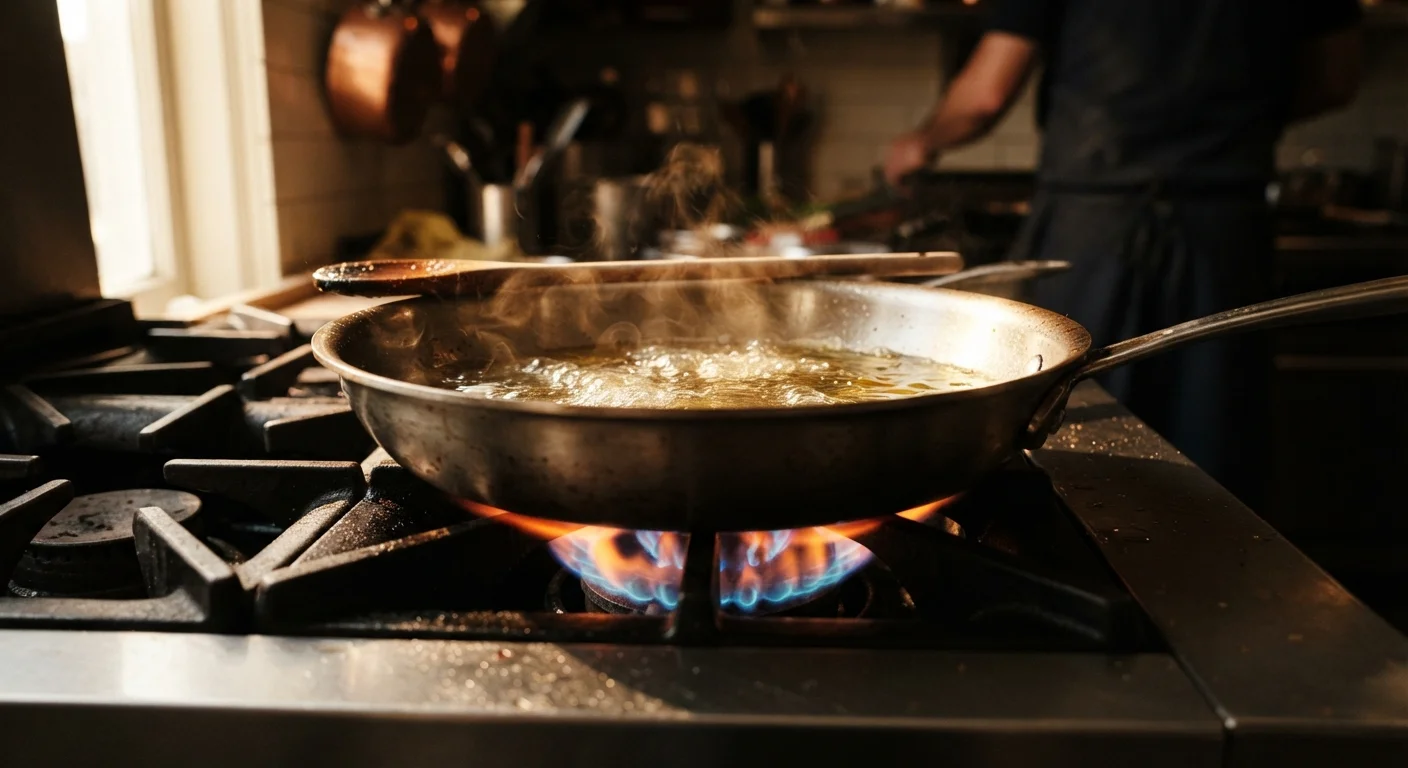
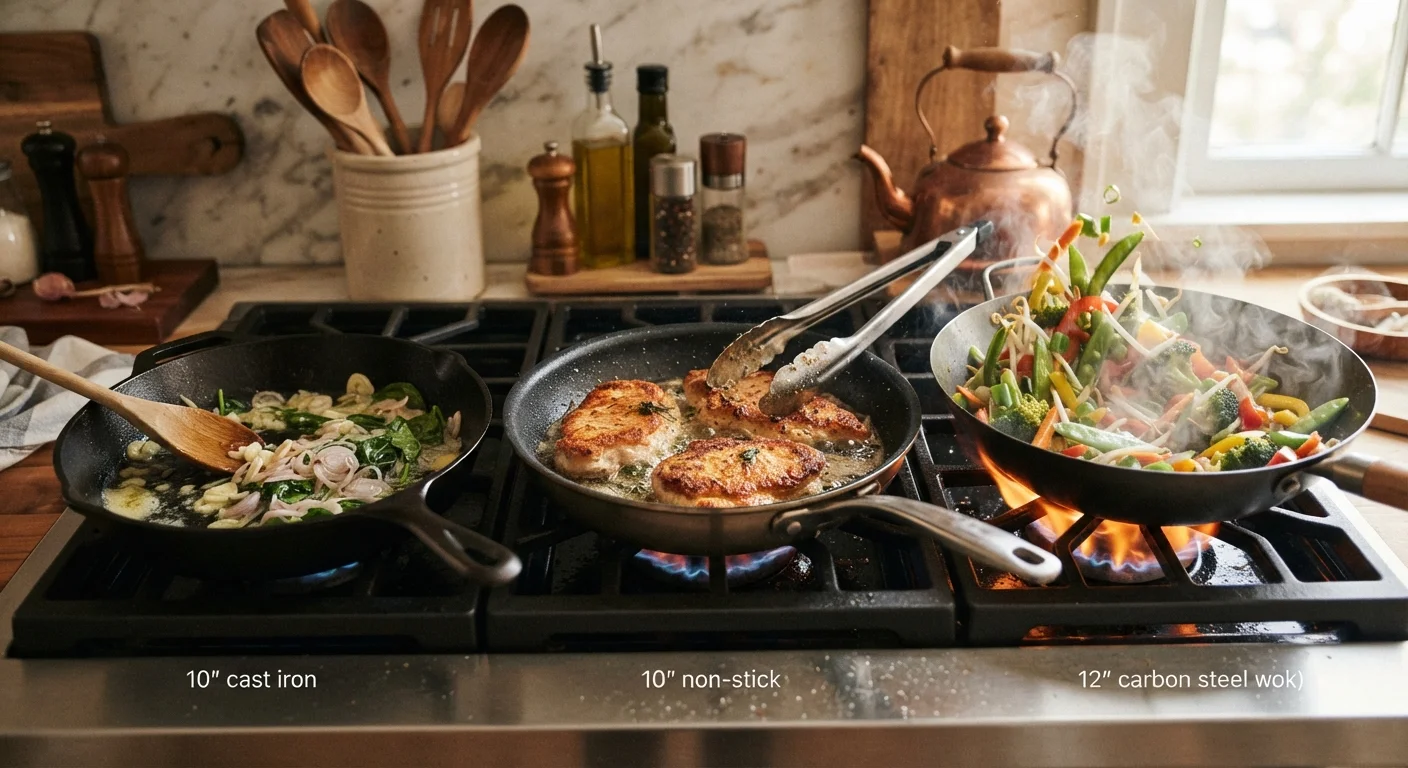
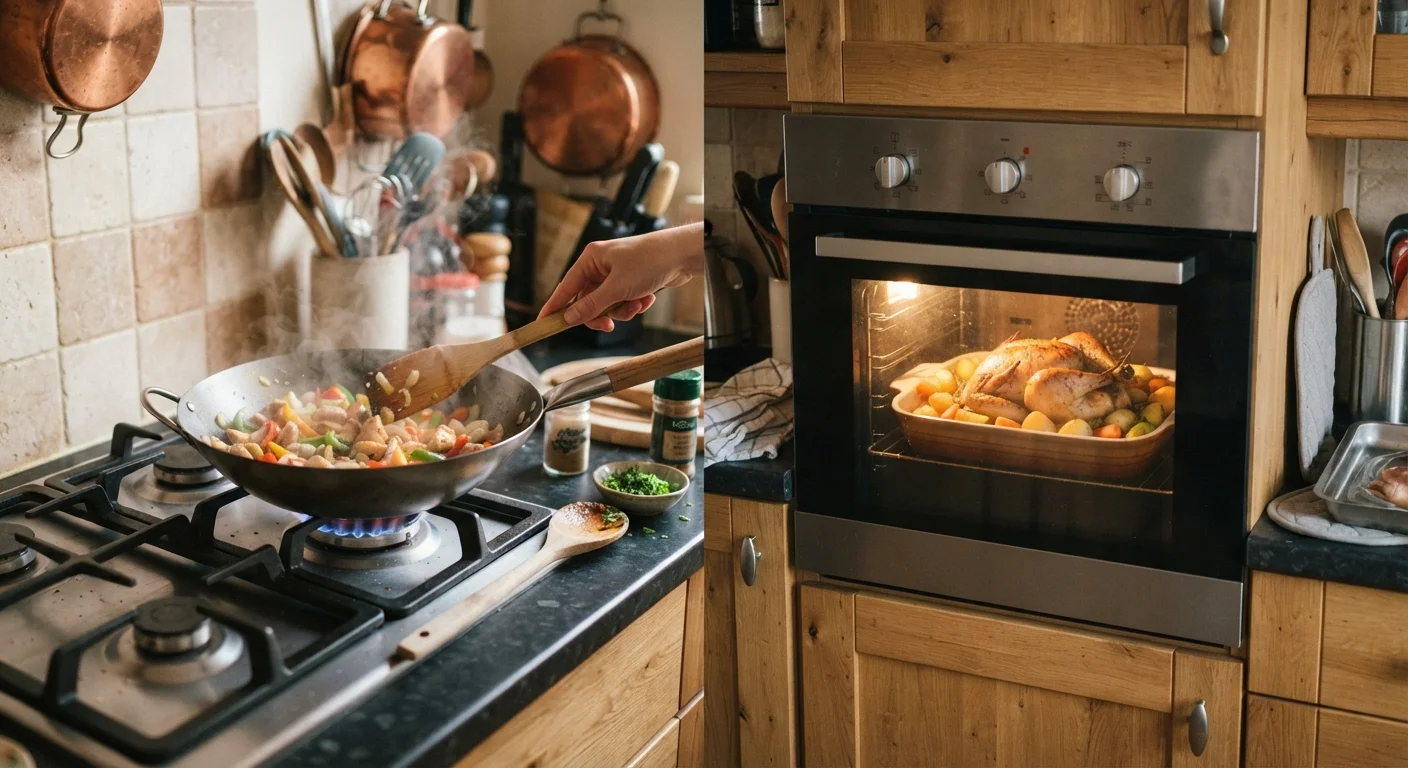
The stovetop delivers heat through direct contact - the burner heats the pan, and the pan heats the food. This conductive heat is fast and responsive. Turn up the dial and the temperature climbs quickly; pull the pan off and heat drops almost immediately. That immediacy is exactly what you want when you're sautéing onions or searing a steak, where seconds matter. Pan temperature management is the core skill behind stovetop cooking - the surface of the pan can easily run 100-150°F hotter than your oven setting.
The oven, by contrast, works through convection - hot air circulates around the food from all sides, cooking it more gradually and evenly. There's no direct contact with a heat element (unless you're using the broiler). This surrounding warmth is what makes the oven indispensable for baking, roasting, and anything that needs to cook all the way through without a scorched exterior.
| Criterion | Stovetop | Oven |
|---|---|---|
| Heat type | Direct conductive heat via pan | Ambient convective heat from all sides |
| Temperature control | Fast, responsive, adjustable | Steady, slow to change |
| Best food size | Small to medium cuts and portions | Large cuts, whole proteins, baked goods |
| Browning ability | Excellent - direct pan contact | Limited without broiler assist |
| Hands-on requirement | High - requires active attention | Low - mostly set-and-wait |
| Preheat time | Fast (1-3 minutes typically) | Slower (10-20+ minutes) |
| Ideal for baking | No | Yes - essential |
| Can use liquid/steam | Yes - boiling, steaming, simmering | Yes - with covered vessels |
When the Stovetop Has the Advantage
The stovetop earns its place for any cooking that needs speed, contact, or constant adjustment. Here's where it genuinely outperforms the oven:
- Searing and browning: The Maillard reaction - the chemical process that creates browned, flavorful crusts on meat and vegetables - requires very high surface temperatures. A properly preheated cast iron or stainless pan can reach those temps; a standard oven cannot replicate the same effect on a large surface.
- Sauces and reductions: Deglazing a pan, reducing a stock, or making a custard all require you to watch, stir, and adjust in real time. The stovetop lets you do that.
- Boiling and steaming: Pasta, blanched vegetables, and steamed fish all rely on water-based heat that only the stovetop can deliver efficiently.
- Quick, delicate foods: Eggs, thin fish fillets, and greens cook in minutes. The oven's preheat time alone would overcook them.
See the differences between sautéing, pan-frying, and stir-frying for a closer look at how to apply stovetop heat across these related techniques.
375-500°F
Typical Maillard reaction range
Food scientists generally place the Maillard browning reaction - responsible for seared crusts and roasted flavor - between roughly 280°F and 330°F at the food surface, requiring pan temperatures well above typical oven settings.
10-20 min
Average oven preheat time
Most conventional home ovens take 10 to 20 minutes to reach a target baking temperature, which is why preheating before you start preparing ingredients is standard practice.
When the Oven Has the Advantage
The oven's strength is consistency and patience. It holds a set temperature and surrounds food with even heat - something the stovetop simply cannot do for large or thick ingredients.
- Roasting whole cuts: A chicken, leg of lamb, or pork loin needs heat to penetrate deep without charring the outside. Oven roasting does this; a stovetop cannot without burning.
- Baking: Bread, cakes, muffins, and cookies all rely on precise, stable temperatures that cause specific chemical reactions - leavening, gluten development, caramelization of sugars. These require the oven's controlled environment.
- Braises and casseroles: Low-and-slow dishes cooked in a covered Dutch oven benefit from the oven's all-around heat, which prevents scorching on the bottom.
- Hands-off cooking: The oven doesn't require stirring or watching. Once the timer is set, you can step away - a genuine advantage for multi-dish meals.
Before committing to any cooking method, read the recipe fully before you start. Many recipes call for both methods in sequence, and missing that detail mid-cook causes real problems.
The Case for Using Both Together
The most useful insight for everyday cooks isn't "stovetop or oven" - it's recognizing that the two methods are often best used together. A common technique: sear a thick steak or pork chop in a hot oven-safe skillet on the stovetop to build a crust, then transfer the pan directly into a preheated oven to finish cooking the interior gently. This gives you browning the oven can't replicate and even doneness the stovetop alone risks missing.
Braises follow the same logic: brown the meat and aromatics in a Dutch oven on the stovetop for flavor, add liquid, then move it to the oven for hours of low, steady heat. The result is deeper flavor than either method alone could produce.
Oven-Safe Pans: Check Before You Transfer
Not every pan that's safe on the stovetop can go into the oven. Pans with plastic handles, non-stick coatings rated for lower temperatures, or lids with rubber seals may not be suitable for oven use above certain temperatures. Always check the manufacturer's guidance for your specific cookware before moving a pan from burner to oven.
As your confidence grows, knowing which tool to reach for - and when to use both - becomes second nature. A well-equipped kitchen with reliable cookware helps, too. The right kitchen tools make switching between stovetop and oven seamless, especially if you have oven-safe pans that can handle both environments.