Why These Three Methods Get Confused
All three techniques happen on the stovetop in a pan with some fat and heat - so it's easy to treat them as interchangeable. They're not. Each one produces a fundamentally different result because the heat level, the amount of fat, and how much you move the food are all different. Using the wrong method can leave chicken rubbery, vegetables soggy, or fish falling apart. Understanding the distinctions makes you a more deliberate cook, not just a more experienced one.
For broader context on why heat levels matter so much, see our guide on why pan temperature matters more than most recipes admit.
Sautéing: Fast, Light, and Frequently Stirred
The word sauté comes from the French verb sauter, meaning "to jump" - and that tells you everything. Sautéing uses medium-high heat, a small amount of fat (typically one to two tablespoons), and frequent movement. The goal is to cook food quickly while developing some light color without forming a thick crust.
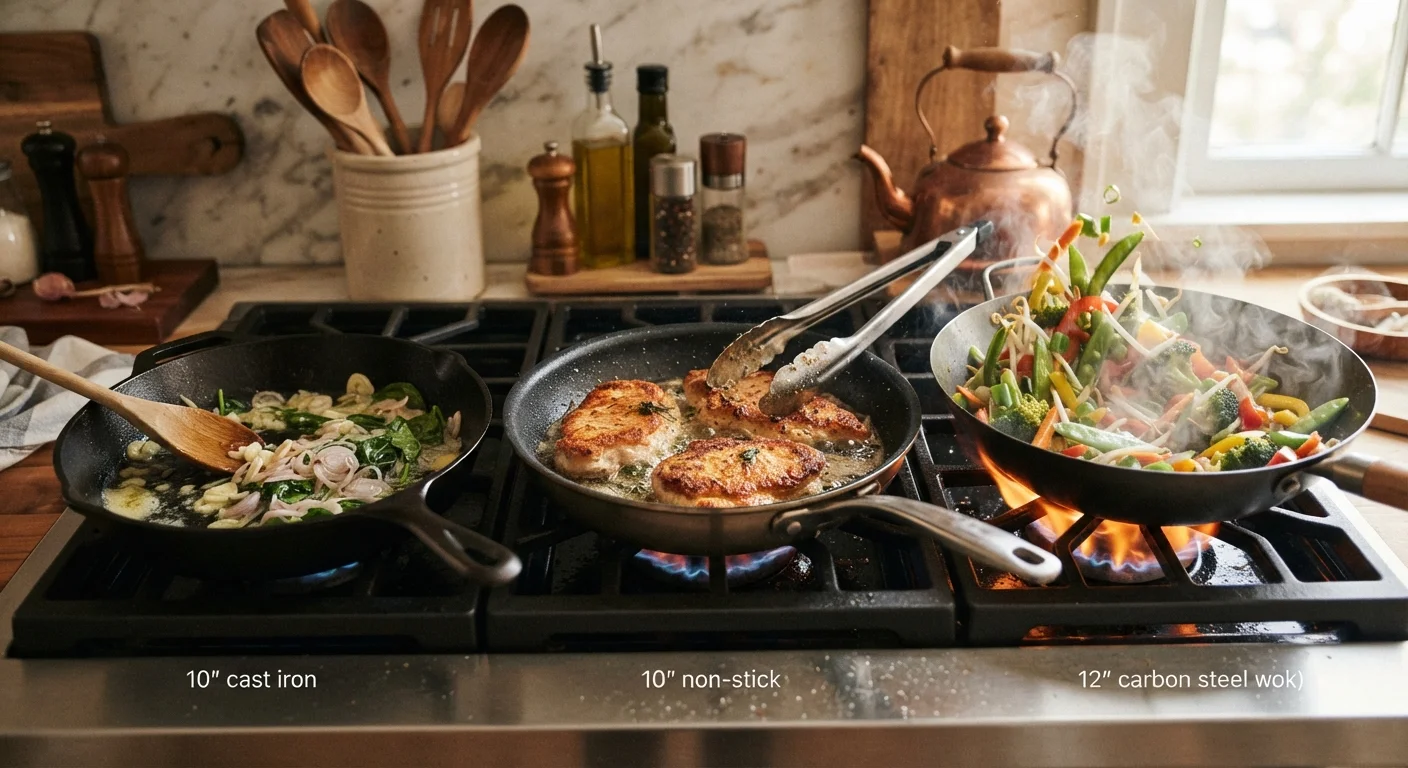
This technique suits smaller or thinner pieces: diced onions, sliced mushrooms, shrimp, cubed chicken breast, or leafy greens. Because you're moving the food regularly, it cooks evenly and stays tender rather than developing a hard exterior. Sautéing is the workhorse technique - fast, versatile, and forgiving enough for everyday cooking.
Pat Ingredients Dry Before Sautéing
Dry your ingredients before they hit the pan. Wet food releases steam, which lowers the pan temperature and causes ingredients to stew rather than sauté. A quick pat with a paper towel makes a noticeable difference in browning.
Dry your ingredients before they hit the pan. Wet food releases steam, which lowers the pan temperature and causes ingredients to stew rather than sauté.
Pan-Frying: More Fat, Less Movement, Better Crust
Pan-frying uses significantly more fat than sautéing - enough to come partway up the side of the food, though not enough to fully submerge it - and much lower levels of stirring or flipping. The fat conducts heat evenly across the food's surface, and leaving the food undisturbed allows the Maillard reaction (the browning process responsible for flavor) to develop a deep, crispy crust.
This is the right method for thicker cuts: bone-in chicken pieces, pork chops, fish fillets, breaded cutlets, or crab cakes. The higher fat content also acts as a buffer, preventing the exterior from burning before the interior cooks through. Patience is the key skill - resist the urge to move the food before it naturally releases from the pan.
| Sautéing | Pan-Frying | Stir-Frying | |
|---|---|---|---|
| Heat level | Medium-high | Medium to medium-high | Very high |
| Amount of fat | Small (1-2 tbsp) | Moderate (enough to partially submerge) | Minimal (1 tbsp or less) |
| Food movement | Frequent stirring | Minimal, let it rest | Constant tossing |
| Best for | Diced or thin-sliced foods | Thick cuts, breaded items | Thin-cut meat, bite-sized veg |
| Resulting texture | Tender with light color | Crispy crust, moist interior | Vibrant, slightly firm |
| Cooking time | 5-10 minutes | 10-20 minutes | 3-7 minutes |
Stir-Frying: High Heat, Constant Motion, Minimal Fat
Stir-frying is the highest-heat method of the three. Traditionally done in a wok, it can also work in a wide, heavy skillet. The pan is preheated until very hot before a small amount of oil goes in, followed by ingredients added in stages. The constant stirring and tossing prevents burning while exposing every surface to that intense heat.
The result is food that's cooked through but still vibrant - vegetables retain color and a slight bite, thin-sliced proteins stay tender rather than chewy. Stir-frying rewards preparation: ingredients should be uniformly cut and ready before the pan goes on the burner, because once things get moving, there's no time to stop. Reading the recipe fully before you start is especially important with stir-fry dishes.
~300°F
Typical sauté pan surface temperature
Medium-high heat on most home burners brings a dry skillet to around 300-350°F, sufficient for light browning without burning.
400°F+
Stir-fry wok surface temperature
Restaurant woks reach much higher temperatures; home cooks can approximate by preheating the pan thoroughly before adding oil.
Choosing the Right Method for What You're Cooking
Ask yourself three questions: How thick is the ingredient? What texture am I going for? How much time do I have? Thin, bite-sized pieces that should stay tender point toward sautéing or stir-frying. Thicker cuts needing a golden crust call for pan-frying. High-energy, quick meals with lots of vegetables are a natural fit for stir-frying.
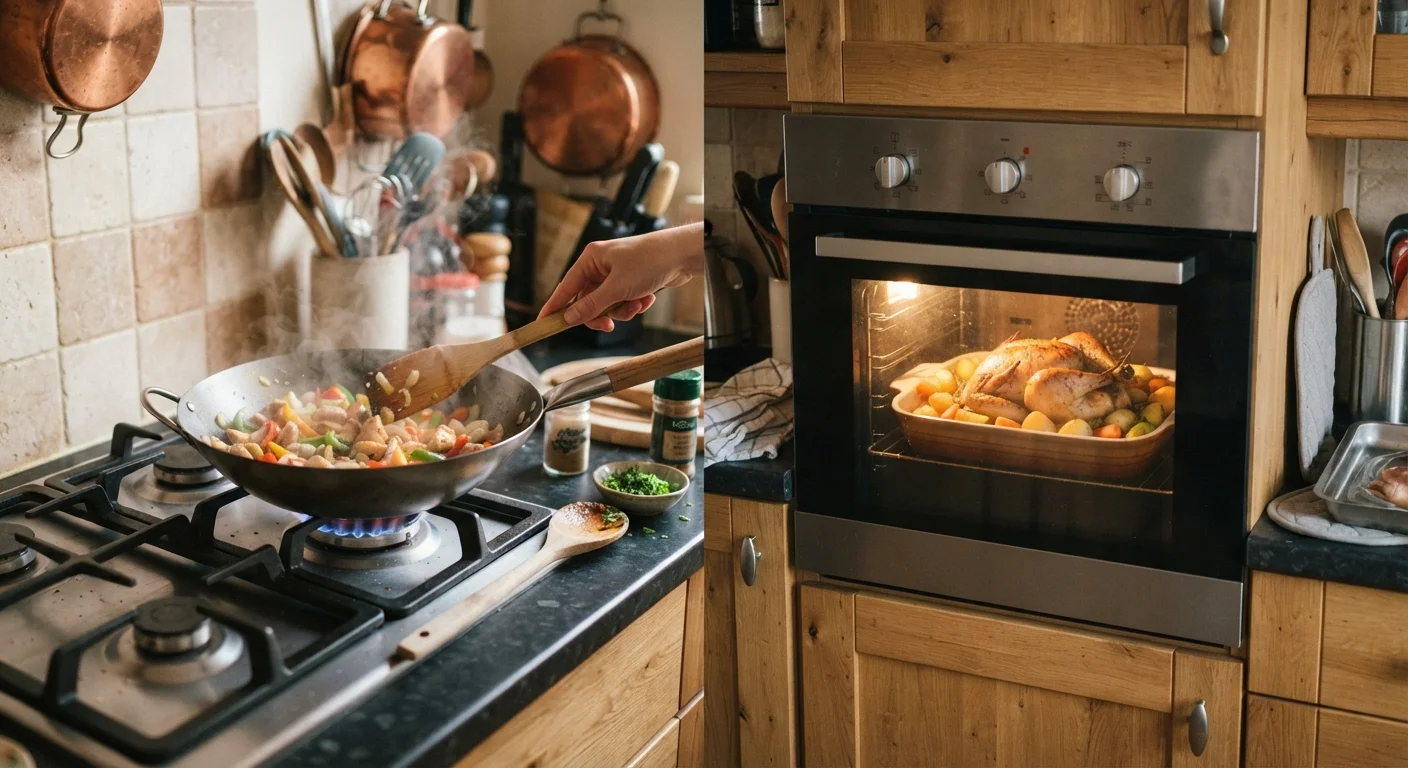
Also consider your pan. A stainless steel or cast iron skillet holds heat well for pan-frying. A wide, thin-walled pan or wok climbs to high temperatures quickly, which stir-frying demands. For a closer look at how stovetop methods compare to oven-based cooking, our article on stovetop vs. oven heat sources breaks down when each environment has the advantage.
Once you've nailed the technique, the next layer of skill is tasting as you go. Adjusting seasoning during cooking - rather than only at the end - is what separates consistently good results from lucky ones.