Why Cocktail Menus Can Feel Like a Foreign Language
Walking up to a craft cocktail bar and seeing words like shrub, falernum, or amaro scattered across the menu can be disorienting - even for frequent bar-goers. Modern bartenders draw on centuries of drinks tradition, pulling in Italian bitter liqueurs, French aperitifs, and bartender shorthand that rarely comes with a definition attached.
The good news: the vocabulary is smaller than it looks, and once you understand the categories, most menus start to make sense quickly. This reference covers the terms you're most likely to encounter, organized so you can scan for what you need. For an equally useful breakdown of spirits, liqueurs, and digestifs, see our after-dinner drinks guide.
Amaro
An Italian herbal liqueur that is typically bittersweet, made by infusing a base spirit with botanicals like herbs, roots, flowers, and citrus peel. It appears in cocktails as a complexity-adding ingredient and is also served as a digestif on its own.
Aperitif
A category of drink - often wine-based, lightly bitter, or low-alcohol - served before a meal to stimulate appetite. Common examples include vermouth, Campari, and Aperol. Many cocktail menus feature a dedicated aperitif section.
Vermouth
A fortified, aromatized wine flavored with botanicals. It comes in two main styles: dry (white, used in Martinis) and sweet (red or rosso, used in Negronis and Manhattans). It should be refrigerated once opened and consumed within a few weeks.
Shrub
A drinking vinegar syrup made by combining fruit, sugar, and vinegar, then straining the solids. When added to a cocktail, a shrub provides bright acidity and fruity depth without citrus juice. It also appears in non-alcoholic drinks.
Falernum
A sweet, spiced syrup or low-alcohol liqueur originating in Barbados, flavored with lime, almond, ginger, and cloves. It is common in tiki-style drinks and rum cocktails, adding a warm, tropical-spiced sweetness.
Bitters
Highly concentrated flavor extracts made from botanicals such as bark, roots, and spices, used in small doses (dashes) to add aromatic complexity and balance to cocktails. Angostura and Peychaud's are two widely used styles.
Orgeat
A sweet syrup made from almonds, sugar, and orange-flower water. It has a rich, floral nuttiness and is a foundational ingredient in tiki drinks like the Mai Tai. It is not the same as plain almond syrup.
Digestif
A category of drink served after a meal, traditionally believed to aid digestion. Digestifs tend to be stronger and more bitter or sweet than aperitifs, and include spirits like brandy, grappa, aged whiskey, and amaro.
Highball
A simple cocktail format: one base spirit topped with a large quantity of a non-alcoholic mixer (typically sparkling water, tonic, or ginger beer) served over ice in a tall glass. The format emphasizes refreshment and the character of the spirit.
Mule (Moscow Mule format)
A style of highball made with a base spirit, ginger beer, and lime juice, served in a copper mug or tall glass over ice. The format is often adapted: a Kentucky Mule uses bourbon; a Mexican Mule uses tequila.
Float
A small pour of a spirit or liqueur added gently on top of a finished cocktail so it rests as a distinct layer rather than mixing in. The float is poured slowly over the back of a bar spoon to keep it separate.
Tincture
A concentrated botanical extract made by steeping herbs, spices, or other aromatics in a high-proof spirit. Bartenders use tinctures much like bitters - a few drops can shift a drink's flavor significantly.
Key Menu Sections and Construction Terms
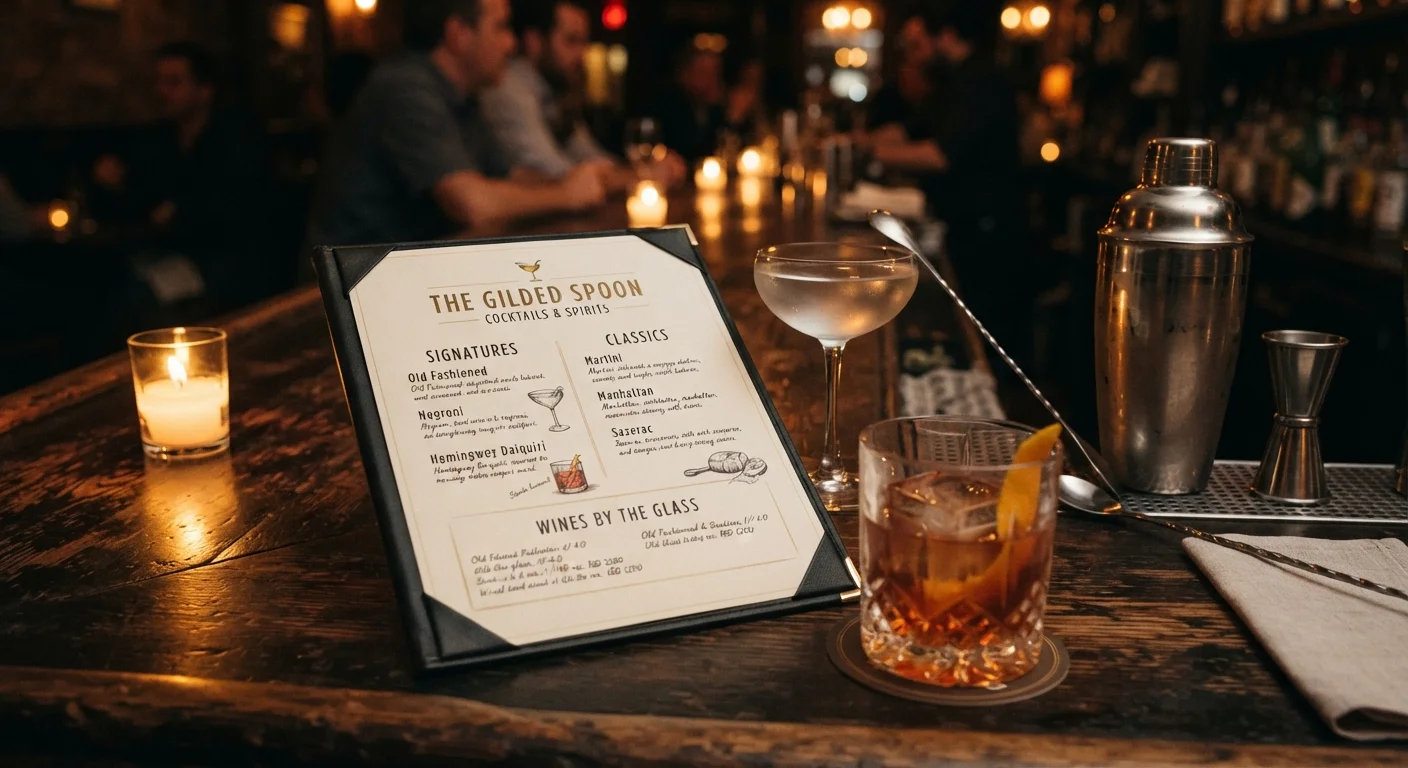
Beyond individual ingredients, cocktail menus use specific language to describe how a drink is built and served. Understanding these terms helps you predict what's in the glass before it arrives.
| Stirred vs. shaken result | Stirred = silkier, clearer; shaken = colder, slightly aerated |
| "Up" means | Served in a stemmed glass, no ice |
| "Neat" means | Spirit poured alone, no ice, no mixer |
| Common aperitif window | Served before the meal, typically lower-alcohol |
| Vermouth shelf life (opened) | Refrigerate and use within 3-4 weeks for best flavor |
| Bitters standard measure | A "dash" - roughly 0.6 mL from a dasher bottle |
Stirred vs. shaken is one of the most consequential distinctions. Stirring (usually done with ice in a mixing glass) produces a silkier, clearer drink with less dilution. Shaking aerates the mixture, creating a slightly cloudy, more chilled, and more diluted result - ideal for drinks containing citrus juice, cream, or egg white. A bartender who shakes a spirit-only drink like a Martini is doing something unconventional.
Up means the drink is served in a stemmed glass (like a coupe or a Martini glass) with no ice. On the rocks means over ice. Neat means a spirit poured directly into the glass with no ice and no mixer - a term more common on whiskey lists than cocktail menus.
If a menu lists a cocktail as batched, the bar has pre-mixed a large quantity of that drink ahead of service. This is a legitimate professional technique and often results in consistent, well-integrated flavors - not a shortcut to worry about.
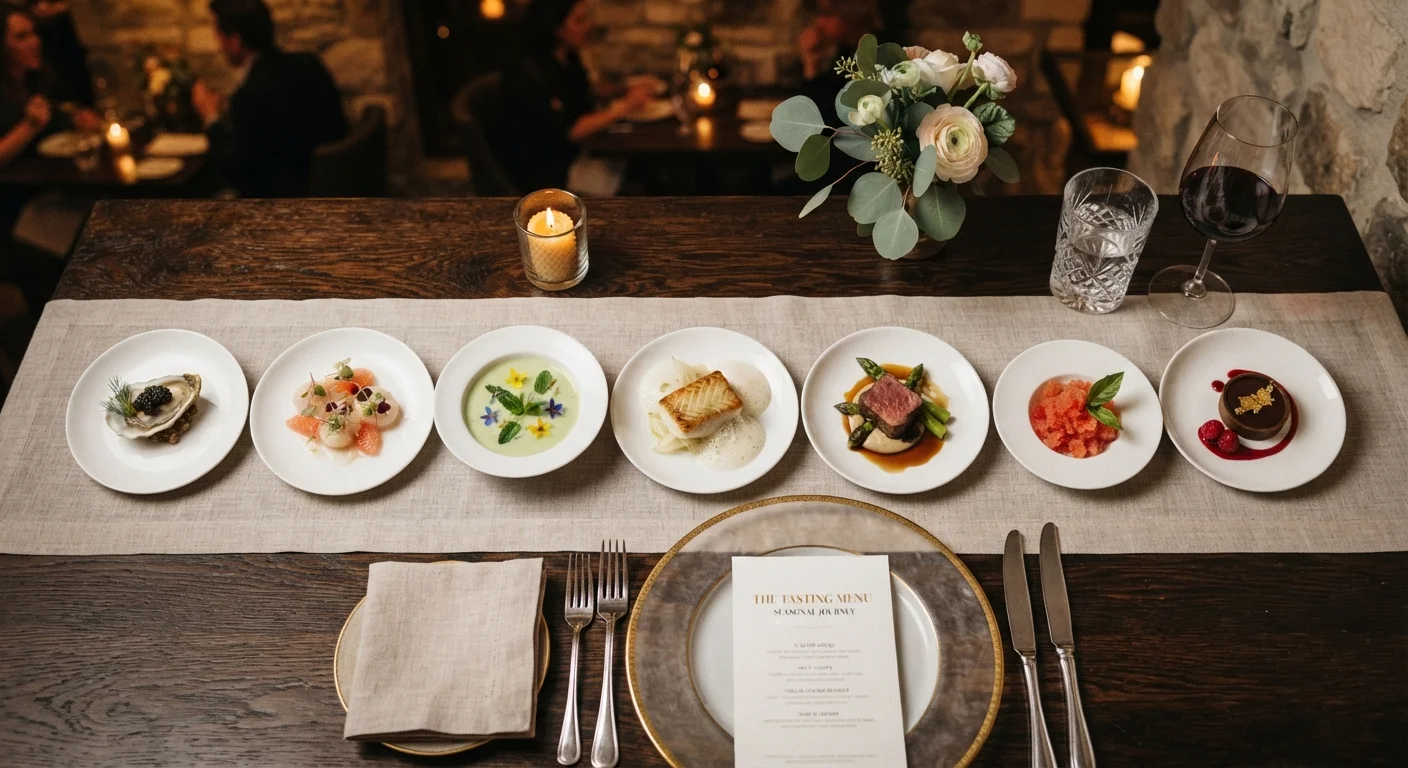
For a look at how these kinds of curated drink programs fit into the broader dining experience, our guide on tasting menus explains how beverage pairing works in multi-course settings.
Zero-Proof Menus Use the Same Language
Non-alcoholic cocktail menus - increasingly common at contemporary bars and restaurants - use much of the same terminology: shrubs, bitters (some are alcohol-free), orgeat, and highball formats all appear. If you're curious about how these programs work, non-alcoholic drink pairings have expanded well beyond soda. The techniques and vocabulary are largely the same - only the base spirit changes.