Start With a Plan, Not a Shopping Cart
The biggest mistake new cooks make is heading straight to a kitchen supply store without a clear sense of what they actually need. An empty kitchen feels urgent to fill, but buying everything at once tends to produce clutter, wasted money, and tools that never see use.
Before purchasing anything, ask yourself two questions: What kinds of meals do I realistically want to cook? and How many people am I cooking for? Someone making weeknight dinners for one needs a very different setup than someone hosting family gatherings regularly.
It also helps to think about your kitchen's physical layout - counter space, cabinet depth, and drawer count all shape what storage solutions will actually work. If you want to think through the financial side of building out your kitchen gradually, our household budgeting guide walks through how to plan for recurring household expenses without stress.
Build Your Kitchen in Phases
Start with a core set of five to seven items and add pieces only when a gap becomes obvious in your actual cooking. This approach keeps spending in check and ensures every tool earns its place. You'll also develop a clearer sense of what you genuinely need, rather than what looks useful in a store.
The Essential Tools Every Kitchen Needs
You don't need a lot - you need the right things. Focus first on tools that serve multiple purposes and hold up over time.
Knives
A single 8-inch chef's knife handles the vast majority of cutting tasks: chopping vegetables, slicing meat, mincing herbs. Add a small paring knife for detail work and a serrated bread knife, and you're set. Keep them sharp - a dull knife requires more force and is actually less safe.
Cookware
- 10- or 12-inch skillet (stainless steel or cast iron): for searing, sautéing, and pan sauces
- 3-quart saucepan: soups, sauces, grains, and reheating
- Large stockpot: pasta, soups, boiling corn
- Sheet pan: roasting vegetables, baking, broiling
Prep Essentials
A large cutting board (wood or plastic, at least 12×18 inches), a colander for draining pasta and rinsing produce, a box grater, and a set of mixing bowls round out the basics. Measuring cups and spoons matter more than beginners expect - imprecise measurements are behind many early cooking disappointments.
Invest in a kitchen scale early - it's more accurate than volume measurements for baking and makes portioning proteins much easier.
Weight-based measurement removes the variability of how tightly ingredients are packed into a cup, which is one of the most common sources of baking inconsistency.
Season your cast iron pan before first use and after every few uses with a thin layer of neutral oil, then heat it briefly to maintain the non-stick surface.
Cast iron's durability and heat retention make it one of the most useful pans in a home kitchen, but it does require a small maintenance routine that most packaging underexplains.
Resist the urge to buy matching sets. Bundled cookware sets often include pieces you'll rarely use. Buy individual items as your cooking expands.
Building a Functional Pantry
A stocked pantry is what separates a kitchen that enables cooking from one that forces constant grocery trips. The goal isn't volume - it's having the building blocks that make recipes possible on short notice.
~72%
Americans who cook at home most days
According to surveys cited by the USDA's Economic Research Service, the majority of US households prepare most meals at home rather than dining out.
30-40%
Reduction in weekly food waste with a stocked pantry
Food policy researchers have noted that households with organized, well-stocked pantries tend to waste significantly less food by using staples before they expire.
Dry and Canned Goods
- Pasta and rice in at least two varieties
- Canned tomatoes (whole and diced), canned beans, and canned broth or stock
- All-purpose flour and baking staples if you plan to bake
- Oats for quick breakfasts
Oils, Acids, and Condiments
Neutral oil (such as vegetable or canola) for high-heat cooking, olive oil for dressings and finishing, white and red wine vinegar, soy sauce, and hot sauce cover most flavor-building situations.
Spices
Salt and black pepper are non-negotiable. Beyond that, start with: garlic powder, onion powder, cumin, paprika, oregano, red pepper flakes, and cinnamon. These seven spices will take you through hundreds of recipes across cuisines. For broader guidance on building eating habits around whole, nourishing ingredients, see the Nutrition & Diet hub.
Organizing Your Space for Real Cooking
Good kitchen organization isn't about aesthetics - it's about reducing friction during cooking. The principle is simple: store things near where you use them.
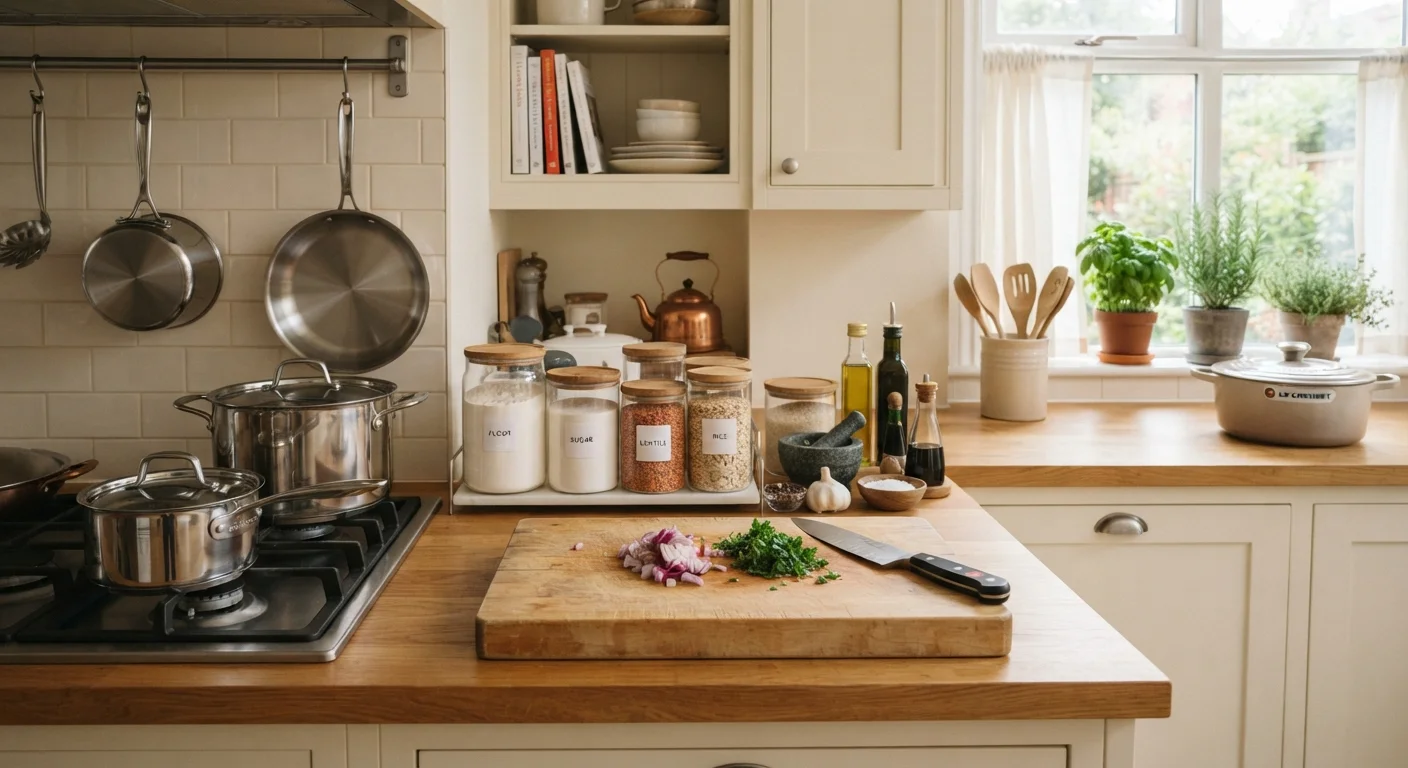
Keep your most-used knives and cutting board on or adjacent to the counter. Pots and pans should live near the stove. Spices belong within arm's reach of the cooking surface, not buried in a cabinet across the kitchen.
Small Kitchens Require Extra Intentionality
If you're working with limited counter or cabinet space, prioritize vertical storage - wall-mounted magnetic knife strips, over-door organizers, and stackable containers reclaim significant room. Avoid duplicating tools: one large cutting board beats three medium ones. Think function before form.
Drawer dividers, shelf risers, and clear bins cost very little and make a significant difference in how usable a kitchen feels day to day. If your space is already crowded before you've finished setting up, our guide to decluttering from scratch offers practical first steps for reclaiming space.
Label pantry shelves or bins so everything has an assigned home. When items have a defined place, restocking and finding ingredients becomes automatic rather than a small frustration every time you cook.
Setting Yourself Up for Cooking Success
The physical kitchen setup is only part of the equation. The habits you build matter just as much as the tools on your counter.
One of the highest-value habits any new cook can develop is reading a recipe all the way through before touching anything. This single step prevents most of the mistakes beginners encounter - missing an ingredient, misreading a timing cue, or discovering mid-cook that something needs two hours of marinating. Our guide to reading a recipe before you start breaks down exactly what to look for.
Another habit worth building early is mise en place - the French culinary practice of measuring and organizing all your ingredients before you begin cooking. It sounds fussy, but it turns cooking from a reactive scramble into a calm, enjoyable process. See how it works in practice with our mise en place guide.
Don't Overlook Food Safety Basics
A new kitchen setup is the right moment to establish safe food handling habits. Keep raw meat stored on the lowest refrigerator shelf and away from ready-to-eat foods. Use separate cutting boards for raw proteins and produce. Wash hands before and after handling raw meat. These practices prevent cross-contamination and are foundational to safe home cooking.
Finally, don't be discouraged by early failures. Even experienced cooks encounter common problems like dry chicken - the difference is they understand why it happened and how to adjust. That understanding is exactly what a well-equipped, well-organized kitchen helps you develop over time.