Why Solo Dining Deserves More Credit
Dining alone has long carried an undeserved social stigma - the assumption that eating solo is a last resort rather than a deliberate choice. In reality, solo dining is increasingly common, and many restaurants actively design for it. Bar counters, chef's tables, and single-seat tasting experiences are all built with the solo guest in mind.
There's also a genuine culinary upside to dining alone: you set the pace, choose exactly what you want, and engage with the meal on your own terms. You're not splitting dishes you don't want or waiting for group consensus. For anyone interested in deepening their appreciation of food and restaurant culture, solo dining is one of the most direct ways to do it.
What you will need
The steps below will walk you through the full experience - from booking to the final bite - so you can arrive confident rather than uncertain.
Step-by-Step: Making the Most of Dining Alone
Make a reservation and mention you're dining alone
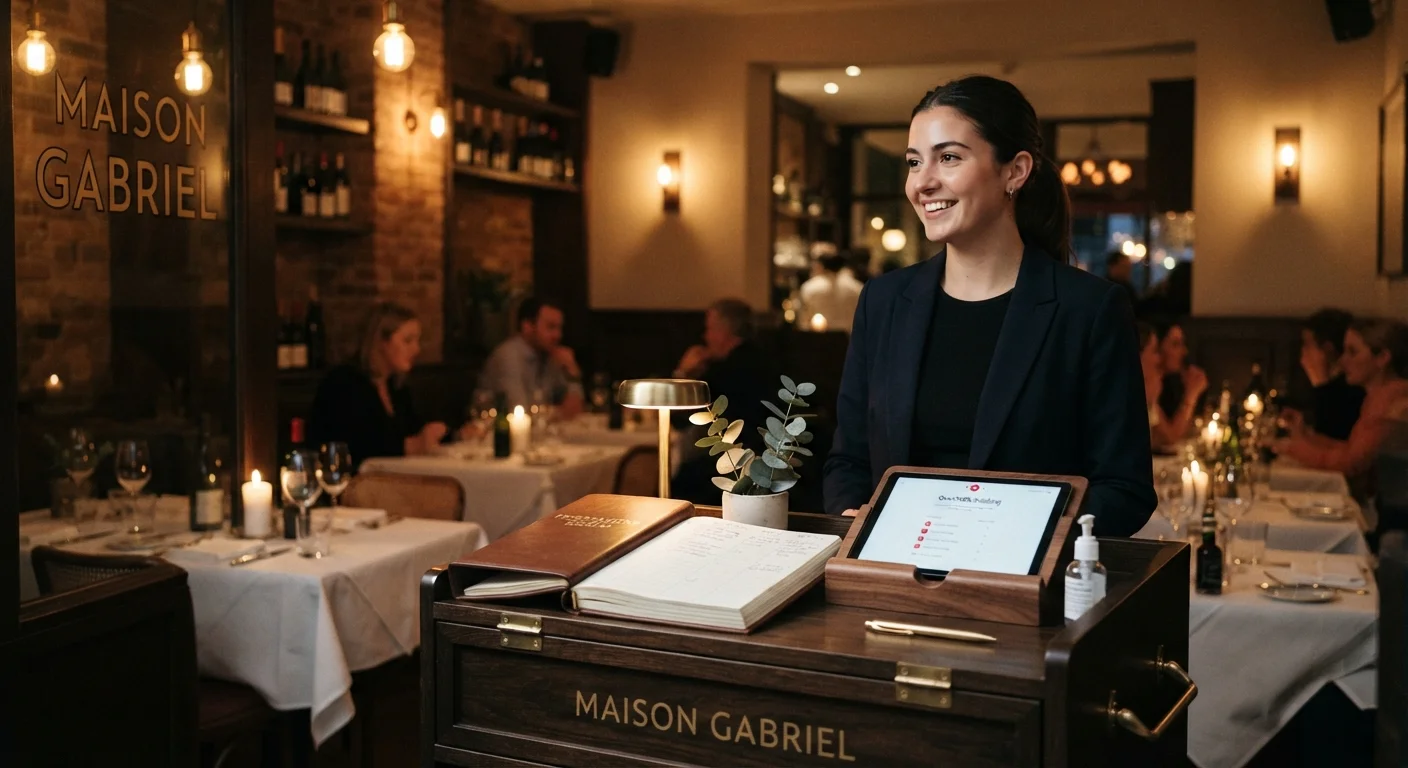
Call ahead or use a reservation platform and specify that your party is one. This small detail helps the host team plan seating rather than reflexively placing you at a table meant for four. Many restaurants have a counter, chef's bar, or compact two-top that works especially well for solo guests. Mentioning it upfront is practical, not apologetic - staff appreciate the heads-up. For more on how reservation systems work, see what restaurant reservation policies actually mean for diners.
Choose your seat strategically
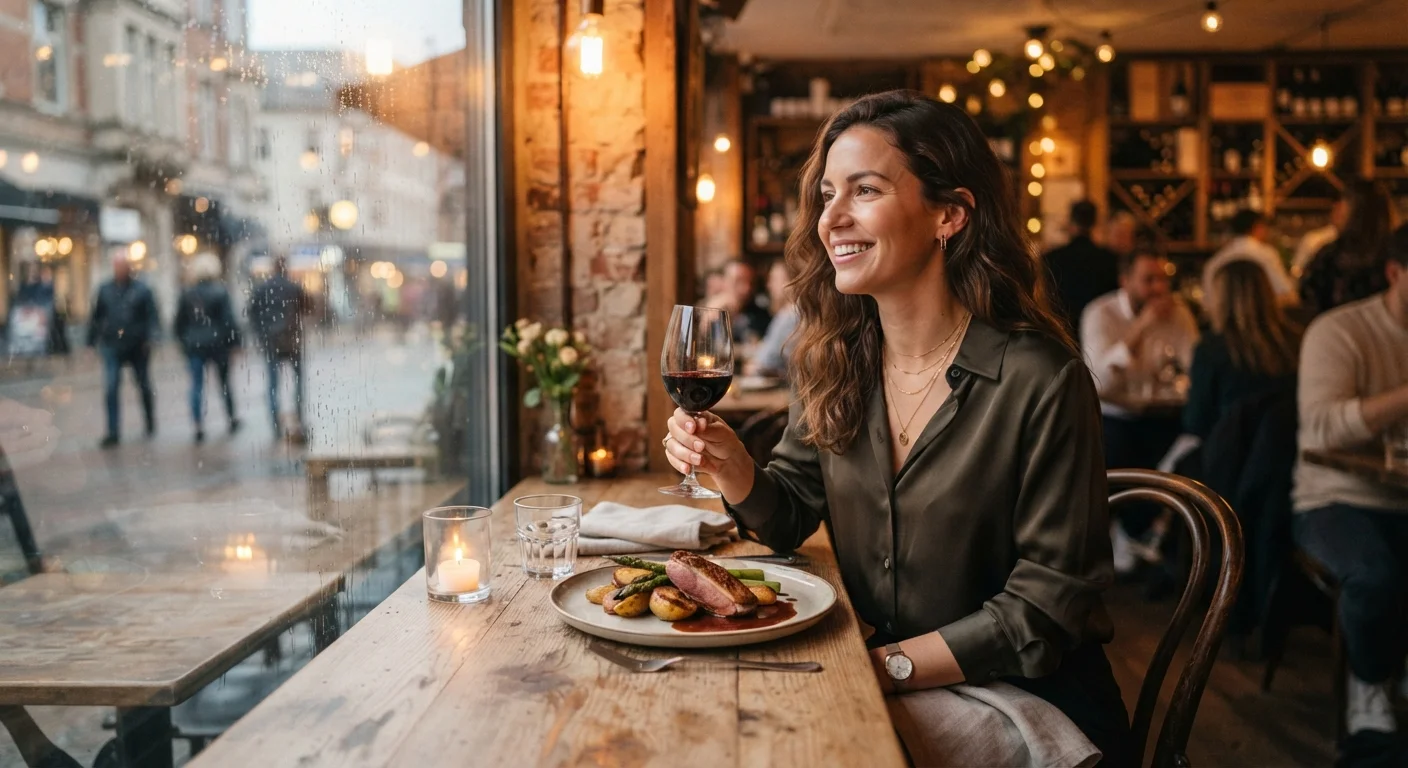
When you arrive, the host may offer you several options. A bar seat or kitchen counter puts you in the action and gives you easy, low-key interaction with staff. A small table near the window or wall provides a comfortable vantage point without the exposed feeling of sitting in the center of the room. Avoid accepting a large booth or group table if a better-scaled option is available - it's perfectly fine to ask if something smaller is open.
Set the tone with your server early
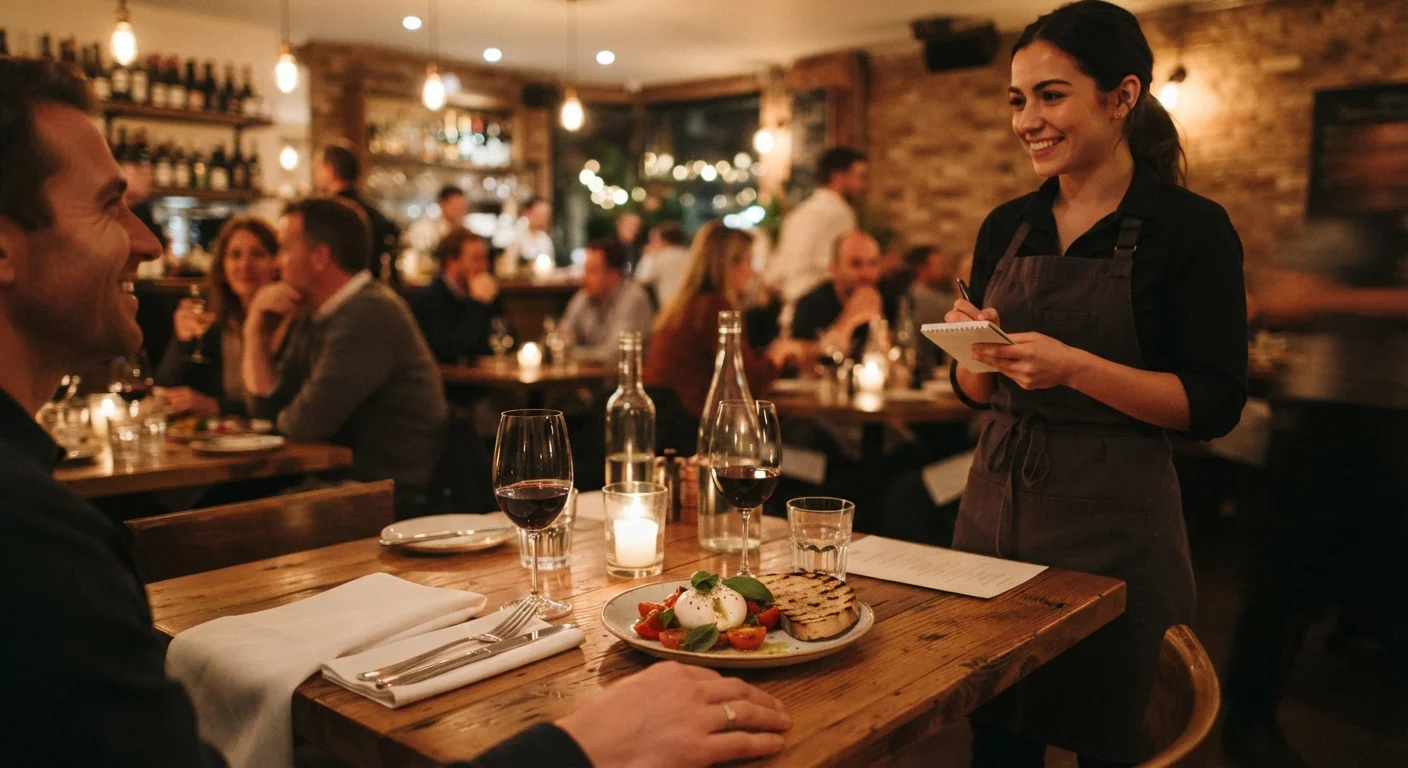
When your server introduces themselves, a brief exchange goes a long way. You don't need to over-explain yourself - simply let them know your pace preference if you have one. Phrases like "I'm in no rush" or "I'd love to take my time tonight" signal that you're there to enjoy the meal, not to turn the table quickly. Asking good questions about the menu is also a natural way to engage; see questions worth asking your server before you order for practical prompts.
Order intentionally - think courses, not just a main
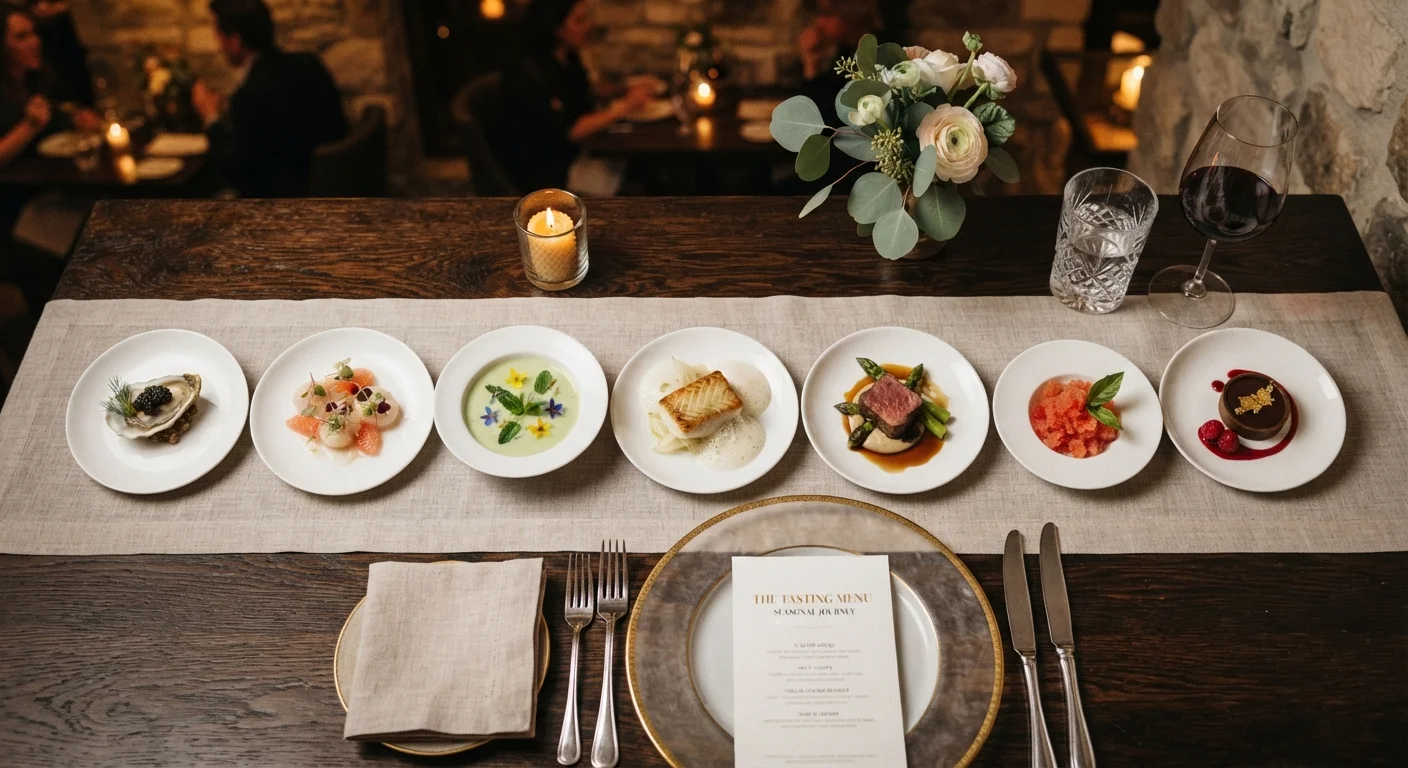
Solo dining is an ideal opportunity to eat the way you actually want to, without negotiating with a group. Consider ordering a starter and a main, or skipping a course entirely. If the restaurant offers a tasting menu, dining solo makes it surprisingly accessible - you only need to accommodate your own preferences. Read up on how tasting menus work if you're considering that format. For à la carte versus prix fixe decisions, understanding both formats helps you pick the right structure for your appetite and budget.
Bring something to occupy you between courses
The most common discomfort solo diners report is not knowing what to do while waiting for food. A book, a podcast through one earbud, or even a notebook normalizes the pauses and keeps the experience enjoyable rather than self-conscious. Using your phone to scroll mindlessly tends to feel less satisfying - something with genuine engagement works better. That said, if you simply want to sit and observe the room, that's a perfectly fine approach too.
Handle the check and tip as you normally would
Solo dining doesn't change tipping conventions. In the US, the standard range of 18-20% applies regardless of party size. If your server gave you attentive, personalized service - which is common for solo diners, since you're the only priority at your table - tipping on the higher end of that range is a fair reflection. If you had dietary concerns to communicate, review how to communicate food allergies effectively before your next visit to make that part smoother.
Try a Counter Seat for Your First Solo Outing
If you're new to solo dining, a bar or counter seat removes much of the self-consciousness that comes with sitting alone at a table. You'll have natural visual stimulation - the bartender at work, drinks being made, other guests nearby - without the pressure of sustained conversation. It's a genuinely comfortable middle ground between solitude and social interaction.
If you're ordering wine and want to navigate that conversation with ease, our guide on ordering wine at a restaurant without overthinking it walks through the process from start to finish - no expertise needed.
What to Keep in Mind
Reservation platform or phone
Used to book your table and, if needed, note that you'll be dining alone so staff can plan seating.
Book, magazine, or podcast
Provides comfortable company between courses and removes any pressure to fill silence.
Notebook or phone notes app
Useful for jotting down dish names or wine details you enjoyed - great for solo dining as a deliberate culinary experience.
Solo dining is a skill that gets more comfortable with repetition. Your first attempt may feel slightly awkward - that's normal. By the second or third time, you'll have a clearer sense of which restaurant styles suit you best, how to communicate your preferences efficiently, and how to make the most of time that's entirely your own.
The most important mindset shift: you are not a lesser guest because your party is one. Restaurants want to serve you well, and most staff genuinely enjoy the chance to give a solo diner their full attention.
Avoid Over-Apologizing for Dining Alone
It's a common instinct to preface everything with "sorry, it's just me" - but this framing signals that solo dining is somehow an imposition. It isn't. Arrive, communicate clearly, and treat yourself as any other guest would. Restaurant staff will follow your lead, and the experience will feel correspondingly more comfortable.