How Wine Lists Are Organized
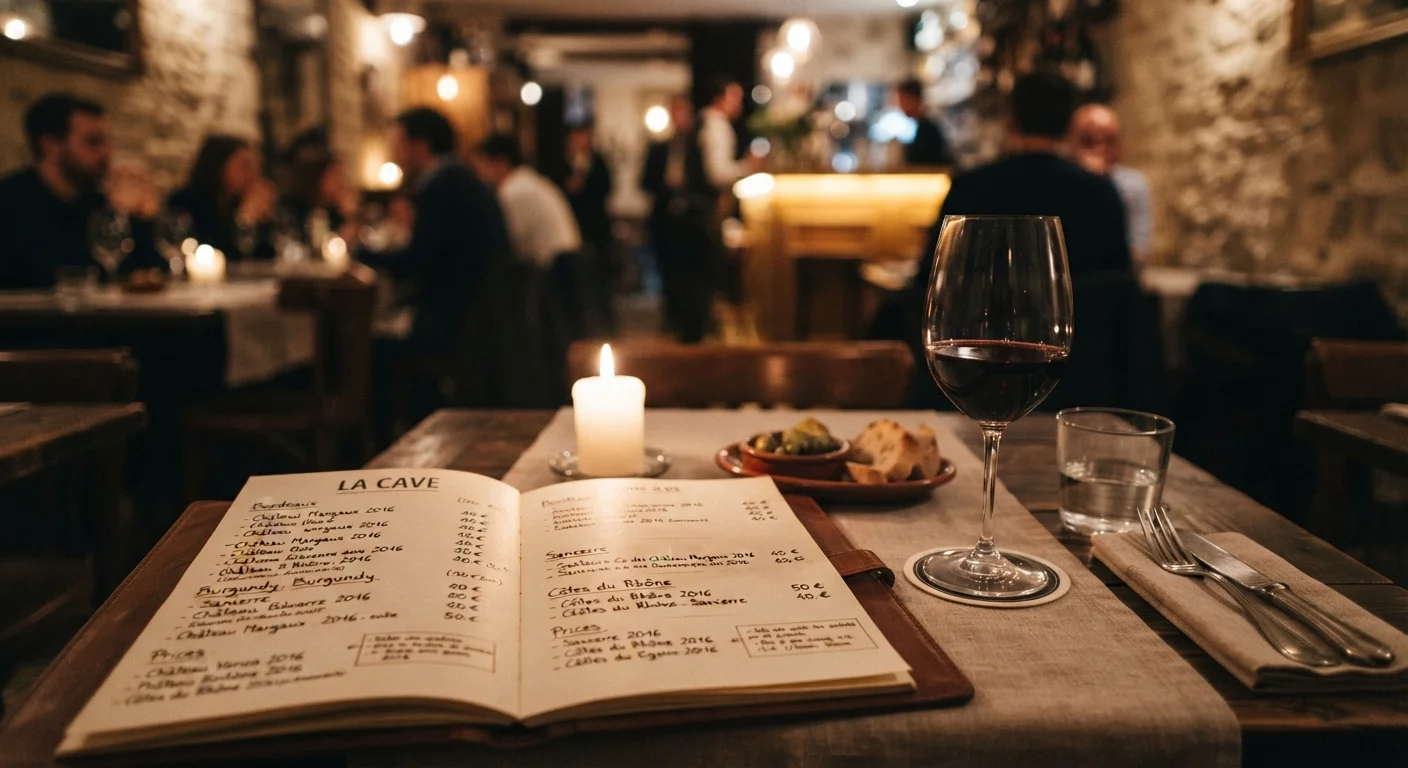
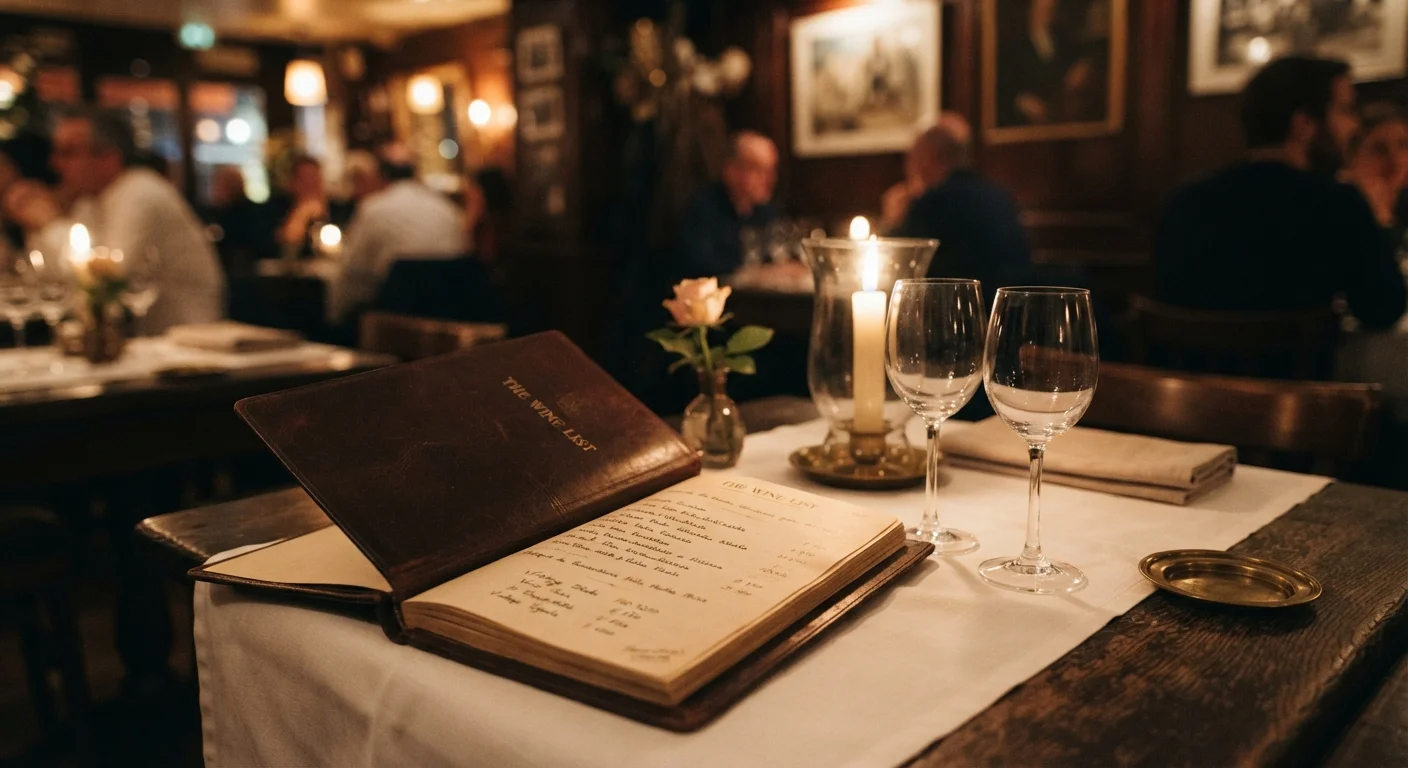
Most restaurant wine lists follow a predictable structure once you know what to look for. Wines are almost always grouped first by color - sparkling, white, rosé, and red - and then subdivided by region, grape variety, or both. Some restaurants add a dessert wine section at the end.
Larger or more ambitious lists may organize wines by country or sub-region, moving from lighter to fuller-bodied options within each category. Smaller restaurants often keep things simple with a short list of house pours plus a handful of bottles. Either way, the logic is meant to guide you - not test you.
If you're looking at a long list for the first time, start with the color you know you enjoy, then narrow down by price point. From there, a few key terms will do the rest of the work.
Tannins
Natural compounds found in grape skins, seeds, and stems that create a drying or slightly bitter sensation in your mouth. They're more prominent in red wines and mellow with age.
Acidity
A natural component of wine that makes it taste bright and refreshing - similar to the tartness of lemon juice. High-acid wines feel crisp and food-friendly.
Vintage
The year the grapes used to make a wine were harvested. It can affect flavor because weather conditions vary from year to year.
Old World
Refers to traditional European wine-producing countries like France, Italy, Spain, and Germany, where wines are often labeled by region rather than grape variety.
New World
Refers to wine regions outside of Europe - including the US, Argentina, Chile, Australia, and South Africa - where wines are commonly labeled by grape variety.
Sommelier
A trained wine professional at a restaurant who manages the wine program and helps guests select wines that suit their tastes and meals.
Grape Varieties vs. Regions: What's the Difference?
One of the most common points of confusion on a wine list is whether a wine is named after the grape or where it comes from. The answer usually depends on whether the wine is from the Old World or the New World.
Old World wines - from France, Italy, Spain, Germany, and neighboring countries - are traditionally labeled by region. Burgundy, Barolo, Rioja, and Chablis are all place names, and knowing what grape grows there is part of understanding the wine. For instance, red Burgundy is made from Pinot Noir; Chablis is a Chardonnay.
New World wines - from the US, Argentina, Australia, New Zealand, and South Africa - typically lead with the grape variety. A California Cabernet Sauvignon or an Argentine Malbec tells you immediately what you're getting.
When in doubt, a quick scan of the wine's country of origin tells you which naming convention to expect. For a practical walkthrough of selecting wine at a restaurant, see Ordering Wine at a Restaurant Without Overthinking It.
Decoding Common Wine Descriptors
Wine menus often include brief tasting notes - a few adjectives that describe what the wine tastes and feels like. These aren't subjective opinions; they point to measurable characteristics in the wine.
- Dry / Off-dry / Sweet: How much residual sugar is present. Dry means very little; off-dry has a hint of sweetness; sweet is noticeable.
- Full-bodied / Medium-bodied / Light-bodied: Refers to how heavy or substantial the wine feels in your mouth, much like the difference between whole milk and skim milk.
- Tannic: Tannins are naturally occurring compounds in grape skins and seeds that create a drying, slightly grippy sensation. Red wines are higher in tannins than whites.
- Crisp or high acidity: A mouth-watering quality, similar to biting into a green apple. Common in white wines like Sauvignon Blanc.
- Oaky or buttery: Flavors that come from aging in oak barrels - vanilla, toast, and a creamy texture. Associated with many California Chardonnays.
Use Descriptors to Navigate, Not Judge
You don't need to agree with a wine's listed tasting notes to find them useful. Think of them as a compass: 'crisp and citrusy' points toward refreshing whites, while 'rich and full-bodied' signals something more substantial. Match the descriptor to your mood and the food you've ordered, and you'll land in the right direction most of the time.
Wine List Terms Worth Knowing
Beyond descriptors, wine lists use a handful of standard terms that can trip up even experienced diners.
- Vintage
- The year the grapes were harvested. For most restaurant wines, the vintage is a reference point more than a quality judgment.
- Reserve
- Often signals a higher-quality tier within a winery's lineup, though the term is not legally defined in the US and its meaning varies.
- Estate
- Means the winery grew and produced the wine on the same property - a sign of tighter quality control.
- BTG (By the Glass)
- Wines sold in individual pours rather than whole bottles. A useful option when diners want different styles or prefer not to commit to a bottle.
- Négociant
- A French term for a wine merchant who buys grapes or wine from growers and blends or bottles it under their own label. Common in Burgundy.
If you're equally curious about the rest of the drinks menu, Cocktail Menu Terminology Every Bar-Goer Should Know covers bar language with the same plain-English approach.
House Wine Is a Legitimate Choice
Many diners overlook the house wine out of a sense that it's less serious. In practice, restaurants select house pours carefully because they represent the establishment's taste - and they're often excellent value. If you're unsure where to start, asking what the house wine is can be a genuinely low-stress entry point.
Asking for Help Without Embarrassment
Sommeliers and knowledgeable servers exist specifically to bridge the gap between the wine list and your table. Asking for help isn't a sign of ignorance - it's what they're there for, and most find it genuinely enjoyable.
A few practical phrases that make the conversation productive:
- "We're thinking of spending around $X on a bottle - what would you suggest in that range?"
- "I usually like lighter reds - something along those lines would be great."
- "We're having the salmon and the steak - is there one wine that works for both, or should we get two by-the-glass options?"
You don't need to know the terminology to get a good recommendation. Describing what you enjoy in plain terms - fruity, rich, refreshing, not too heavy - gives a sommelier enough to work with. For more on how to communicate effectively with your server across the whole meal, see Questions Worth Asking Your Server Before You Order.
And if wine isn't your preference at all, that's equally valid - Non-Alcoholic Drink Pairings at Restaurants Are Having a Moment have become a genuine category worth exploring.